
The shock and incredulity were still washing over his bearded face as he approached me, and they softened and deepened his voice as he spoke. It was so unlike his usual, merciless teasing of me, his constant, often drunken or stoned, goading of my teenage sensibilities, his having a laugh at my expense at each encounter, that his words felt especially weighted that day. I did not know him to show gravity, empathy, or humility, but there they were as he stood before me condemning and still recoiling from the ceremony. A liturgy that only moments before had pierced my juvenile heart and so crushed me, that I felt I was standing naked in the middle of this happy reception with a gashing wound where my heart had been, unable to breath let alone make a sound or verbalize my agony.
“I’m so sorry,” he said, “that was awful and wrong and such an insensitive and hurtful thing to do.” There was no pity in his words, only the bridled fury of solidarity and a humble awareness of his own powerlessness to have prevented the spectacle of abandonment or undo the pain it must be causing. To me the words offered an immediate cloak over this feeling of naked shame and worthlessness now engulfing me, and in the ensuing years they became a buoy to cling to when the stasis of gaslighting threatened to wash away what scrap of faith I still had in my own perceptions and meaning-making abilities or any residual self-worth.
For that, I forgave him everything else.
The Big Kids
– Eight Years Earlier –
“We went camping with the Big Kids,” I answered Mrs. DiPietro, when she asked each of us second graders how we had spent the past weekend. The alarmed look on her face begged for more information. I thought she must not know what camping was, since I had never heard of it before that weekend either. So I explained that we had gone out of the city to a big lake in the woods and put up tents, which we slept in, and cooked on an open fire, and roasted marshmallows…” I wanted to tell her about the fun we had had playing games and swimming and hiking, and singing Bye Bye Miss American Pie and listening to the Big Kids tell scary stories around the camp fire, but my favorite teacher interrupted me to ask about these Big Kids, “Who are they? Were there any grownups? Were your parents there?”
That was a bit of a puzzle for me. It was hard to say what or who these people we now lived with were, let alone what they were to me. People called their parents Mom and Dad and grownups were called Mr and Mrs, like at school or in the previous foster homes. But one day in spring, when we were picked up from Ms. Perry’s in Virginia and taken to a big brownstone in Adams Morgen, DC, an attractive couple, she, thin and tan with long, straight, blond hair and a tight and nervous smile, he with long, reddish-blond hair, gleaming eyes, and a jovial grin crowning his beard, greeted us warmly and told us their names were Marty & Kenner, not Mr. and Mrs. Thomson, not Mom and Dad.
My new guardians and their friends were not like any grown ups I had ever encountered in my long, little seven year old life. No grownup outside of school had ever even read a book to me before, let alone played games with me and made craft projects. No grownup had ever laid down in the snow and taught me how to make snow angels or joined the snow ball fights with all of the kids on our street. No grownups had ever gone sledding, or ice-skating, or swimming, or bike-riding before. No adults had picked us up and swung us around, or played chase, or rough-housed with us, or tickled us ‘til we screamed uncle. No grownups laughed and told silly stories or goofed around, or made ridiculous bets they always lost.
People who played were kids and people who didn’t were grownups. The best way, in my mind, to describe these caretakers and the loose conglomeration of tall, playful-creatures whom we called by their first names, who had weekly pot-lucks at each other’s houses in winter and played soft-ball with all of us on the Washington Mall in summer, who went camping and sailing with us, who sometimes might sit around our kitchen table and play a dulcimer or smoke a joint, was not to call them parents or grownups, but to call them Big Kids.
Despite never having been told how long we would stay and the inevitable tantrums and turmoils that beset children in such circumstances, my two year old brother and I came to adore these mythical beings, and, over the next three years, we settled into the habit of being their wards and navigating the various playful and eccentric characters that now peopled our lives, hoping our social worker wouldn’t again just show up one afternoon to take us to the next placement. To that end, I stopped calling them Big Kids at school.

Hank
Hank was one of these Big Kids. He was not as tall as the other men, nor was he a heavy-set man, though his beer-belly did expand over the years. Few would have said he was handsome, fewer still that he was unattractive. It was Hank’s personality that was large and magnetic, not in the kind, generous, Ted-Lasso way, but in the provocative and entertaining way of a late-show host. Because of this, Hank could be found in the center of attention at most gatherings he attended. He held a certain fascination for us little kids too, the way fire does or someone’s pet tarantula. Though we could usually manage to provoke one of the other men, Mac, Bob, or Pat Patrick, to chase after us, throw us in the air and shake the pennies out of our pockets, or catch us in a “death-grip” we had to squirm our way back out of, with Hank, these poke-the-bear games were only ever verbal, and they were always more dangerous.
If a friend was with me, we would stoke each other’s courage until we had the nerve to challenge him with some childish insult about farts or things growing in his beard, or that his baby must be due any day now since his belly was so big. Without fail, and to the amusement of anyone present, Hank would not just take the bait, but he would run so far with it, that the line would tear through a deep insecurity as it was being yanked out of our hands. Hank always managed to hit just below the belt. It always ended with my feelings smarting from the sting. And I always went in for another round the next time we met.
The older I became, and the more things fell apart at home, the more bare surfaces there were to inflict injury on my self-esteem. No doubt Hank underestimated this fragility, or was unaware, or could not have guessed just how little positive reinforcements there were in my life to stack up against such low-flying banter, but I grew to resent him for it none the less. This acrimony reached its peak my last year at the YMCA summer camp on a river off of the Chesapeake.
Camp Lets
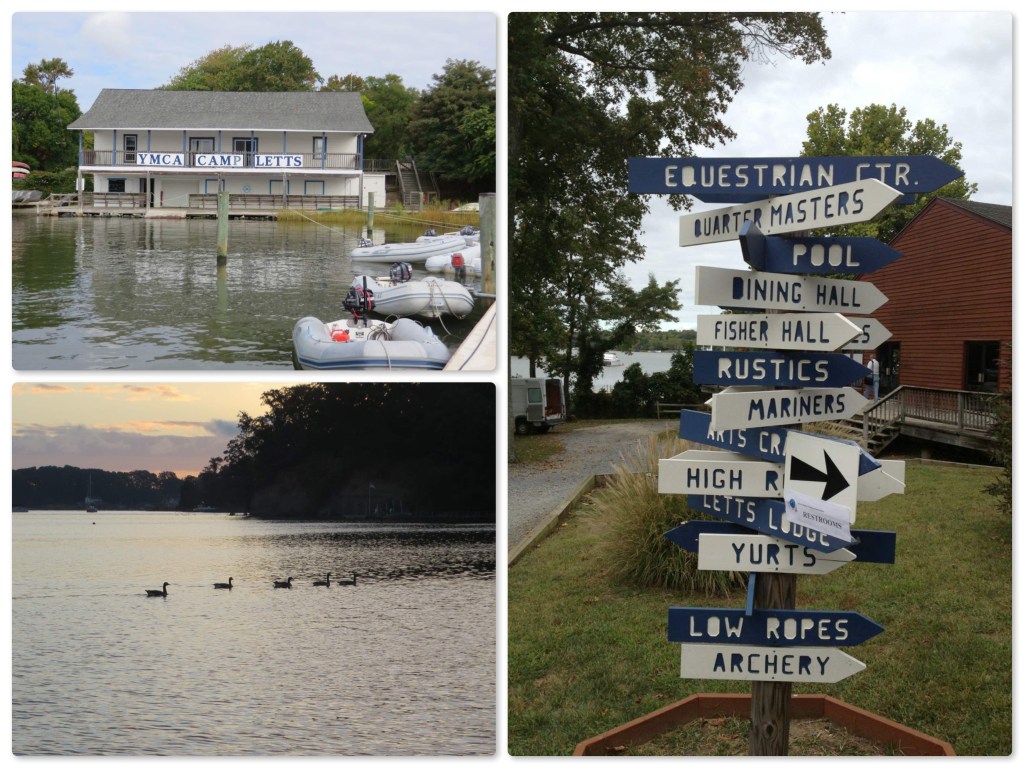
It would be my last, though only my second summer here, but these two weeks of summer belong to the best memories I have growing up. This year I had signed up for the equestrian program instead of selecting several different activities. The year before I had done diving, sailing, archery, and water-skiing, but this year, camp was all about horses. Though we didn’t get to do as much riding as was promised, I got to spend most of the day at the stables. And all good things converge in horse stables: the smell of leather saddles, the sound of the hardware on tackle, the sweet smell of horse sweat, the look of riding boots up over our tight riding pants and the black riding helmet perched on top, the warm wood of the barn siding as we leaned against it on a break, the fresh scent of hay and the crunch of it underfoot, the dust fairies that dance around in the beams of sunlight pouring through an open barn door. Even the horse manure that we spent a lot of time shoveling, is like no other shit on the planet.
The only thing better than being around horses all day at that age is being around boys. I had one in my sights who had also been there the year before. Michael and I spent most of those two weeks with each other on our radars but lacking the courage to do any serious flirting. Having a crush is an exhilarating preoccupation. Underlining everything you do and everywhere you go is the question, “is he here?” Then there is that elevator-drop you feel in your belly, when you see him. After that you are self-consciously trying to act normal while at the same time trying to draw his attention by laughing just a bit louder than usual at your friend’s jokes. It is all very silly and not unlike anyone else’s experience, but it does make life more delicious when it is happening and is one of the very best parts of that age. Finally, at the party on the last night, we slow-danced and made out, and Michael became my boyfriend for the rest of the summer… that being all of about three weeks, which is when the enchantment always wore off.
It was a great two weeks. Sherry and I found each other on the first day in our cabin of ten girls, and it was all Laverne & Shirley after that. We doubled each other’s wardrobe and were each other’s accomplice in whatever schemes and pranks we came up with. She shared her care-packages with me, and I helped her write letters to her boyfriend back home. Making friends has always been easy for me. No matter how many times I had moved or switched schools, I always found ‘my person,’ someone to belong to, to identify with. Those Someone’s kept me from feeling all alone in the world, and Sherry was my Someone at camp. The person your eyes sweep the room for in the dining hall or out on the sports field, the one you move toward in relief once you’ve spotted them, the one who anchors you in belonging, so you can relax into the social gathering and maybe even dare to be more of yourself. Everything is better with a Someone, and that was true at camp, even if we weren’t always together.
I loved all the things at camp: rising to Reveille, the long walk alone up to the stables in the early hours, the call to attention at the flag pole in the center of the camp, the rituals and songs and duties in the dining hall, the free time to swim and hang out at the camp store, the smell of the cabins, the walk to the bathrooms and wash house carrying our toiletries with our towels slung over our shoulder and talking to the other girls, and the melancholy sound of taps at days end. Never once did I question whether I belonged. Never did I doubt if I was liked. There was not a single time I felt I was a bother or an interference.
I was in high spirits while all of us campers checked each other for ticks and waited with our trunks by the end of the lane where our parents would pick us up. Michael was picked up first by both of his parents in a shiny sedan. His mom was all smiles and hugged him longer than he wanted. His dad did the guy thing with a hand shake and half a hug and then grabbed Michael’s trunk and heaved it into the back of the car. Both his parent’s were glad to see him and said they couldn’t wait to hear all about camp when they stopped to get something to eat on the way home. Sherry was picked up by her boyfriend in his pickup truck. He was a few years older and had already graduated from high-school. Eventually all the girls in my cabin had been picked up, and I felt awkward waiting without my posse, though I was secretly relieved they had gone before Marty and her boyfriend, Art, came in their rusty old 1965 VW pick-up truck.
The cars came and went and came and went. I waved to each camper as they left, my agitation growing with every goodbye, until I was the very last camper standing. When there was still no sign of them for what seemed like hours after everyone else had gone, that toxic mix of feeling unseen, unwanted, and betrayed, which had come to be an almost constant companion over the last four years, returned after this two week hiatus and surged through to every last nerve ending in my body. The resulting rage could only hold the line of defense against my rising panic for so long, and eventually I threw myself into searching for a contingency plan.
Looking around to see if anyone at all was still here at this camp miles from nowhere, I saw a dripping wet, naked man with a beard walking toward me from the shore. As this odd figure came closer, a kaleidoscope of information hit me simultaneously, which, when aggregated, revealed that whatever exaggerated and awful situation my catastrophic thinking had drummed up the last few hours, nothing could trump the reality I was now facing. In that moment, my worst suspicions about my foster mom and her boyfriend were confirmed: they were sadists!
The Sacred Thread
“Those Fuckers came with Sea Fever!” I said out-loud to no one. The soaking wet man approaching me was none other than Hank. Marty and Art were not coming in Art’s rusty old VW pickup, nor in Marty’s rusty old VW bug. They had come with their 35 foot, wooden Dutch Sloop. Art was still in the dinghy rowing ashore, but Hank, who actually was wearing a speedo, had jumped overboard and beat him to land.
I can’t remember anything about the rest of that trip, how long it was, or who else was on board. My nine year old brother had been shuffled off with one of his friend’s families as usual, but my three year old foster-sister must have been there, though I can’t remember if she was. Most likely I spent the rest of that trip, like so many others, sulking in the head and screaming obscenities at them, which had become my only retort on such occasions. But the image of Hank walking toward me in his speedo, which left nothing to the imagination, and of Art and him trying to fit my huge trunk into that wet, little dinghy will forever be seared into my mind.
At fourteen I had no where near the fortitude, self-esteem, or even the sense of humor I would have needed to hit a curve ball like this, let alone spin a golden narrative of love and care from straw so wanting in empathy and circumspection. Maybe somewhere there is a 14 year old girl who could have been cool with waiting alone for hours in a deserted summer camp, could have improvised with such a capricious escort, and could have conjured a positive identity out of thin air and navigated it successfully through the exacting world of her peers entirely on her own without flinching over her exotic associates. Maybe there are hoards of such girls and boys. But I was not one of them. I would never be one of them.
The failure, or refusal, of my Peter-Pan-guardians to be aware of and appreciate my reality and factor it into the calculations of literally thousands of decisions that impacted me over the previous seven years, as well as the remaining three years I would live in their house, was a relentless sabotage on the filigree of trust that should have bound us together. Though this fine and delicate strand, without which no caring and loving relationship can be woven, had been severed into innumerable pieces, there was rarely, if ever, an accounting for them, let alone an attempt to mend the thread. To this day, these parents, who would not be my parents, these adults, who would not grow up, fail to see the true preciousness of the thing they trampled underfoot that day, and on many other days. A thing that can be carelessly, even unknowingly, broken, but takes intention, hard work, and humility to repair. If only they had known the words, “I’m so sorry, that was awful and wrong and such an insensitive and hurtful thing to do,” I might have had a different story to tell.
As it was, I was thanking my lucky stars that they did not have the audience they may have been hoping for. Their own extreme tardiness had spared me this humiliation at least. I was not so lucky the day that Hank approached me at the awful wedding. A day that was still over a year away.
Kenner & Diane
It was an intimate ceremony at her two bedroom, cottage-style house in Bethesda, Maryland. The kitchen had been expanded into a large, bright, open space with sky-lights, a kitchen island, and dining area near the sliding glass doors from which the modest, enclosed garden could be accessed. Now there were maybe thirty white, fold-up chairs rowed in a long semi-circle facing a tastefully decorated archway that had been placed off to the right. Some of Diane’s bronze sculptures were on pedestals in the garden, while her more recent stone pieces could be found in the house.
Not seeing anyone to whom I could attach myself among the arriving guests, I headed for the kitchen and found something to do that made me look busy and useful and signaled that I belonged here. I still didn’t know what to make of this union or what it would mean for my brother and me. On the one hand, she was a dream come true. A svelte woman with long, dark hair, she could have been younger Sarah stepping out of the pages of the Old Testament, who, even in old age, tempted kings. Not only was Dianne beautiful, but she had keen aesthetic sensibilities, impeccable and expensive taste, and a Midas touch. Whether it was rooms, stone, food, ceramic, words, or oils on canvas, she managed to turn them into something that delighted. She was smaller than I was, even then at fifteen, but she had an abundant and lavish personality that filled every room she was in and enchanted everyone she met. I was enthralled from the moment she was introduced to me. She was generous, open, interesting, curious, creative, wore lovely clothes, and had a clean, comfortable and gorgeous home. The rare occasions we came for a weekend, she wanted to hear about everything, had a point of view and, with a master’s in psychology, an educated opinion about my social life. She also found things to notice and compliment me on, showed enthusiasm over my creative endeavors and celebrated my successes, and once or twice took me shopping and out to lunch in Georgetown. In this way, Kenner’s soon to be wife was all that I had ever fantasized about in a mother, and I drank it in. How could I not want someone like this to fill a role that had been vacant all my life?
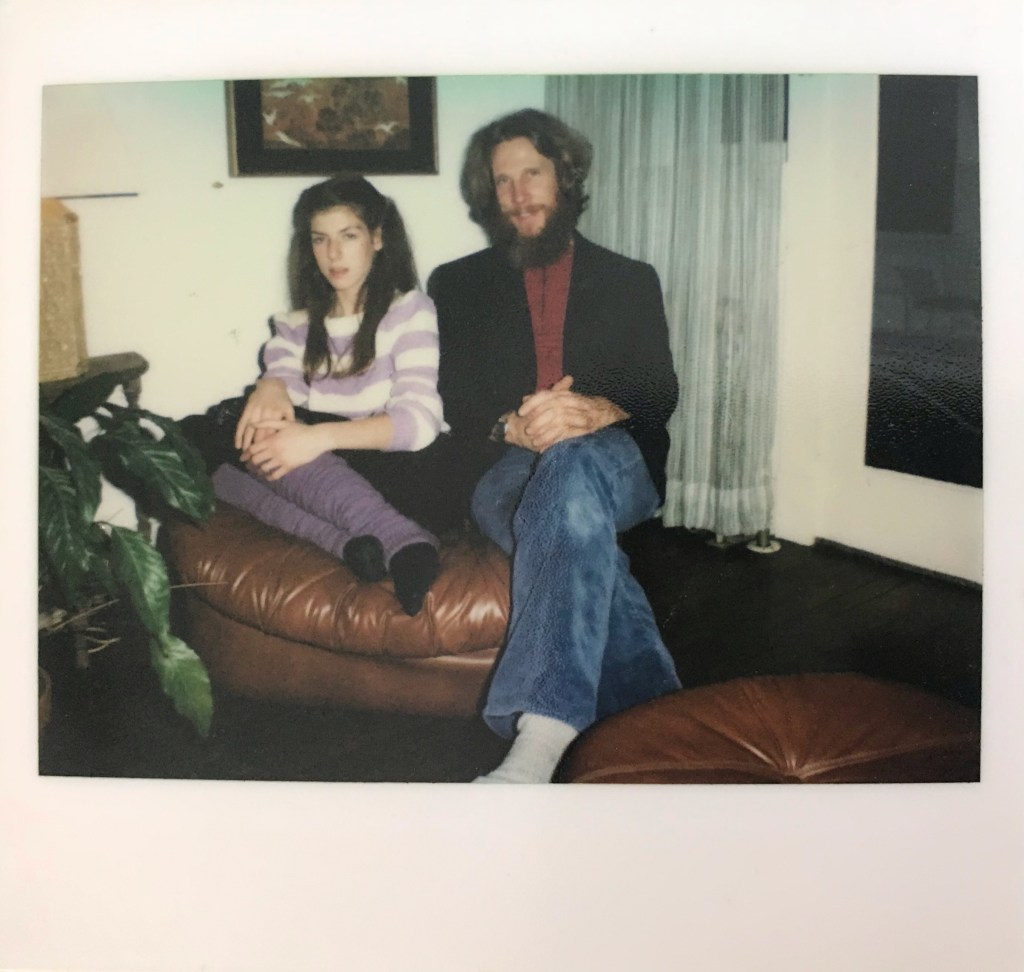
On the other hand, my relationship with Kenner had already changed quite a bit in the short time he had been with Diane, and I could not tell whether this trajectory would continue once they were married. Certainly his moving in with Diane was a healthy step for him, even though it meant that he was farther away from us and we now had to schedule times to “visit.” The past five years had been chaotic and confusing and heart-breaking for me, and they must have been excruciating for him. I was ten when Marty told me she was pregnant. Whatever sense of emotional stability I had begun to rely on the previous three years with this couple as guardians vanished the instant Marty spoke the words that night by my beside, “Kenner is not the father.” It ripped the rug right out from under my new found life.
Nothing was the same after that. Kenner moved up to the third floor apartment which was still open to the rest of the house, and Art moved into Marty’s room. Kenner’s bedroom right above theirs. And that is how we lived for the next five years, outwardly, one big, “open,” progressive, patchwork family with four different last names; inwardly, completely dysfunctional, isolated and emotionally shut down individuals without even a family name to unify us.
Once he moved upstairs, Kenner did not actually spend a lot of time at home. More often than not, he was away sailing up and down the East Coast until he ran out of money and had to come back and pick up some renovation work, only to then be off again. When he was home, I was his constant shadow, “helping” him work on the house or do projects for clients, hanging out at the boat yard as he renovated Sea Fever, or joining him on his trips to the hardware store. Because of him I learned my way around a hammer and saw, still love the smell of sawdust and turpentine, and can spend hours in hardware stores. It was Kenner who took my brother and me and our friends sledding and ice skating, built snowmen and had snowball fights with us. It was Kenner who took me to the Washington Monument to fly the elaborate kite he had bought me, and took me on movie dates. Only Kenner could brush the knots out of my hair without hurting me. It was Kenner who bought me a large chemistry set, taught me the names to all the bones in my body and the names of all the semi-precious stones in the collection he helped me grow.
When he was away, he would write letter’s and send us pictures or trinkets from wherever he was, and I would get to fly to meet him for spring break. One year I flew to the Bahamas and stayed with him on Sea Fever in Nassau Harbor, sailing around the islands, sleeping on the beaches of the smaller, uninhabited ones, leaping and hopping on moon shadows together. Another spring break, I flew down to Miami and drove back to DC with him and his then girlfriend, Dana, switching up between riding with him in the ‘69 VW bus and riding with her on her BMW motorcycle. Even from quite a young age, Kenner would let me sit in his lap and steer the bus, and from twelve or thirteen, drive on roads with little to no traffic. When I was 14 and Dallas was the big show on Television, the two of us flew to Texas to visit his parents in Irvine. Besides visiting Southfork, I got to ride his parent’s mopeds and shoot cans with a real gun.

But this had all begun to change since he met Diane. The only time we spent together alone anymore was when he picked me up from school to bring me to her house for one of the scheduled visits I had managed to wrangle out of them. I doubted that there would be any more spring breaks with just the two of us, but maybe, possibly, something more substantial would replace it. Something I couldn’t quite name, but that might ground me in a sense of my creative agency and keep me from being swept further away from my own potential and sense of purpose. Maybe their union could offer a knew hub of positive energy and magnetic beauty. Maybe if I could grab onto to that somehow, plant myself in their garden, it would keep me from being sucked down into the entropy and enmity that had taken over the home Kenner had left, a vortex of decline that was leaching away my vitality. I had little reason even at this point to believe there may be room for me, but down to the marrow, I yearned for it none-the-less.
As I placed canapés on a tray and covered them with saran wrap to keep for later, all I knew was that Kenner was the sun of my universe. Without him, I would wither in frosty darkness.
The Awful Wedding
Life is simply a series of yes and no choices. Being finite creatures, limited by time, space, and matter as we are, we cannot have all the things. We cannot do all the things. We cannot be all the things. We are forced to choose. It is the burden of being human. Every single moment of our lives, we must choose. One thing over another. One person over another. One path over another. One principle over another. One love over another. Even God, rumored to be infinite, revealed himself to us through his choices. Able over Cain. Jacob over Esau. David over Saul. No less his very first choice, the choice to create a world of beauty, love, and suffering over being eternally alone, or so the story goes. Many times over, life leads us to a fork in the road where we must choose what matters most to us. What or who is most precious? What do we really value? Our lives are the sum total of these choices we make, and, in the end, we are exposed by having become who we really are. But as Cain and Esau, Hagar and Leah will tell us, the only thing worse than having to choose, is not being chosen.
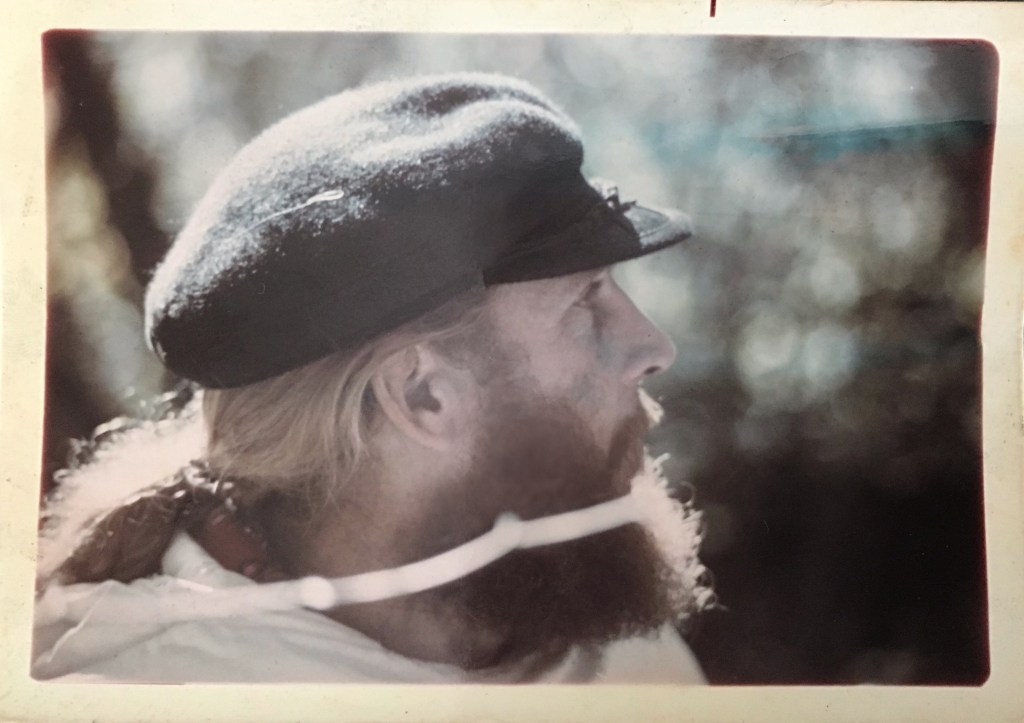
The white, wooden fold up chairs in the garden began to fill up with people I did not know. The faces I did recognize were standing packed together with me in the back for a shortage of chairs. There must have been music of some kind. There was probably a cute flower girl; Kim, Diane’s daughter from her previous marriage, I think was already too old for that role. There were no bridesmaids or groomsmen. Diane wore a long cotton lace dress with flowers in her hair. Kenner wore a white linen tunic shirt, beige pants, and leather sandals. He still had hair almost as long as Diane’s, and though he usually had it up in a knot, it was combed out and worn long for the ceremony. It would not be long after this that Kenner would cut his hair, shave his beard and replace his T-shirts and faded and torn jeans for button ups and slacks, but for the wedding, he looked every bit the bohemian child of the ‘70’s I’d always known him to be.
He beamed at her as he spoke the vows he had written. She promised to love and be faithful through all the storms ahead. I wondered if she would be able to keep her promise better than his first wife had. They exchanged golden bands, their union was blessed, and Kenner took her into his arms and kissed her.
But this was not the end of the ceremony.
They both then turned toward their guests as the pastor called Kim up to join them. She stood between them, each of them with a hand on one of her shoulders as the pastor of the Pentecostal church they had recently joined consecrated this new family. He prayed for every blessing any family might wish for. He prayed that Kim would receive the full blessings of a godly father who would love her as well as her mother, and that Kenner would take on the responsibilities and joy of having a daughter, not only by loving and honoring her mother, but also by becoming a father to Kim. The pastor prayed that god would put a spiritual wall around these three, that they would be protected from any forces that would try to harm or come between them. Families were God’s plan, and he smiled down on this new family, the pastor said. I waited for the pastor to then call my brother and me, but he never did.
I was suddenly outside of my own body, my limbs frozen in place by the wash of adrenaline coursing through my veins. Though I had always feared the day would come when we would have to find another family, I had not seen this coming. I was blindsided. My brother and I were being boxed out of Kenner’s life not just to make room for a wife, but to make room for a new daughter. Never mind that she already had a father and a mother for whom she was the center of their universe, but now Diane and Kim were taking the very sun from mine.
It was torture enough that I had not been chosen to join this new family, but apparently God himself would guard the gates that kept me out of their lives. And all of these people dressed in their Sunday-best must agree. As I looked around, no one had flinched. No one seemed embarrassed. There were some “Amen!”s And “Yes, Lord!”s from a small group off to the right, but no one who looked down or turned away from the shame of it. After the ceremony, Kenner and Diane beamed and greeted people with exuberance as if nothing at all peculiar had taken place, while I felt I had been drenched in pigs blood in front of everyone at the prom.
Hagar & Ishmael
What happened that day was never mentioned by Marty and Art, by their friends that were at the wedding, nor by the extended family. The world was silent on the matter. No wounds were bound up. No comfort offered. No explanations. No repairs made. No second place prizes. That day the sun was blotted out and my sky turned black, and it went entirely unnoticed by any of the people that should have been looking out for me, caring for me, and wanting the best for me.
There was only one lone star in that night sky and it was Hank.
“I’m so sorry! That was awful and wrong and such an insensitive and hurtful thing to do,” he had said.
Without those words I might have been convinced that it was all an awful dream or that I deserved no better. I might have doubted my reality and swallowed the lie that was so often fed to me, that my internal cues for what was uncomfortable or hurtful or even odious only ever indicated that something was wrong with me. I might have given in to the pressure to believe that the world belonged to others better than me, and it was always only ever my place to bow out quietly and make space for them as they had need of it. I might have drowned in the pervasive message, that if I did not give over my good things freely and without objection, I was selfish and problematic. I might have been pulled down into that incessant undercurrent which made me feel that, as a foster child, I had no rights and no claims to make on these guardians to be the kind of parents every child needs.
Without a doubt I did spend time shipwrecked in these waters. Too much time. Things spiraled out of control for me after the wedding, and two years later, when I was seventeen, I was told to move out of the brownstone in Adams Morgen. After a few years of couch surfing, I finally began to get some sure ground under my feet. But the scrap of ship-wood I clung to to keep me afloat during those lost years were the words of an adult who had seen my reality and mirrored it back to me. Someone outside of myself had seen and heard what I had, had also found it odious, and then actually told me so. I don’t think that had ever happened before. And it has rarely happened since.
Years later, we found out that there had been a back-room-deal between Marty and Kenner as part of the divorce settlement. Initially, Kenner, as the wronged partner, was set to keep the Brownstone in Adams Morgen and would pay out Marty her half of the then real-estate price. Marty and Art had already found a house a few streets over to rent for them and their daughter. They had agreed that whoever stayed in the Brownstone would keep us, the foster kids. But at some point, Kenner and Diane backed out of that deal, and decided to let Marty pay them out instead. They used that money to buy property in Annapolis, MD and, after the wedding, never initiated contact with us again. We stayed in the brownstone with Marty and Art, who, at that point, appeared to be the bigger people for sticking it out with us. But they had already had one foot out the door of this foster commitment. Though Kenner’s abandonment was abrupt and couched in public, religious ceremony to justify it, Marty’s was a slow, silent, and private freeze. In the end, neither one had chosen to include us in their new families, by that point, we had simply come with the house.
There is hardly anything more painful than not being chosen. When the one we prize chooses another to be their prize. When we are not able to rise to the needs, desires or expectations of those that we believe to be existential to our lives. When we are written out of someone’s story, erased, every ephemeral trace of us burned to purge the world of the shame of their choice. Few things in this world are more painful than that. Hagar knew that pain. She and her son were sent away by Sarah for fear of her own child’s future. They were sent away to die of hunger and thirst in the desert, but they lived. They lived and thrived. Abraham and Sarah sent them away, but they could not write them out of their story. Hagar and Ishmael would not be silenced.
The pain of these events stretches across four decades to reach into a life that is now full and abundant. It initially took me out at the knees, but I have long since regained my footing. The crater that was left in my life in the wake of the choices these Neverland-guardians made has been refilled many times by others. There is no invoice waiting for payment. I cannot harbor ill will or contempt for those who, like me, are subject to the same, at times, unbearable fate of being human, of being finite, of having to make awful choices. I can let them go. Because I now know that it is not the crippling blows we’re dealt that kill us, it’s the silence that does.
 It Takes One To Know One
Wonderfully written!
LikeLiked by 1 person
Thank you, dear!
LikeLike
I love it!!! 🙂 MORE !!!!!
LikeLiked by 2 people
Thank you!
LikeLike
I’m so glad that I discovered your blog. You are such a great writer. I’ wanted to know you better and be your friend. Perhaps it’s not too late. You are very talented, Lee.
LikeLike
Thank you Apryl! That is very sweet.
LikeLike
Wow. Wow. Sone wrenching parallels with my dad and our relationship. You are very strong! ❤️❤️
LikeLike
Thank you Ariel! Good to hear from you.
LikeLike
Wow, so gut!!💜
LikeLike
I’m finally finished reading your blog. That wedding scene was so painful that I needed a break. Then there has been problems in my own life.
You end this story of an upbeat note.
You are a really beautiful person Lee.
It’s hard to believe that people could be so cold.
That’s a side of us that should rarely be seen once we accept Christ as our Savior. I believe everything that happens to us is allowed but it will not thwart the plans that God gave us.
I knew you at some point after this. Maybe you mentioned you were adopted and I was bewildered. I thought maybe it was my personality. Now I have a better understanding.
I’m pretty strong. I’ve had a lot of experiences too and I still hope we can meet again.
We will have all of eternity to find out.
Bless you, Lee Mason Fischer!
LikeLike