Ugh! Not this word! It is almost as bad as “moist!” But there it is, so I’ve got no choice but to spend the next 20-30 minutes writing about it. I could go the easy route and fetch up one of the many precarious situations our foster mother had gotten us into. But that would just be an avoidance tactic. I know what this has to be about. I know what needs to be said. And it won’t be pretty. It won’t be fun.
Women are HAIRY!
There! I said it! See where this is going? We grow hair. On our legs. Under our arms. We grow pubic hair. And now, at my age, we even start growing mustaches. It’s nature.
No, I am not completely liberated from the razor. I started shaving my legs and underarms long before the first hair even had a chance, so it is too late to stop now. Somehow we girls absorbed the message pre-puberty that becoming a woman wasn’t so much about the natural process of our bodies growing in certain ways, like hips, boobs, and hair, as it was about being able to use certain products, like bras, pretty underwear, and shaving cream. I cringe to think about how much of my puny allowance and baby-sitting money went to that crap… that and cigarettes!!
And it didn’t end there. Just last week, at my mother-in-law’s celebration, my 24 year old daughter told me I’d better take a tweezer to my upper lip (I had left my epilator at home), so I spent a few painful minutes in the bathroom plucking out the darker fuzz under my nose one at time until it met her approval. “Wer schön sein will, muss leiden!” “To be beautiful, one must suffer,” so the German saying.
But to what new torture has this younger generation acquiesced?! It infuriates me that the porn industry has reached so far into the main culture, that one would be hard pressed to find a woman under, what? 40? 35? Older? Younger? that has any hair at all anywhere on her body but her head. It is not enough that they are selling women string wedgies for the price of a fine bottle of wine, but now the culture is dictating that women masquerade as prepubescent girls for the rest of their lives to appease a pornography, excuse me, a child-pornography saturated male (and female?) population. Only children well under the age of consent have no pubic hair. Growing pubic hair is what happens when you grow into an ADULT. What does that say about those that are holding this up as the new bar of beauty sex-appeal for women to order their lives around?
Obviously I am not writing an expose with any facts, statistics, or personal profiles in the half hour I give myself to write my warm ups. And of course, I’ve not seen any of this for myself. But just knowing that women are going along with this is enough for me to tear my hair out!
When I listen to Bilyeu and hear this oh so familiar clarion call to chase your goals with “these ten rules and this secret sauce,” I can’t help but wonder how my life has stacked up to my own dreams. I am no stranger to having caught a ‘vision’ for/of my future: the resonance I felt around teachers, speakers, and preachers even from as young as four or five; the inspiration and sense of kinship I feel when reading certain authors; the pure delight that these wordsmiths seem to forge in me; and the confirmation I received of my own abilities for writing/teaching/preaching during my time at college. But in the years since, I have had to contend with an undercurrent of panic fueled by the thought that I have somehow missed my calling, have squandered my gifts and training, and have receded into obscurity, having not filled in my spot of the grand puzzle.
I have so often flagellated my conscience for not hustling harder to make this future happen… that I have not already written my book, not already become a public speaker, not already unleashed a movement. I berate myself for getting distracted by the circumstances and the needs that those circumstances presented. Never-mind that these ‘distractions’ were that I fell in love, threw all my energies into raising a family, tried to form deep community, lived in several foreign countries and learned a few languages, followed my curiosity and my interests for designing spaces and events, worked for years for free to fulfill other people’s goals- I let them shift my focus away from pursuing this one vision of myself and my gifts!
Over the decades, I have felt the excruciating pressure of multiple longings and interests competing for my limited time and attention, and no matter which thing I focus on, feeling a sense of guilt and restlessness for neglecting the others. I have so often anxiously suffered under that sense of urgency to reach all of those goals before crossing that final finish line, before my time is up. Sometimes it seems to me that all these other needs and longings have led me down a different path entirely, have somehow stolen something from me… my future perhaps?
Compounding this dilemma, is the sad fact that I am the slowest human being alive. Implementing any one of the million ideas, the possible worlds that exist in my head, is an excruciatingly slow process. The ideas are backed up for miles and miles, each waiting impatiently for their day to be born into this time-space-matter matrix we call life. And just as waiting on too many tables always put me in the weeds and would find me in the walk-in fridge cussing and crying before the night was over, my inability to keep up with the onslaught of things going on both in my head and around me often overwhelms me. Because of this, I experience this creative process as a kind of hustle, an anxious striving, and always a race, not always against others, but always against the clock.
So the discussion that Dr. Lembke and Bilyeu have had is deeply relevant to me and touches on this irksome question about pursuing any goals of any kind, having any images at all to aim for, even as trail markers along the way, as we are guided by a worthy, universal, and truly infinite North Star. Does every image trap us in a dopamine-induced hustle for a finite identity based on a comparative/competitive measure/orientation? Is every creative idea an image casting on the pavement ahead of us, like hopscotch, that pulls us to scuttle and scurry after it? Every new thought and idea of what could be taunting the shortcomings of our current reality?
This is what I have struggled against for what seems like my whole life. The image of the idea in my head drawing the yardstick, the finish line, plum line for the reality that I struggle to make it become. The longing for a beautiful home, a worthy goal or a hustle for the hit of dopamine that status and comfort can give? The dream of a lovely garden, an expression of creativity, or a refusal to be content with things as they are? The vision for a certain kind of loving, intimate community, a new reality worth the effort and conflict, or proof of my intolerance for human fallibility? The log-jam of things to write about, raw ideas needing only the logic and language I can give them, or simply a restless spirit and an over active imagination? The impulse to preach/teach, a promise of certain contribution, or a pipe-dream that taunts me with FOMO? Change the world, or be content with the way it is? Lord knows the people telling me to leave well enough alone are stacked a mile high and more than fifty years deep.
A New Perspective
But while contemplating this conversation with Dr. Lembke and Bilyeu, I had a new thought, and for the first time I can remember, I can begin to feel the pressure lifting. This new thought rises up from a deep well I dug a long time ago and which has quietly sustained me all these years. This well is filled with the imperfect, but invaluable narrative and propositional wisdom which has been passed along through millennia like a precious family heirloom. Filtered? Worn? Problematic? Contextualized? Misappropriated? Shocking? Yes, I think so. And yet, I have always been able to trace within it, as if my finger were tracing a red thread, the very questions I ask of myself and the world today: Am I enough? Why am I here? And Where do I belong? And like a weary and bedraggled currier, it offers me a gulp of water it has smuggled through 3000 years of rough terrain, and instantly and instinctively I know that it is curative.
I am talking about the account of a shepherd boy’s rise to the throne in the Judeo/Christian traditional literature. In this narrative, when David is anointed in secret by Samuel to be king of Israel, he is still a boy tending his father’s sheep, and it isn’t until many years and many trials later that it actually came about. Joseph’s dream of ruling over his brothers is another such narrative. There are many other times the Universe seems to give people a peek into their future, though they still have a long way to go to get there, and if you are caught up on your quantum theory, it is no longer far fetched to believe this is possible. But even if the narrative is a fiction, a myth to transport a deeper truth, what is the wisdom it wants to convey? What is the medicine it offers me?
What is the message of such a future glimpse? “Here, you should strive to be king! And all of your priorities and everything you do should be oriented toward achieving this goal!”? Get yourself an MBA at King School, do these ten things and add this special sauce so you can claim your crown? I don’t think so. There is no indication in the narrative that David is being told what he should do or what should happen, but instead it relays what will happen. It is a promise. It is drawing back the curtains and saying, “look, this is in your future, for certain, so whatever else comes your way, whatever obstacles or apparent detours you may face, whatever menial chores, whatever or whoever conspires against you, whatever obligations or needs you will be asked to fulfill, don’t worry, it is not a fools errand! Because the outcome is already secured, you are free to give your full attention, commitment, and engagement to the moment by moment, the step by step of your life as it unfolds before you. You do not have to hustle for this future you have glimpsed. It already exists.”
The promise, the sneak peak, was not a finish line to ‘cross or be doomed’ with which God goaded him. It was not a Vision-carrot to increase motivation and participation in company goals. It was not a fix point of orientation around which to plot and scheme and prioritize the people, places and things of his life, so as to orchestrate that end. It was an “It is done” declaration that would be a go-to well of comfort and hope in the midst of the extraordinary hardships, challenges, and drudgery that David would face in the years that preceded his wearing the crown. Ascending the throne was not something David achieved. He became King. He grew into a sovereign able to exorcise authority on this level through a curriculum David would not have chosen nor have known to create for himself. In so far as David rose to face each of the challenges that confronted him, doing what seemed to be the right thing to do to the best of his knowledge and abilities for himself and his people (or sheep as it were) at that time, he collaborated in that process…leaving the outcomes to God, or fate, as you will.
So what if I have gotten it backwards all these years? What if this thread of longing and intuition I have had my whole life about the kind of work I should be doing, which has goaded me for as many years, was actually just a promise of what the fact of what some part of my future would look like? What if it was meant as an assurance to help me relax into my life, with all the unexpected bends and twists that it would have, and not panic about meeting the myriad of markers that are held out to us to gain “worthiness” points in this world? What if it was never meant to drive me to scurry along this yellow brick road toward some ambitious goal in the future so I will win the prize? What if instead, God was saying, this whole area is filled out already! This is who you are, past, present, and future, and it is enough! You are free to take it one step at a time, one challenge at a time, at your own pace. You are free to live in the moment of it, even while you and the universe move toward the future together in a collaborative dance. There is no hurry. There is no scarcity of time, because you will get there exactly when you need to.
Just because David was anointed King long before he would be King, God never said that is all that he will be. It is like David only got a glimpse behind the last window of the advent calendar, but that didn’t mean that there weren’t other windows, or that the same kind of chocolate would be behind every other door. Or in other words, we want to make a B-line from where we are now to some marker of success or fruitfulness on a distant horizon. We want to cut across the grass, so to speak. If we take that route, all we have from our lives is that one, well worn path and perhaps a significant amount of time being “ahead” of others and smugly waiting for them to catch up – or hoping they never do. This kind of hustle may get some somewhere faster, but almost always by externalizing the cost of their lives or denying and excluding other pressing needs. But just as disturbing, by having such a laser focus on some marker of success, we could be denying the fullness, depth, and dimension our life could have had, had we been fully present for all of it.
Life as a Spiral
What if instead of cutting across the grass, we are meant to weave a spiral out of what we’ve been given, the way one would crochet a round area rug from leftover scraps of material? Each crochet loop tightly stitched to the row that came before and the one that comes after, going around and around in a spiral, one stitch at at time. By the end, we will have a multi-colored, rich tapestry, full of unexpected things, hard things, joyful things. At any given point along our journey, we are what we have woven out of the scraps life has given us, and what we have woven forms the basis for what comes next.In this way our identity is our foundation not our orientation.
But if we were shown any one part of it, say a short stretch made from a silk tie, or worse yet, see someone else’s rug made of desirable fabric, we may come to believe that our whole rug should be made from that yellow and blue striped silk, spend our lives looking for this particular fabric, be willing to pay exorbitant prices for it, and waste all the good fabric we already had. That is the hustle. The striving.
So what could be a worthy orientation for our lives? I think to truly be a worthy North Star, it must be values that are infinite, eternal, and universal. It must give us the questions we can ask ourselves in any and every situation to help guide us. It must leave the door open for others, especially the least of these (anyone who is not/will not be instrumental to our ego-goals), to shape the answers to the question what is good at any given time. For me that leaves Truth, Goodness, and Beauty, in that order, as worthy points for a North Star. Not trying to Be Right, Good, or Beautiful (harmony of just relationships), but seeking them like water or oxygen to nourish a thirsty and gasping soul. My curiosity, my creativity, my energies, my attention, my resources, my competencies all attuned to seek and create these realities in my immediate vicinity, in others, in my circumstances, even in my enemies, as one would precious minerals, no telling where it may lead me save for the few reassuring glimpses I have tucked away in my heart. These are the magnets that draw me forward, as I stitch row for row on what came before, who I was every bit a part of who I am as the new creation I am becoming moment by moment. In this way, I weave a life that accepts the givenness of things even while I reach toward connection and grow in ways that are true and good and just for me and my neighbor.
Full Circle
The narrative in no way whitewashes David’s grave moral failings, and yet, in the final equation, it tells us that God chose David to be King because he had a heart after God’s own heart. Maybe another way of saying this is that David navigated his daily life oriented toward the North Star of the infinite, eternal, and universal principles of Truth, Goodness, and Beauty, because that is what was most valuable to him. Even when looking into the mirror of truth meant seeing the ugliest things about himself and what he had done, he did not look away, nor did he expunge the public record of it. He was able to do this because he was deeply and securely grounded in the knowledge and acceptance that his past, present, and future self, his Identity, were in the hands of a power greater and more benevolent than himself, and would be enough.
Though Dr. Lembke and Bilyeu’s conversation was about understanding and moderating dopamine, the neurochemical responsible for motivation, at the heart of their exchange, I believe, is the age old duality between what is and what is not yet. The reality we are born into and the world we are creating. The centripetal forces that pull us around and around what is known, and the centrifugal forces that pull us out into that which is not yet known. To err one way is to circle in place like a broken record, to stagnate, to wither, and become irrelevant. To err the other way is to chase a mirage, dissociate, become unmoored, and be lost to chaos. I think what we are avoiding in our endless over-consumption of easy dopamine (and I am thinking of my own eating, binging, and shopping habits!) is the unique pain that each of these two forces brings with them. I wonder if the kind of balance that Dr. Anne Lembke is advocating is to allow both forces to act on our lives in a way that produces a stable but growing spiral. Not just chasing for the sake of chasing. Not just resting on our laurels, or on those that came before us. We form a solid and stable spiral by leaning into the promise and the pain of both of these forces. Facing what has come before and what is with radical honesty, embracing this imperfect reality with grace and compassion, and salvaging and curating whatever good we can with gratitude, while also allowing curiosity, creativity, and empathy to pull us outside ourselves so we may venture into the risk of failure and danger, as well as all the novel truth, goodness, and beauty that still lay waiting to be both discovered in and given to the world.
Recently I watched a podcast with Dr. Anna Lembke and Tom Bilyeu centering her book Dopamine Nation. In the book, Dr. Lembke describes how our pain-pleasure system has adapted to never be satisfied, making us always want more, so as to keep us pursuing food in a pre-modern world of scarcity. Now in our modern society of plenty, we are flooding that system with readily available substances and behaviors which throws this delicate balance (Homeostasis) into chaos. Dr. Lembke explains the role the neural-transmitter, Dopamine, plays in our co-located, pain-pleasure pathway; why too much pleasure is actually stressing us out and leads to dopamine-deficit states; how in the long run this decreases our sensitivity to pleasure (needing more and more stimulus for less and less reward) and increases our sensitivity for pain (it becomes stronger for longer); and how all this leads to addictions and robs us of meaning, vitality, and well being. But Dr. Lembke also draws on her many years of clinical practice to reveal how through a life of radical honesty, self-transcendence, and a time of abstinence, we can reset our baseline for a healthier life of balanced expectations when it has gone awol. It is worth hearing at least her concise explanation in this short clip, if not the entire podcast.
Though in the interview Dr. Lembke is given enough space to expound on her research, she was gently and politely resisting the reframing of her conclusions throughout, since Bilyeu had hijacked them before she had said her first word. They continued back and forth, amicably, but she was not able to entirely winnow out his chaff from her grain. With the last words of the interview, Dr. Lembke says, “What I’ve loved about this conversation is how much you and I agree, and yet there is still this strange kind of friction where we don’t agree and I still don’t quite know where it is.” That Bilyeu managed to evade Dr. Lembke’s probes into his work/life philosophy was dissatisfying, and I was left with the urge to have a go myself at working out what was causing that friction.
Though all I know about dopamine is what I have learned from Dr. Lembke’s book and subsequent podcast interviews, I have thought about and wrestled with the issues at the heart of their differing approaches to this information for so many years now, I can’t remember not thinking about it. How it shows up in our understanding of ourselves, our relationships, to the pursuit of excellence vs. perfectionism, growth mindset vs. fixed mindset, and its impact on setting boundaries and when, how and why we do or don’t do that. That dopamine plays a role in this push and pull of our pain-pleasure-motivation system is new to me, but the dilemma has always been there. Essentially Dr. Lembke and Tom Bilyeu are pushing back and forth between the duality of being and becoming. And though Dr. Lembke’s research is incredibly helpful in understanding the mechanics of motivation, how we are pulled forward or stay stuck, these mechanics in and of themselves don’t resolve the issue entirely, as their conversation shows.
Having listened to this interview twice, once while transcribing most of it, my professional layman’s opinion is that Bilyeu has gotten everything upside down. His self-descriptions sound a bit like the reciting of paragraphs from a catechism, principles that he is intentionally applying to reach an outcome. And though these principles in and of themselves are not untrue, they don’t seem to add up in a one size fits all kind of way. On a few points in the conversation, Dr. Lembke remarks that they seem to agree on some basic principles and yet they end up at completely different conclusions, which, understandably, confuses her. I believe this is because Bilyeu has slotted these, almost right, principles under the wrong headings on his work/life’s philosophical ‘canvas’. In fact, they are in reverse order of where they need to be to have a healthy, balanced, and fruitful life.
I say canvas because I often think in pictures. I am a designer, so I know that I haven’t understood something until I can see a picture of how all the different pieces stand in relationship to each other. What follows is an analytical tool to help visualize the different pieces of their conversation and to locate the disconnect.
The Conceptual Canvas
The headings of this philosophical, conceptual canvas, as I’m calling it, are Foundation, Orientation, and the Guardrails. Like the four sides of a rectangular canvas, the Foundation is the bottom side, the Orientation, the top, and the guardrails are the left and right sides. The Foundation refers to the ideas, principles, inner-dogmas, conscious or unconscious beliefs, and assumptions about ourselves and the way the world works upon which our lives are erected. The Orientation denotes what we are reaching for, which direction we are pointed, where we are headed. Orientation is the focal point of our attention, efforts, and resources, and reveals what is most valuable to us. The Guardrails channel the abstract of our values and beliefs into reality by hedging them with the particulars of our life and the context in which we live. In other words, how our foundation and orientation show up in real time and what their impact is on us and the world. These are the four directions or dimensions which form the conceptualcanvas or space within which our lives unfold.
It is within this conceptual space that we try to answer three existential questions about our lives. 1) Am I enough? A question of Being, of Identity. 2)Why am I here (what am I here to do)? A question of becoming, of Agency. And 3) where do I fit in? A question of belonging, or Relationship. I imagine these three existential questions being represented by a triangle on our larger conceptual canvas. But it is how we “draw” our triangle in this space that makes all the difference, as I plan to argue.
TheConceptual CanvasApplied to Bilyeu
His Foundation
Bilyeu is a You-Tube, life and business coach, who appears to be a start up, go-getter kind of guy. Throughout the conversation Bilyeu talks openly about the beliefs, methods, and systems upon which he constructs his life. He is especially excited by this research because it confirms the path he had taken out of his own stuckness, which he did by hacking his Dopamine-motivational system. The most important thing, he explains to his guest, the dopamine expert, is the pursuit. Dopamine is about wanting something, and he has “become good at tying wanting something to a flood of dopamine.” His own life began to change when he realized that his brain is a chemical cocktail which could be managed by ensuring that he attaches his internal rewards only to sincere pursuit and not to actually attaining any specific goals. In this way, Bilyeu believes he can create a self-perpetuating motivation for a productive life. He gives himself those internal rewards, kudos, (I’m ok!) for working long and hard (striving) toward the goal, even if his particular efforts have failed. At a later point in the conversation, Dr. Lembke observes that Bilyeu sets a lot of stock in his will, which Bilyeu confirms saying, “I worship my will.” Bilyeu’s foundation is a belief that through striving, exercising his will, and cleverly manning his biological systems, he can orchestrate a worthy life which others will want to emulate.
His Orientation
Key to sustaining this motivational loop, Bilyeu expounds further, is having a goal that is so far away, that he will always have something to strive for and not risk attaching rewards to the actual attaining of something. One must set a “North Star,” a goal so high and unlikely that it sounds absurd to anyone who hears it. This is Bilyeu’s orientation. What he pours his time, energy, efforts, and attention into. It is the measure and crucible for deciding both what trade offs he will make throughout his life, and when he can stop pursuing, or in his case, striving. Bilyeu’s “unattainable” goal? To be the next Disney.
His Guardrails
But after push back from Dr. Lemke that this sounds like a recipe for addiction, Bilyeu offers qualifiers to this goal. Since nature crafted humans to be the ultimate seekers, quoting Dr. Lembke, Bilyeu recognizes that we have to choose wisely what we seek. The goal must be exciting (something to get us out of bed) and honorable, elevating rather than harming ourselves or others. With these guardrails, Bilyeu makes the case that he can evade the trap of addiction that this modern eco system of abundance poses for our ancient reward-deficit pathway.
Gentle Pushback
Dr. Lembke’s intuition was to be skeptical of Bilyeu’s ambition right from the start of their interview, and more than hinted that this sounded like a kind of addiction in and of itself and not the balance that she is advocating for in her book. Her own personal conclusion to her research and extensive clinical experience is that, though it is good for us to do hard things, it is not about ‘striving,’ working harder and longer, to reach some specific goal, no matter how far away, but more “doing the small things,” and in calibrating the immediate of our lives in being present, intentional, and having realistic expectations about how hard and difficult life can be. Life can be a drudgery, Dr. Lembke admits, is filled with hardship, and is costly, and we should resist the urge to escape that pain by indulging in easy to access and potent dopamine providers (alcohol, drugs, sex, porn, work, food, our phones, binge watching, body modifications, novelty seeking, high-risk activities, etc). She pushes back against the prevailing message of our time, that the goal in life is to always be happy and feel good, and that pain, effort, and suffering are things to avoid, overcome, hack, and medicate any way possible.
As I watched and then studied their conversation, I found myself not only drawn to Dr. Lembke’s person and manner, but also in agreement with her intuitive suspicion that something wasn’t quite right with Bilyeu’s life strategy, even though many of the things he said also ring true. Though how Bilyeu lives his life is none of my business and he has certainly not asked me for my thoughts, there are so many Bilyeus out in the world, and their message is so pervasive, that I feel almost compelled to “fix it.” In a nut shell, I think Bilyeu’s existential triangle needs to be flipped inside the conceptual canvas of Orientation, Foundation, and the two Guardrails.
Problems with His Orientation
Bilyeu is almost right in his wisdom to have a goal so far away that he knows he will never reach it in his lifetime. That means there is always movement and progress. There will never be a moment where he doesn’t have some reason/motivation to take another step forward, solve another problem, move into new territory. That is the basic precept of the Growth Mindset. There will always be another step forward, another horizon. It keeps us from becoming bored, complacent, smug, stale, stagnant…and dead. And it keeps him moving for sure. In another interview, Bilyeu reveals that he has optimized his work week at 93 hours! 94 hours would be too many, but 93 hours is just the right amount for him, he assures.
But I see at least three problems with Bilyeu’s hack. First, and most obvious to me, is that Bilyeu’s “North Star” is too Close. It is not nearly far enough away. It is more like the Moon than a North Star. The moon is unattainable for most of us, but some have actually made it there. He could, theoretically, actually become the next Disney (whatever he thinks that means, I can only guess). It is a goal, not a fixed point by which to navigate. I have never heard of anyone navigating by the moon. Presumably, even the real Disney navigated by some other celestial marker much farther off than any of the milestones he, himself, reached.
Second, it fails the North Star test because it is Comparative. Actually what Bilyeu is saying, is that he wants to tie a record that has already been broken, or maybe actually break that record (be even better than Disney?). It is two very different things to navigate your ship by the North Star on the open seas of the reality of this earth in the here and now, than it is to try and get to the North Star, or in his case, the moon. The second is a race. He is saying he wants to occupy a singular, rarified place in the future history of mankind. The person who ushered in a new era (receive the one gold medal). That of course means he would have to cross that finish line first (a race against time). In order for him to be the next Disney, no one else can be (a race against others). Anna Lembke recognizes and reflects back to Bilyeu that, “I think where the gap is, is that the thing you are trying to get is a materialistic, king of the mountain kind of thing. ‘I am going to be king of this mountain.’” It is a measure dependent on scarcity. There is only space for one at the top. The measure used to define success is still other people. The standard they have set, the mould they have created, which is static rather than dynamic, since it is already finished, and will never suit someone else entirely, never be a perfect fit for anyone else.
Third, it is tooCramped. In a number of ways, Bilyeu’s goal of becoming the next Disney, in all its outlandishness, is not broad enough. Its scope is too specific and narrow.
• Picking this one spot on the horizon and focussing solely on it has the danger of being an Inflexible Tunnel vision. It excludes multiple other spontaneous or important and urgent ways of being and serving that may be presented to him in the course of his life that might need to be prioritized over his becoming the next Disney (Olympian, Academy award winner, Steve Jobs) in any given moment. Whether changing the diapers of a new born, caring for a sick parent, helping someone who has been left for dead by the side of the road, or his own needs for recreation and connection. How does such a North Star help him navigate the kind of son, husband, friend or father he wants/needs to be?
• It is Elitist and Exploitative. Since decisions and action are always defined by an Image in the future rather than a present, observable or expressed need or curiosity, other individuals, community, society, and the planet are excluded from giving input into what his priorities might need to be at any given moment, or even in what a worthy vision might be to begin with. At one point in the interview, he says he believes in a collaboration of equals and wants to create a culture of good soil for honest feedback. However, he is creating this only in the context of serving the goal he has already committed to- only as an extension of his self-Image of being the next Disney- which is, in essence, an ego image. That is not the same as a collaboration of equals toward a more universal understanding of the Good for all, which includes what is good for others also. There is, at the very least, an element of exploitation involved. Is the world crying out for another entertainment empire? Is that all that the people closest to him, or impacted by him, need him to be?
• It is precarious. It is based on a fixed and specific set of circumstances which could change at any moment. The wording for a North Star kind of orientation should be something that we can pursue in any circumstance, at any time, in all places, with anyone. If he was in a plane crash on a deserted island, would his North Star give him orientation? Would it help him know what needed to be done, and what was needed from him? Would he be able to recalibrate and allow the immediate and expressed needs of the circumstances, together with his competences and resources, chart the course for decision making and action? I am not saying that he should not pursue what may actually be a good thing for him to pursue. I am saying that this is not tall enough to be the center tent pole of his life because it does not make space for all the other good he may want or need to pursue over the course of his lifetime.
Ultimately, his goal is an Identity, to be the next Disney, to be the next man on the moon, king of some mountain, the next olympic gold champion, the next mother Theresa, the best Mom on the block. To be the North Star. When we make our identity, even our future identity, even one we believe is unattainable, even if we believe it serves mankind on the grandest of scales, our orientation, it never actually serves anything outside of ourselves!! We are serving our own ego, Hubris, and no one else. No wonder the attaining never brings him satisfaction, because striving for an identity never does. The “rewards” just fall out of the bottom, because there is no foundation based in the reality of his actual and true present self. It is an ego goal. His answer to the question, “who am I?” is, “I am the next Disney in the making.” His identity is defined only in relation to the idea he has of himself, rather than to the accumulation of circumstances, experiences, choices and relationships that have been his life thus far, or even how he is showing up in that very moment and the impact he is actually having currently.
Whether or not he ever attains the goal, in his mind, his identity is about what hewill fashion himself to be, not what he is or was, but about what he will make happen. Either it will become a “fixation”(compulsion) urging him to hurry ahead of his own pace, ignore his own limitations, or it could quite possibly become a defining limitation, putting a cap on how far he feels he must go. In that case, it becomes a brittle fixed identity, limiting him to become only that thing, becoming overly sensitive to anything that might question him or challenge him to become more or something else. The hustle to prop up/maintain and defend that identity is his Dopamine addiction, his hedonic treadmill.
Problems with His Foundation
Whenever our understanding about ourselves is based on a projected image, either an idealized portrait we curate or a future self we strive toward, then that becomes our orientation, the thing we pour our attention, time, energy, and resources into creating and validating. It becomes the measure by which we judge not only our real/present and past self and our contributions, but also others and their contributions, as well as their honest and constructive feedback about our real selves and the impact we are actually having on our environment. Having an identity as an orientation makes us extremely fragile and unstable, like a triangle standing on its tip, easily tipped over into shame. There is simply too little grounding in reality to give it the secure base it would need to not be easily rattled by the opinions, otherness, or push-back from the world around us.
To flip that triangle onto its base would be to recognize that the only stable Foundation we can have, the starting place for everything that is then built, is the awareness and acceptance (rather than denial) of who we actually are. To radically embrace and show solidarity with the truth about ourselves and the real impact we have in the world is the only stable foundation for any kind of transformative growth. It is the AA member’s “Hi my name is Bob, and I am an alcoholic,” to Bilyeu’s, “Hi my name is Tom, and I am the future Disney.” Tom’s identity is aspirational, an orientation. Bob’s identity is foundational. Whatever the future holds for Bob, it includes and doesn’t hide his past and present self and is still open for whatever forces, choices, and serendipity may yet play their part in it.
In place of a foundation, Bilyeu has constructed a scaffold which keeps his ‘triangle’ erect and from tipping over into shame. In listening to the interview, I could not help feeling that Bilyeu’s scaffold was cobbled together with a collection of truisms, management advice, and current research, like Dr. Lembke’s on dopamine, not unlike using inspirational post-it notes to wall paper your house. Some of the poles of Bilyeu’s scaffold are his beliefs that through striving, exercising his will, and cleverly manning his biological systems, he can orchestrate a life worthy of approval, emulation and perhaps admiration. Dr. Lembke, in stark contrast, seemed to be the very embodiment of the concept grounded. Throughout their conversation, she remained rooted in her own thorough research, decades of clinical experience, and radical self-awareness, while still remaining flexible enough to genuinely listen for, mirror, and find overlap with Bilyeu. It was truly inspiring to watch her.
The more aware, truthful, and accepting we are of our limitations (biological, time, space, matter, conscience, abilities, resources), our organic nature (our needs, potentials, and vulnerabilities), and our impact (of what we think and believe and how we act on the world), the more secure our grounding will be. The more aware, truthful, and accepting we are of these realities outside of us, the better able we will be to navigate them successfully. We may argue and dialogue with each other over what is really true, but the proof will be in the pudding. The one who builds their life on the rock of reality, which is how truth usually shows up, has no need to fear that questions, otherness, setbacks, or pushback might take out the pillars of such a scaffold.
Problems with His Guardrails
Bilyeu’s attempt to qualify and give safety-rails to his ambition are in part miss-placed and in part miss their mark. In order to be successful and relevant, and avoid both motivational entropy and the treadmill of pursuit, Bilyeu offers these guidelines: the North Star goal one chooses must be both exciting (something to get us out of bed) and “honorable, elevating rather than harming ourselves or others.” In theory, that rules out choosing things that would spiral into addiction or peter out into less and less satisfaction. In practice, we must remember, and Bilyeu should too, that he admits to working 93 hours a week, has no friends, and, besides his wife, no family.
Bilyeu’s use of the adjectives, exciting and honorable, are misplaced in this part of the conceptual canvas, because they are simply more values and not concrete particulars of reality. Without realizing it, he has placed these two values as watchmen over his “North Star,” north stars to his north star, or as I mentioned earlier, his moon. This should clue us in to what kind of thing should actually be the celestial marker by which we can assess our current location and navigate forward growth, as well as weigh the worthiness of the mile-markers and landmarks we choose to move towards.
However, Bilyeu is not completely off track in the guardrails that he offers. By instructing us to choose a “North Star that elevates rather than harms ourselves or others,” Bilyeu comes closer to hitting the ball on the green. Earlier I wrote that “the Guardrails channel the abstract of our values and beliefs into reality by hedging them with the particulars of our life and the context in which we live. In other words, how our foundation and orientation show up in real time and what their impact is on us and the world.” No matter how good our values and beliefs appear on paper, it is the living of them in the here and now of relationship that will ultimately reveal their true impact. This makes ‘self’ one of the guardrails, and ‘other,’ everything that is not us, the guardrail on the other side of our conceptual canvas. At the end of the day, what matters is not how lofty and noble our ideological castles were, nor how logically neat and tidy our dogmatic house of cards may be, nor even how closely we adhered to either one, but rather what matters is if we and those around us actually flourish. As you might imagine, the “guardrails” turn out to offer a much more dynamic process than their image conjures up, as they insist that moving forward into more truth and goodness is a continual negotiation as we reach out to the other for connection and intimacy. This does not mean that Truth and Goodness are negotiable, only that our finding them in authentic connections will entail negotiating between our internal and external worlds. Self and other are the sheep dogs for abstraction, if you will.
A Look at Both Triangles
To bring this all together, I want to put Bilyeu’s existential triangle with the sides Identity, Agency, and Relationship, on our conceptual canvas. Just from what Bilyeu reveals about himself in this conversation, it sounds that he has drawn the identity side of his triangle on the top of the canvas, Orientation, meaning it consists of an idea, an image, or a delusion that must be maintained from within and from without. This leaves the sides, Agency and Relationship, to come together in a point at Foundation. This is an inherently unstable structure, like building a roof before the house. The efforts and successes of his agency and his relationships all serve to keep this triangle propped up and stable, and therefore, ultimately serve his idealized image (hubris). Also, since the foundation is missing, all these efforts are going into filling a cup without a bottom, or in other words, a vortex or funnel, which is the opposite of growth. There will never be enough validation, and therefore questions, otherness, and pushback can easily destabilize the system and throw it into defensiveness and a shame spiral.
Identity as Integrated Foundation
To flip this triangle is to plant the identity side of the triangle on the bottom of the canvas, Foundation, with the two sides pointing up toward Orientation. Here, identity forms a solid base because it is grounded in the truth of what is. The person with this triangle is unflinchingly committed to pursuing and embracing (as opposed to living in denial) the truth about self without shame or condemnation. Because they are already sure of their worthiness to exist and take up space in this world in their unique way, they are able to face and take responsibility for their limitations, their potential, their needs, their vulnerabilities, and the impact they have on others. The person with this triangle experiences internal cohesion because there is no discrepancy between the truth of who they are and the idea they have of themselves. This is often called wholeheartedness because one is not divided between being loyal to an image and being loyal to the reality of self. This triangle represents an identity of integrity, since, as it grows, it remains a solid structure, having no gaps between what is and what is projected outwardly.
Seeking Self-Transcendent Values
The two sides of the triangle, Agency and Relationship, rise from this foundation. As we pursue the Good (for ourselves and others) through our agency, we experience transformational growth. This is a natural and organic byproduct of focussing our attention and energies toward seeking self-transcendent values. To seek the Good means to go through life with that hunter-gatherer mentality looking for and consuming that which will truly nourish our mind, heart, and body. Because the person in this triangle is seeking self-transcendent values, ones that are infinite and eternal and serve something outside an ego-image, there is no scarcity to fight over, no running out, no finish line to hurry toward, and no winner’s circle in which to hang out and get comfortable. There is always more truth, goodness, and beauty to move toward, uncover, and contribute to the world. And because these values are truly nourishing, giving us what we need to reach full maturity and fruitfulness, they motivate us to continual pursuit without the danger of addiction or compulsive over-consumption.
A Harmony of Just Relationships
As we seek a harmony of just relationships, what I have been calling Beauty, between ourselves and the people and things around us, we experience intimate connection. The person in this triangle knows that others also have limitations, needs, vulnerabilities, potential and agency and is present and aware enough to see these and respond in ways that encourage their transformational growth toward maturity and fruitfulness. That will mean nurturing, protecting, empowering, and collaborating (co-creating) with others, just as it will mean holding them accountable to do the same. The person in this triangle is neither driven by a desire to be king of a mountain, nor lured by a desire to remain dependent and coddled, but rather is motivated to action by a deep longing to both be known and to know the other in an intimate connection of mutuality. The more we truly see and engage each other in this way, the more we experience intimate connection and the deeper our sense of belonging becomes.
Because there is a solid foundation, the more we make truth, goodness and beauty our orientation and pursue them in any and every circumstance, the more our triangle grows, or rather, our life flourishes and so do those around us.
The Crux of It…
At this point it is important to remember that I am offering these triangles on this conceptual canvas as an analytical tool to uncover the disconnect between Tom Bilyeu and Dr. Anne Lembke in their conversation and not to make general assumptions about what really grounds or drives Bilyeu or what kind of impact he is actually having in his life as a whole. I am fully aware that it is not my place to stand in judgement of him. It may be that Bilyeu actually has his triangle right side up and only talks about it in a confused and wonky way. My guess is that he, like all of us, is a mixed bag of both triangles and is doing his level best to figure it all out. But since he is publicly proselytizing his work/life philosophy, it is my duty to myself to investigate and evaluate if what he says here in this interview is worthy of emulation. I think we do ourselves a disservice if we don’t carefully think through our core values, our self-perception, and what we want from others, and the language we use can either help or hinder us in that process. Using this tool helps me to see that, though it often seems that Bilyeu and Dr. Lembke use similar vocabulary, “it’s about the process,” “North Star,” “truth telling,” “doing hard things,” among others, they end up having different outcomes because they appear to be operating from opposite, existential frameworks. Dr. Lembke argues for the stability and balance that comes from being grounded in accepting the truth about our identities and moving forward in a sustainable pace from there. Bilyeu is advocating for a life of chasing the moon.
Only one question remains: How can these triangles help me?
He simply did not want to come out. It was like running a 10K marathon and just when you get to the finish line, they move it another ten yards, and when you get there, they move it another ten yards… and they do that 12 times! I have never run a marathon, and most likely never will, but I imagine that would almost be as frustrating as having an over-due baby. I had a belly the size of a large kickball that weighed as much as 1.5 gallons of milk, maybe 2, and was told that it would all be gone by New Year’s Eve. Maybe the fireworks scared him off, because midnight came and went and no baby showed up, and no tax break for 1995 either.
I did all the things. I drank coffee, did squats, took baths, had … never mind. We even hiked up to Neuschwanstein, the famous Disney castle prototype, in three feet of snow with my brother, who needed this thing to come out before catching his plane back to the USA. Nada. Finally the doctors gave him an ultimatum, let the hostage go by January 11th, or they would come in, guns blazing, and induce labor.
He called their bluff.
The morning of the 11th, they gave me a mild suppository to induce and told me to walk around. By that evening I had a google-worthy mental map of the entire hospital, sore feet, and a bad mood, but no baby. Turns out that twelve hours of being rolled over by a rhythmic wave of intense cramps doesn’t necessarily convince little human hijackers to come out of hiding! They let me have a rest that night and gave me a bed in a room with two other women who already had their babies. I hated on them all night long. I’ll skip over Nurse Ratchet and the false alarm in the middle of the night that caused my husband to drive off the road and almost hit a forest. The next morning the doctors came with bigger guns: an intravenous drip. That got things rolling for real, but my little hijacker still held out for another TWELVE hours! All the while, I was not allowed to eat or drink, but was given ice cubes to suck on instead. It was the longest, and most arduous ten centimeters of my life.
Finally, at 8pm on January 12th, three shifts of nurses after I first arrived and long after the hospital kitchen had closed, my little hijacker surrendered and Jonathan Baily Fischer was born.
The nurses ordered out and we all had a little pizza party together.
None of my three children were in a hurry to move out of their mama’s cozy Bed ‘n Breakfast. And why would they be? Their every need was met without ever even experiencing they had a need. They were fed without being hungry. They were hydrated without ever experiencing thirst. They were sheltered from the elements, never knowing anything but a perfect climate. They didn’t even have to get out of bed in the morning to go to the bathroom. For nine months (and a half!), they never had to get out of bed at all. They didn’t have to work for a living, make any decisions, or deal with any part of the world that was not just like them, or rather, that was not them.
No painful needs, no effort, no responsibility, no conflict of interests. No costs. What a life! Who would want to leave a set up like that? The writers’ den of my dreams! It is a miracle that any of us ever come out of this ultimate comfort zone.
So it falls to us mothers to gather all of our strength, bite our lips, suck on our ice-cubes, and in great agony push with all our might to force little humans into a world where they will now experience the pain of their needs, the true cost of their agency, and the frustration of their limitations. No wonder they come out screaming. They – we- were gods, and the moment we pass through that ten centimeter portal, we are mere mortals who can do nothing but scream, suck and shit. In no time at all we feel the pangs of hunger, the discomfort of a wet and cold diaper, the anxiety of being alone, the restlessness of boredom. We begin to move through the world and must pay the high price of trial and error to discover that not everything is edible, useful, or worthy of our time and attention. Our little humans, we humans, must run headlong into the hard fact of our own finiteness, that we cannot be everything, have everything, do everything, or even live forever. No matter how careful we mothers are or quick to respond, our little humans are bound to contend with the scandalous conundrum of feeling the pain of their needs while their own finiteness leaves them powerless to alleviate it: the humiliation of being entirely dependent on another.
But it is exactly this brazen enigma that gives us our greatest gift. That our children should be thrust into a world where they must experience both the pain of their needs and their inability to address those needs in and of themselves are the very two needles necessary to knit them into community. At this very juncture, we mothers, if we have survived the ordeal of giving birth, take them to ourselves, hold them firmly against us, nurse them, and have sweet communion. Not until this moment did I know what love was.
As sweet and adorable as he was, though, I was not made to nurse forever. At some point, one begins to feel that same kind of “overdue” feeling, my resources running low, feeling like this is getting too big to carry around all the time, my own life being engulfed by someone else’s. So another kind of labor is induced which thrusts this little human into a greater arena of his own resources, where he will again experience the pain of his needs, the true cost of his agency, and the frustration of his limitations. We then find a new way to commune, a new way to take care of those needs he cannot yet meet himself, and find concessions to my own needs and limitations. This pattern has repeated itself over and over for 26 years now. Each birth and rebirth a crises of its own for both of us. Each time the reward of more space for each of us and more intimacy between us awaiting when we pull through it.
The shock and incredulity were still washing over his bearded face as he approached me, and they softened and deepened his voice as he spoke. It was so unlike his usual, merciless teasing of me, his constant, often drunken or stoned, goading of my teenage sensibilities, his having a laugh at my expense at each encounter, that his words felt especially weighted that day. I did not know him to show gravity, empathy, or humility, but there they were as he stood before me condemning and still recoiling from the ceremony. A liturgy that only moments before had pierced my juvenile heart and so crushed me, that I felt I was standing naked in the middle of this happy reception with a gashing wound where my heart had been, unable to breath let alone make a sound or verbalize my agony.
“I’m so sorry,” he said, “that was awful and wrong and such an insensitive and hurtful thing to do.” There was no pity in his words, only the bridled fury of solidarity and a humble awareness of his own powerlessness to have prevented the spectacle of abandonment or undo the pain it must be causing. To me the words offered an immediate cloak over this feeling of naked shame and worthlessness now engulfing me, and in the ensuing years they became a buoy to cling to when the stasis of gaslighting threatened to wash away what scrap of faith I still had in my own perceptions and meaning-making abilities or any residual self-worth.
For that, I forgave him everything else.
The Big Kids
– Eight Years Earlier –
“We went camping with the Big Kids,” I answered Mrs. DiPietro, when she asked each of us second graders how we had spent the past weekend. The alarmed look on her face begged for more information. I thought she must not know what camping was, since I had never heard of it before that weekend either. So I explained that we had gone out of the city to a big lake in the woods and put up tents, which we slept in, and cooked on an open fire, and roasted marshmallows…” I wanted to tell her about the fun we had had playing games and swimming and hiking, and singing Bye Bye Miss American Pie and listening to the Big Kids tell scary stories around the camp fire, but my favorite teacher interrupted me to ask about these Big Kids, “Who are they? Were there any grownups? Were your parents there?”
That was a bit of a puzzle for me. It was hard to say what or who these people we now lived with were, let alone what they were to me. People called their parents Mom and Dad and grownups were called Mr and Mrs, like at school or in the previous foster homes. But one day in spring, when we were picked up from Ms. Perry’s in Virginia and taken to a big brownstone in Adams Morgen, DC, an attractive couple, she, thin and tan with long, straight, blond hair and a tight and nervous smile, he with long, reddish-blond hair, gleaming eyes, and a jovial grin crowning his beard, greeted us warmly and told us their names were Marty & Kenner, not Mr. and Mrs. Thomson, not Mom and Dad.
My new guardians and their friends were not like any grown ups I had ever encountered in my long, little seven year old life. No grownup outside of school had ever even read a book to me before, let alone played games with me and made craft projects. No grownup had ever laid down in the snow and taught me how to make snow angels or joined the snow ball fights with all of the kids on our street. No grownups had ever gone sledding, or ice-skating, or swimming, or bike-riding before. No adults had picked us up and swung us around, or played chase, or rough-housed with us, or tickled us ‘til we screamed uncle. No grownups laughed and told silly stories or goofed around, or made ridiculous bets they always lost.
People who played were kids and people who didn’t were grownups. The best way, in my mind, to describe these caretakers and the loose conglomeration of tall, playful-creatures whom we called by their first names, who had weekly pot-lucks at each other’s houses in winter and played soft-ball with all of us on the Washington Mall in summer, who went camping and sailing with us, who sometimes might sit around our kitchen table and play a dulcimer or smoke a joint, was not to call them parents or grownups, but to call them Big Kids.
Despite never having been told how long we would stay and the inevitable tantrums and turmoils that beset children in such circumstances, my two year old brother and I came to adore these mythical beings, and, over the next three years, we settled into the habit of being their wards and navigating the various playful and eccentric characters that now peopled our lives, hoping our social worker wouldn’t again just show up one afternoon to take us to the next placement. To that end, I stopped calling them Big Kids at school.
My Brother and I with Marty & Kenner
Hank
Hank was one of these Big Kids. He was not as tall as the other men, nor was he a heavy-set man, though his beer-belly did expand over the years. Few would have said he was handsome, fewer still that he was unattractive. It was Hank’s personality that was large and magnetic, not in the kind, generous, Ted-Lasso way, but in the provocative and entertaining way of a late-show host. Because of this, Hank could be found in the center of attention at most gatherings he attended. He held a certain fascination for us little kids too, the way fire does or someone’s pet tarantula. Though we could usually manage to provoke one of the other men, Mac, Bob, or Pat Patrick, to chase after us, throw us in the air and shake the pennies out of our pockets, or catch us in a “death-grip” we had to squirm our way back out of, with Hank, these poke-the-bear games were only ever verbal, and they were always more dangerous.
If a friend was with me, we would stoke each other’s courage until we had the nerve to challenge him with some childish insult about farts or things growing in his beard, or that his baby must be due any day now since his belly was so big. Without fail, and to the amusement of anyone present, Hank would not just take the bait, but he would run so far with it, that the line would tear through a deep insecurity as it was being yanked out of our hands. Hank always managed to hit just below the belt. It always ended with my feelings smarting from the sting. And I always went in for another round the next time we met.
The older I became, and the more things fell apart at home, the more bare surfaces there were to inflict injury on my self-esteem. No doubt Hank underestimated this fragility, or was unaware, or could not have guessed just how little positive reinforcements there were in my life to stack up against such low-flying banter, but I grew to resent him for it none the less. This acrimony reached its peak my last year at the YMCA summer camp on a river off of the Chesapeake.
Camp Lets
YMCA Camp on the Rhode River, Edgewater, MD
It would be my last, though only my second summer here, but these two weeks of summer belong to the best memories I have growing up. This year I had signed up for the equestrian program instead of selecting several different activities. The year before I had done diving, sailing, archery, and water-skiing, but this year, camp was all about horses. Though we didn’t get to do as much riding as was promised, I got to spend most of the day at the stables. And all good things converge in horse stables: the smell of leather saddles, the sound of the hardware on tackle, the sweet smell of horse sweat, the look of riding boots up over our tight riding pants and the black riding helmet perched on top, the warm wood of the barn siding as we leaned against it on a break, the fresh scent of hay and the crunch of it underfoot, the dust fairies that dance around in the beams of sunlight pouring through an open barn door. Even the horse manure that we spent a lot of time shoveling, is like no other shit on the planet.
The only thing better than being around horses all day at that age is being around boys. I had one in my sights who had also been there the year before. Michael and I spent most of those two weeks with each other on our radars but lacking the courage to do any serious flirting. Having a crush is an exhilarating preoccupation. Underlining everything you do and everywhere you go is the question, “is he here?” Then there is that elevator-drop you feel in your belly, when you see him. After that you are self-consciously trying to act normal while at the same time trying to draw his attention by laughing just a bit louder than usual at your friend’s jokes. It is all very silly and not unlike anyone else’s experience, but it does make life more delicious when it is happening and is one of the very best parts of that age. Finally, at the party on the last night, we slow-danced and made out, and Michael became my boyfriend for the rest of the summer… that being all of about three weeks, which is when the enchantment always wore off.
It was a great two weeks. Sherry and I found each other on the first day in our cabin of ten girls, and it was all Laverne & Shirley after that. We doubled each other’s wardrobe and were each other’s accomplice in whatever schemes and pranks we came up with. She shared her care-packages with me, and I helped her write letters to her boyfriend back home. Making friends has always been easy for me. No matter how many times I had moved or switched schools, I always found ‘my person,’ someone to belong to, to identify with. Those Someone’s kept me from feeling all alone in the world, and Sherry was my Someone at camp. The person your eyes sweep the room for in the dining hall or out on the sports field, the one you move toward in relief once you’ve spotted them, the one who anchors you in belonging, so you can relax into the social gathering and maybe even dare to be more of yourself. Everything is better with a Someone, and that was true at camp, even if we weren’t always together.
I loved all the things at camp: rising to Reveille, the long walk alone up to the stables in the early hours, the call to attention at the flag pole in the center of the camp, the rituals and songs and duties in the dining hall, the free time to swim and hang out at the camp store, the smell of the cabins, the walk to the bathrooms and wash house carrying our toiletries with our towels slung over our shoulder and talking to the other girls, and the melancholy sound of taps at days end. Never once did I question whether I belonged. Never did I doubt if I was liked. There was not a single time I felt I was a bother or an interference.
I was in high spirits while all of us campers checked each other for ticks and waited with our trunks by the end of the lane where our parents would pick us up. Michael was picked up first by both of his parents in a shiny sedan. His mom was all smiles and hugged him longer than he wanted. His dad did the guy thing with a hand shake and half a hug and then grabbed Michael’s trunk and heaved it into the back of the car. Both his parent’s were glad to see him and said they couldn’t wait to hear all about camp when they stopped to get something to eat on the way home. Sherry was picked up by her boyfriend in his pickup truck. He was a few years older and had already graduated from high-school. Eventually all the girls in my cabin had been picked up, and I felt awkward waiting without my posse, though I was secretly relieved they had gone before Marty and her boyfriend, Art, came in their rusty old 1965 VW pick-up truck.
The cars came and went and came and went. I waved to each camper as they left, my agitation growing with every goodbye, until I was the very last camper standing. When there was still no sign of them for what seemed like hours after everyone else had gone, that toxic mix of feeling unseen, unwanted, and betrayed, which had come to be an almost constant companion over the last four years, returned after this two week hiatus and surged through to every last nerve ending in my body. The resulting rage could only hold the line of defense against my rising panic for so long, and eventually I threw myself into searching for a contingency plan.
Looking around to see if anyone at all was still here at this camp miles from nowhere, I saw a dripping wet, naked man with a beard walking toward me from the shore. As this odd figure came closer, a kaleidoscope of information hit me simultaneously, which, when aggregated, revealed that whatever exaggerated and awful situation my catastrophic thinking had drummed up the last few hours, nothing could trump the reality I was now facing. In that moment, my worst suspicions about my foster mom and her boyfriend were confirmed: they were sadists!
The Sacred Thread
“Those Fuckers came with Sea Fever!” I said out-loud to no one. The soaking wet man approaching me was none other than Hank. Marty and Art were not coming in Art’s rusty old VW pickup, nor in Marty’s rusty old VW bug. They had come with their 35 foot, wooden Dutch Sloop. Art was still in the dinghy rowing ashore, but Hank, who actually was wearing a speedo, had jumped overboard and beat him to land.
I can’t remember anything about the rest of that trip, how long it was, or who else was on board. My nine year old brother had been shuffled off with one of his friend’s families as usual, but my three year old foster-sister must have been there, though I can’t remember if she was. Most likely I spent the rest of that trip, like so many others, sulking in the head and screaming obscenities at them, which had become my only retort on such occasions. But the image of Hank walking toward me in his speedo, which left nothing to the imagination, and of Art and him trying to fit my huge trunk into that wet, little dinghy will forever be seared into my mind.
At fourteen I had no where near the fortitude, self-esteem, or even the sense of humor I would have needed to hit a curve ball like this, let alone spin a golden narrative of love and care from straw so wanting in empathy and circumspection. Maybe somewhere there is a 14 year old girl who could have been cool with waiting alone for hours in a deserted summer camp, could have improvised with such a capricious escort, and could have conjured a positive identity out of thin air and navigated it successfully through the exacting world of her peers entirely on her own without flinching over her exotic associates. Maybe there are hoards of such girls and boys. But I was not one of them. I would never be one of them.
The failure, or refusal, of my Peter-Pan-guardians to be aware of and appreciate my reality and factor it into the calculations of literally thousands of decisions that impacted me over the previous seven years, as well as the remaining three years I would live in their house, was a relentless sabotage on the filigree of trust that should have bound us together. Though this fine and delicate strand, without which no caring and loving relationship can be woven, had been severed into innumerable pieces, there was rarely, if ever, an accounting for them, let alone an attempt to mend the thread. To this day, these parents, who would not be my parents, these adults, who would not grow up, fail to see the true preciousness of the thing they trampled underfoot that day, and on many other days. A thing that can be carelessly, even unknowingly, broken, but takes intention, hard work, and humility to repair. If only they had known the words, “I’m so sorry, that was awful and wrong and such an insensitive and hurtful thing to do,” I might have had a different story to tell.
As it was, I was thanking my lucky stars that they did not have the audience they may have been hoping for. Their own extreme tardiness had spared me this humiliation at least. I was not so lucky the day that Hank approached me at the awful wedding. A day that was still over a year away.
Kenner & Diane
It was an intimate ceremony at her two bedroom, cottage-style house in Bethesda, Maryland. The kitchen had been expanded into a large, bright, open space with sky-lights, a kitchen island, and dining area near the sliding glass doors from which the modest, enclosed garden could be accessed. Now there were maybe thirty white, fold-up chairs rowed in a long semi-circle facing a tastefully decorated archway that had been placed off to the right. Some of Diane’s bronze sculptures were on pedestals in the garden, while her more recent stone pieces could be found in the house.
Not seeing anyone to whom I could attach myself among the arriving guests, I headed for the kitchen and found something to do that made me look busy and useful and signaled that I belonged here. I still didn’t know what to make of this union or what it would mean for my brother and me. On the one hand, she was a dream come true. A svelte woman with long, dark hair, she could have been Sarah stepping out of the pages of the Old Testament, who, even in old age, tempted kings. Not only was Dianne beautiful, but she had keen aesthetic sensibilities, impeccable and expensive taste, and a Midas touch. Whether it was rooms, stone, food, ceramic, words, or oils on canvas, she managed to turn them into something that delighted. She was smaller than I was, even then at fifteen, but she had an abundant and lavish personality that filled every room she was in and enchanted everyone she met. I was enthralled from the moment she was introduced to me. She was generous, open, interesting, curious, creative, wore lovely clothes, and had a clean, comfortable and gorgeous home. The rare occasions we came for a weekend, she wanted to hear about everything, had a point of view and, with a master’s in psychology, an educated opinion about my social life. She also found things to notice and compliment me on, showed enthusiasm over my creative endeavors and celebrated my successes, and once or twice took me shopping and out to lunch in Georgetown. In this way, Kenner’s soon to be wife was all that I had ever fantasized about in a mother, and I drank it in. How could I not want someone like this to fill a role that had been vacant all my life?
Last Photo of Author with Kenner
On the other hand, my relationship with Kenner had already changed quite a bit in the short time he had been with Diane, and I could not tell whether this trajectory would continue once they were married. Certainly his moving in with Diane was a healthy step for him, even though it meant that he was farther away from us and we now had to schedule times to “visit.” The past five years had been chaotic and confusing and heart-breaking for me, and they must have been excruciating for him. I was ten when Marty told me she was pregnant. Whatever sense of emotional stability I had begun to rely on the past three years with this couple as guardians vanished the instant Marty spoke the words that night by my beside, “Kenner is not the father.” It ripped the rug right out from under my new found life.
Nothing was the same after that. Kenner moved up to the third floor apartment which was still open to the rest of the house, and Art moved into Marty’s room. Kenner’s bedroom right above theirs. And that is how we lived for the next five years, outwardly, one big, “open,” progressive, patchwork family with four different last names; inwardly, completely dysfunctional, isolated and emotionally shut down individuals without even a family name to unify us.
Once he moved upstairs, Kenner did not actually spend a lot of time at home. More often than not, he was away sailing up and down the East Coast until he ran out of money and had to come back and pick up some renovation work, only to then be off again. When he was home, I was his constant shadow, “helping” him work on the house or do projects for clients, hanging out at the boat yard as he renovated Sea Fever, or joining him on his trips to the hardware store. Because of him I learned my way around a hammer and saw, still love the smell of sawdust and turpentine, and can spend hours in hardware stores. It was Kenner who took my brother and me and our friends sledding and ice skating, built snowmen and had snowball fights with us. It was Kenner who took me to the Washington Monument to fly the elaborate kite he had bought me, and took me on movie dates. Only Kenner could brush the knots out of my hair without hurting me. It was Kenner who bought me a large chemistry set, taught me the names to all the bones in my body and the names of all the semi-precious stones in the collection he helped me grow.
When he was away, he would write letter’s and send us pictures or trinkets from wherever he was, and I would get to fly to meet him for spring break. One year I flew to the Bahamas and stayed with him on Sea Fever in Nassau Harbor, sailing around the islands, sleeping on the beaches of the smaller, uninhabited ones, leaping and hopping on moon shadows together. Another spring break, I flew down to Miami and drove back to DC with him and his then girlfriend, Dana, switching up between riding with him in the ‘69 VW bus and riding with her on her BMW motorcycle. Even from quite a young age, Kenner would let me sit in his lap and steer the bus, and from twelve or thirteen, drive on roads with little to no traffic. When I was 14 and Dallas was the big show on Television, the two of us flew to Texas to visit his parents in Irvine. Besides visiting Southfork, I got to ride his parent’s mopeds and shoot cans with a real gun.
Me with my Rescuer in the Bohamas
But this had all begun to change since he met Diane. The only time we spent together alone anymore was when he picked me up from school to bring me to her house for one of the scheduled visits I had managed to wrangle out of them. I doubted that there would be any more spring breaks with just the two of us, but maybe, possibly, something more substantial would replace it. Something I couldn’t quite name, but that might ground me in a sense of my creative agency and keep me from being swept further away from my own potential and sense of purpose. Maybe their union could offer a knew hub of positive energy and magnetic beauty. Maybe if I could grab onto to that somehow, plant myself in their garden, it would keep me from being sucked down into the entropy and enmity that had taken over the home Kenner had left, a vortex of decline that was leaching away my vitality. I had little reason even at this point to believe there may be room for me, but down to the marrow, I yearned for it none-the-less.
As I placed canapés on a tray and covered them with saran wrap to keep for later, all I knew was that Kenner was the sun of my universe. Without him, I would wither in frosty darkness.
The Awful Wedding
Life is simply a series of yes and no choices. Being finite creatures, limited by time, space, and matter as we are, we cannot have all the things. We cannot do all the things. We cannot be all the things. We are forced to choose. It is the burden of being human. Every single moment of our lives, we must choose. One thing over another. One person over another. One path over another. One principle over another. One love over another. Even God, rumored to be infinite, revealed himself to us through his choices. Able over Cain. Jacob over Esau. David over Saul. No less his very first choice, the choice to create a world of beauty, love, and suffering over being eternally alone, or so the story goes. Many times over, life leads us to a fork in the road where we must choose what matters most to us. What or who is most precious? What do we really value? Our lives are the sum total of these choices we make, and, in the end, we are exposed by having become who we really are. But as Cain and Esau, Hagar and Leah will tell us, the only thing worse than having to choose, is not being chosen.
The white, wooden fold up chairs in the garden began to fill up with people I did not know. The faces I did recognize were standing packed together with me in the back for a shortage of chairs. There must have been music of some kind. There was probably a cute flower girl; Kim, Diane’s daughter from her previous marriage, I think was already too old for that role. There were no bridesmaids or groomsmen. Diane wore a long cotton lace dress with flowers in her hair. Kenner wore a white linen tunic shirt, beige pants, and leather sandals. He still had hair almost as long as Diane’s, and though he usually had it up in a knot, it was combed out and worn long for the ceremony. It would not be long after this that Kenner would cut his hair, shave his beard and replace his T-shirts and faded and torn jeans for button ups and slacks, but for the wedding, he looked every bit the bohemian child of the ‘70’s I’d always known him to be.
He beamed at her as he spoke the vows he had written. She promised to love and be faithful through all the storms ahead. I wondered if she would be able to keep her promise better than his first wife had. They exchanged golden bands, their union was blessed, and Kenner took her into his arms and kissed her.
But this was not the end of the ceremony.
They both then turned toward their guests as the pastor called Kim up to join them. She stood between them, each of them with a hand on one of her shoulders as the pastor of the Pentecostal church they had recently joined consecrated this new family. He prayed for every blessing any family might wish for. He prayed that Kim would receive the full blessings of a godly father who would love her as well as her mother, and that Kenner would take on the responsibilities and joy of having a daughter, not only by loving and honoring her mother, but also by becoming a father to Kim. The pastor prayed that god would put a spiritual wall around these three, that they would be protected from any forces that would try to harm or come between them. Families were God’s plan, and he smiled down on this new family, the pastor said. I waited for the pastor to then call my brother and me, but he never did.
I was suddenly outside of my own body, my limbs frozen in place by the wash of adrenaline coursing through my veins. Though I had always feared the day would come when we would have to find another family, I had not seen this coming. I was blindsided. My brother and I were being boxed out of Kenner’s life not just to make room for a wife, but to make room for a new daughter. Never mind that she already had a father and a mother for whom she was the center of their universe, but now Diane and Kim were taking the very sun from mine.
It was torture enough that I had not been chosen to join this new family, but apparently God himself would guard the gates that kept me out of their lives. And all of these people dressed in their Sunday-best must agree. As I looked around, no one had flinched. No one seemed embarrassed. There were some “Amen!”s And “Yes, Lord!”s from a small group off to the right, but no one who looked down or turned away from the shame of it. After the ceremony, Kenner and Diane beamed and greeted people with exuberance as if nothing at all peculiar had taken place, while I felt I had been drenched in pigs blood in front of everyone at the prom.
Hagar & Ishmael
What happened that day was never mentioned by Marty and Art, by their friends that were at the wedding, nor by the extended family. The world was silent on the matter. No wounds were bound up. No comfort offered. No explanations. No repairs made. No second place prizes. That day the sun was blotted out and my sky turned black, and it went entirely unnoticed by any of the people that should have been looking out for me, caring for me, and wanting the best for me.
There was only one lone star in that night sky and it was Hank.
“I’m so sorry! That was awful and wrong and such an insensitive and hurtful thing to do,” he had said.
Without those words I might have been convinced that it was all an awful dream or that I deserved no better. I might have doubted my reality and swallowed the lie that was so often fed to me, that my internal cues for what was uncomfortable or hurtful or even odious only ever indicated that something was wrong with me. I might have given in to the pressure to believe that the world belonged to others better than me, and it was always only ever my place to bow out quietly and make space for them as they had need of it. I might have drowned in the pervasive message, that if I did not give over my good things freely and without objection, I was selfish and problematic. I might have been pulled down into that incessant undercurrent which made me feel that, as a foster child, I had no rights and no claims to make on these guardians to be the kind of parents every child needs.
Without a doubt I did spend time shipwrecked in these waters. Too much time. Things spiraled out of control for me after the wedding, and two years later, when I was seventeen, I was told to move out of the brownstone in Adams Morgen. After a few years of couch surfing, I finally began to get some sure ground under my feet. But the scrap of ship-wood I clung to to keep me afloat during those lost years were the words of an adult who had seen my reality and mirrored it back to me. Someone outside of myself had seen and heard what I had, had also found it odious, and then actually told me so. I don’t think that had ever happened before. And it has rarely happened since.
Years later, we found out that there had been a back-room-deal between Marty and Kenner as part of the divorce settlement. Initially, Kenner, as the wronged partner, was set to keep the Brownstone in Adams Morgen and would pay out Marty her half of the then real-estate price. Marty and Art had already found a house a few streets over to rent for them and their daughter. They had agreed that whoever stayed in the Brownstone would keep us, the foster kids. But at some point, Kenner and Diane backed out of that deal, and decided to let Marty pay them out instead. They used that money to buy property in Annapolis, MD and, after the wedding, never initiated contact with us again. We stayed in the brownstone with Marty and Art, who, at that point, appeared to be the bigger people for sticking it out with us. But they had already had one foot out the door of this foster commitment. Though Kenner’s abandonment was abrupt and couched in public, religious ceremony to justify it, Marty’s was a slow, silent, and private freeze. In the end, neither one had chosen to include us in their new families, we had simply come with the house by that point.
There is hardly anything more painful than not being chosen. When the one we prize chooses another to be their prize. When we are not able to rise to the needs, desires or expectations of those that we believe to be existential to our lives. When we are written out of someone’s story, erased, every ephemeral trace of us burned to purge the world of the shame of their choice. Few things in this world are more painful than that. Hagar knew that pain. She and her son were sent away by Sarah for fear of her own child’s future. They were sent away to die of hunger and thirst in the desert, but they lived. They lived and thrived. Abraham and Sarah sent them away, but they could not write them out of their story. Hagar and Ishmael would not be silenced.
The pain of these events stretches across four decades to reach into a life that is now full and abundant. It initially took me out at the knees, but I have long since regained my footing. The crater that was left in my life in the wake of the choices these Neverland-guardians made has been refilled many times by others. There is no invoice waiting for payment. I cannot harbor ill will or contempt for those who, like me, are subject to the same, at times, unbearable fate of being human, of being finite, of having to make awful choices. I can let them go. Because I now know that it is not the crippling blows we’re dealt that kill us, it’s the silence that does.
Managing my kitchen, the influx of groceries and the outflow of meals, has never been my strong suit. It’s my job. I do it. But it’s a chore. The longer I am in my kitchen, the nastier I get. Every day I wait as long as I possibly can to even enter the kitchen, and then I try to come up with the meal that will take the least amount of prep time, cause the least amount of mess to clean up, with the ingredients I happen to have on hand.
It is like an Escape Room challenge, “how to get out of this room before Mommy Dearest emerges and traumatizes my children?”
Shopping is a matter of making sure I have the basic building blocks for all of the kinds of meals I might want to make. Multiply this by the fluctuating and spontaneous number of mouths I might be feeding on any given night, you come up with a not too tiny sum of perishables that get thrown out in any given year.
And each one of those trips from the fridge to the garbage bin weighs heavily on my conscience! I’ve taken to saying a little prayer of repentance each time I throw out a rotten cucumber or a moldy tomato. “Lord, forgive me for I have sinned against you and your bountiful provisions!” Those leftovers that have been in the fridge longer than anyone can remember? They travel “The guilt-avoidance-underground.” First stop is offering them to my husband to eat. If he passes, they are doomed for the bin, but not before they do their time on the counter waiting for me to summon the courage to actually commit the crime. All the while, I pretend I’m weighing my options. The condements and products that have expired in the fridge or pantry are not a problem at all. I just completely avoid them until my college girls come home and toss them for me.
But for the past year, my conscience has been much lighter. This is not solely because I am only cooking a few times a week for just the two of us now, and thus might have less that goes to waste.
No, it is because I have discovered the secret to life itself!
I grew up in the inner-city. Everything went into one bin, back then, in DC. Plastic, paper, cans, glass, old shoes, sanitary napkins, banana peels. We didn’t have a garbage disposal and we didn’t have a garden, just a back lot with a lot of junk on it. That all changed when I moved to Germany thirty something years ago. When we first married, we lived in a town where we had to even separate out a few different kinds of plastic in addition to the paper, metal, organics, brown glass, green glass, black glass, and clear glass. We had one whole room in the cellar full of boxes for sorting and collecting these different items of trash, and every Saturday morning we would take them to the dump. Thankfully here in Augsburg, the city isn’t so particular about plastic. We have four large garbage bins, brown, green, yellow, black. Organic, paper, plastic & metals, and the rest. We have to bring our glass to a large sorting container on the corner. All very doable.
But having a large brown bin for organic “waste” is not the same thing as actually doing compost, as I have recently found out. Though for the last twenty years, we have lived in a home with a rather large garden for being in a European city, we have only started composting about a year ago. I still don’t know heaps about it or gardening, slow learner that I am, but composting has taught me something pretty essential to life, something I only actually knew in a bookish way. A proverbial truth that I might have even glibly offered to others as a comfort, all while still carrying the burdens a deeper understanding of this truth could have lifted from me.
Nothing is wasted!
It is really true. If it grows, it sows.
My (organic) trash is my garden’s treasure!
Actually seeing this process of egg shells and rotten apples and wilted brown iceberg being turned into soil right in my own yard is a revelation.
There is no garbage in nature.
There is nothing organic that is unusable.
There is no ‘expires-by’ date on plants for being able to replenish the soil.
Just because I can’t or won’t eat it, does not mean I have denied it some fundamental purpose or removed it from the cycle of life. One way or another, my two-month old zucchini will go the way of all living things: From dust to dust.
What a relief this has been. I’m not saying I now think I can let my vegetable drawer become a greenhouse for fungus, or that I can flush left-overs with impunity. I try to do right by the contents of my refrigerator. I do try!
But at the most, it is a sin against my own wallet when I fail, and not a sin against Mother Nature herself. She graciously accepts my slimy, smelly, green and brown gifts, and with willing and industrious hands, she folds them back into herself.
In return, she gives me color, flavor, sweetness, fiber, vitamins, air and beauty.
Those creases were so sharp they could almost cut you. We wouldn’t leave the house without them, that stiff, crisp line right down the front of our jeans. Right out of the laundry and hot off the press, that is how it had to be. The older the jeans, the lighter the crease. We may not have always had time to shower, and make up in our day was so paired down, it could be done on the move if need be: black eyeliner heated over a lighter-flame and poked in between our lids and quick left and right motion, swipe of the finger across grey eyeshadow and onto our lids, two quick strokes with the blush-brush, and tinted lip-gloss. Voila. Ok, sometimes there was that god-awful zit that needed coverup and powder, but we had the whole procedure trimmed down to a Formula 1 pit-stop. But the pants? There was no shortcut for the crease and no occasion when it wasn’t mandatory. I couldn’t tell you if it was an ‘80’s thing or just a DC ghetto thing, but it was a thing.
Until it wasn’t anymore. Eventually I traded in my creased jeans for mini skirts, or hippy skirts, or cut offs, or just creaseless jeans.
What did we think those creases would give us? What did we think would happen if we were caught without one? Did we think we could validate our right to exist in this world, add more value to our net worth, or would somehow form deep and meaningful connections only when we had a crease in our pants? How quickly and easily we women are fooled out of our birthright. Through the years I have traded it away for so many stupid and inconsequential things, but none so absurd as when my best friend and I handed it over for an iron.
Sometimes it was like a gentle breeze. And just like that, she would put herself right in the middle of it, close her eyes, and let it wash over her, caress her thirsty skin, her thirsty soul. In these soft moments, she would turn toward it and let every inch of her face be kissed. Then she would soften too. She liked it when she could be soft.
Other times, it was like nothing. Like sitting in a motorless sailboat on the Chesapeake, dead in the water. Sails hanging like a fickle and wilted Hydrangea. Nothing. Just hotness. Just a visible shoreline with no movement toward it. Just sitting there in your own little boat with nothing but yourself and your boat, and all the things still not done. Pitiful.
Other times it was like a whole lot’a somethin’. Too much somethin’. Like it was on steroids, whipping everything up, setting everything in commotion. Not a far cry from those stormy winds that got up to terrifying and chasing the fall leaves around the garden. Those times it was like trying to catch a hurricane in a shot glass. Those times she could get just a glimpse of how much more of everything there was, and it was frightening. Those times she thought it better just to shut the hell up.
And sometimes… sometimes, it was amazing. It would come in strong, like it had purpose or something, and those sails would be up, just as strong and determined, pulled in taut and razor sharp. Then things would get going! Hold on! They would fly over those choppy circumstances! Those times made her feel like the queen of the Regatta! It didn’t happen much any more, but that’s what she was always hoping for…
They are more than sisters, they are friends. Not inseparable, not exclusive, but they enjoy each other, trust each other more than anyone else, and love each other deeply. They go “into town” together, code for hitting the shops, going to a cafe, meeting some friends. Or in summer, they go to the lake with their books, bikinis, a pick-nick, and their phones of course. When they come home for a couple of days or a week, they cook together, wear each other’s clothes, stay up late to watch a movie together, and share a room, though there are enough for everyone to have their own. All the while they are catching each other up on their lives in their respective cities, the college roommates in their apartments, the intrigues in class, their fears and frustrations about their own performance, their romances. There is lots of laughter and silliness when they are together.They have the same humor and get each other. They celebrate each other in grand style on birthdays, their successes, or special occasions, are in constant communication, and yet visit each other whenever possible. Unconsciously, throughout their lives, they have been stitching ever more strands of connection with each other, and these have, over time, turned into strong chords of love and trust and goodness. These chords are all the more secure, because they know that they are much more than best friends. They are sisters.
It is more than an eye sore. It is an affront. Skinny, flat-steal grey, it protrudes above all the actual growing things in the garden. It is not even behind her house. It is behind my house. Right behind it. It stares me down when I am in my dining room. It stares me down when I am in my living room. It towers over the hedge that separates my garden from hers and taunts me. Usually it is bare. Actually, for the past ten years since her husband died, it has prevailed in naked memorial. But now, the faded, gold, red, and black cloth is swaying from it once again, saluting this nations team during the European Soccer Cup. There it hangs, directly in my sights. I cannot ignore it, and I cannot make it go away.
On rare occasions, though, when I am out on the patio and there is a light breeze, I can close my eyes and listen for it. And it has happened that the metal cross bar, to which the flag is fixed, clinks up against the metal flag mast and sounds just like the rigging on a boat bobbing in a harbor. When that happens, I am not homesick. For that fleeting moment, I am home.




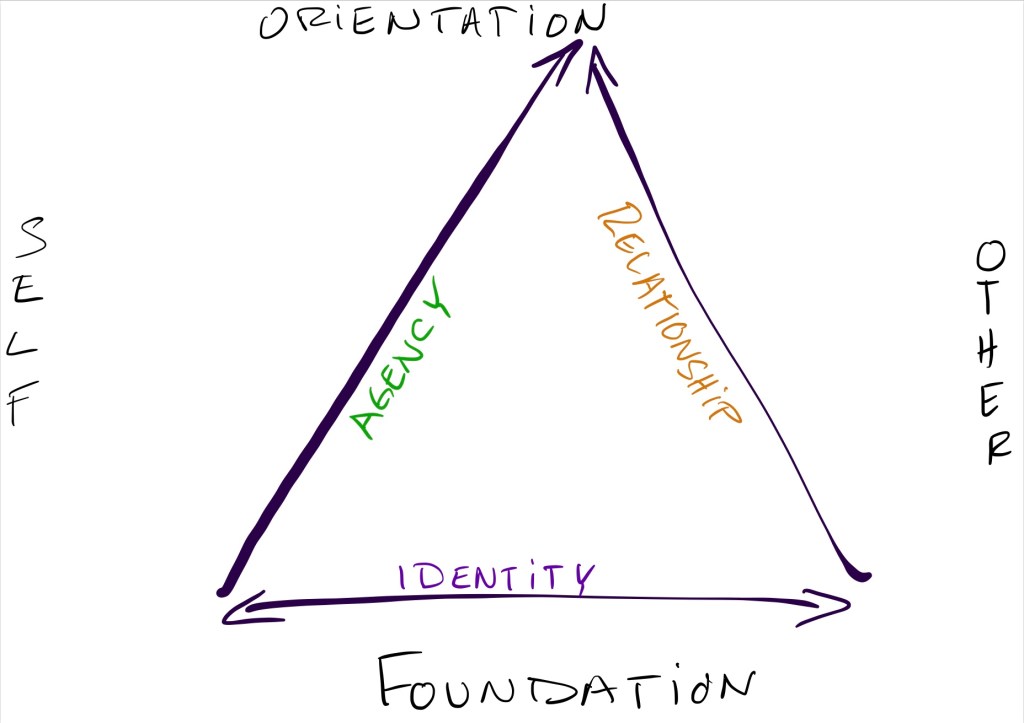

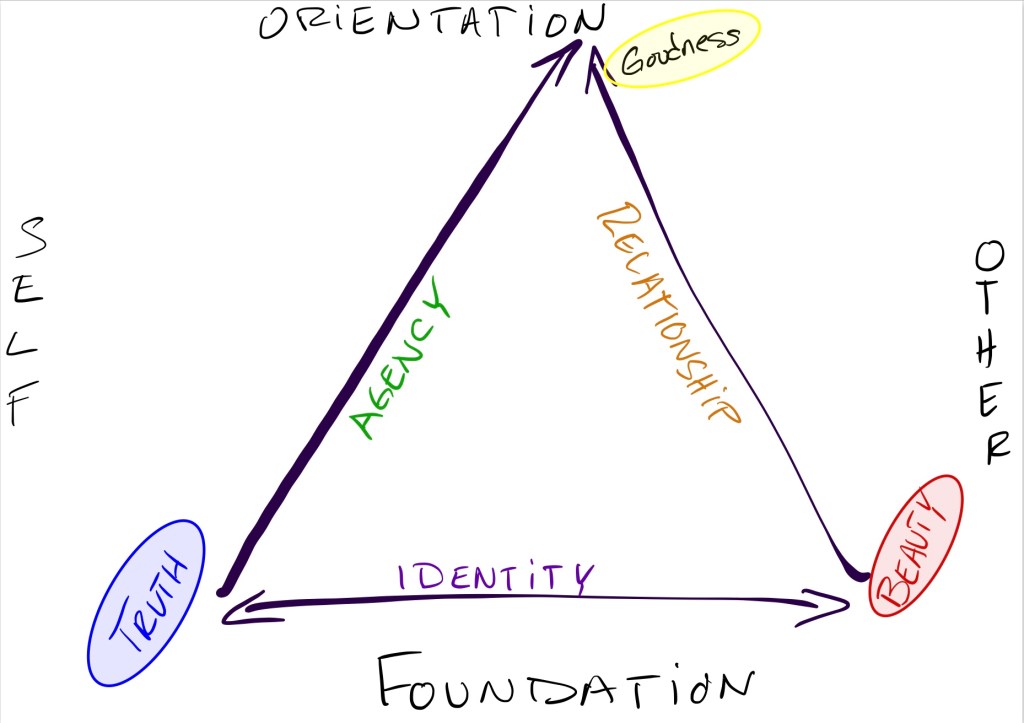
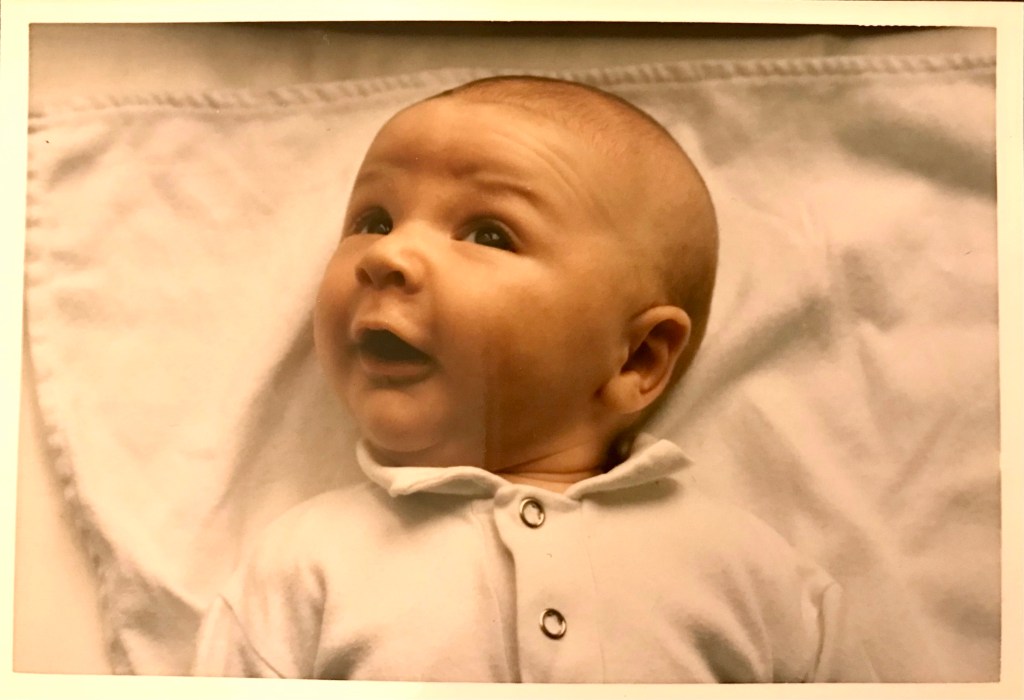


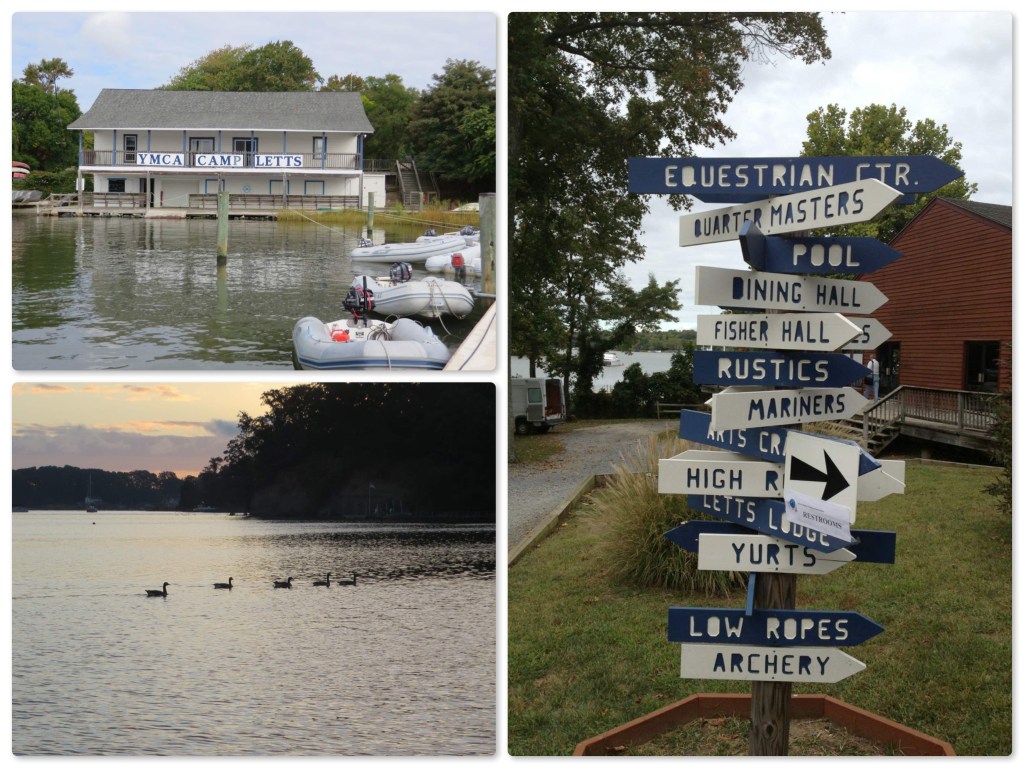
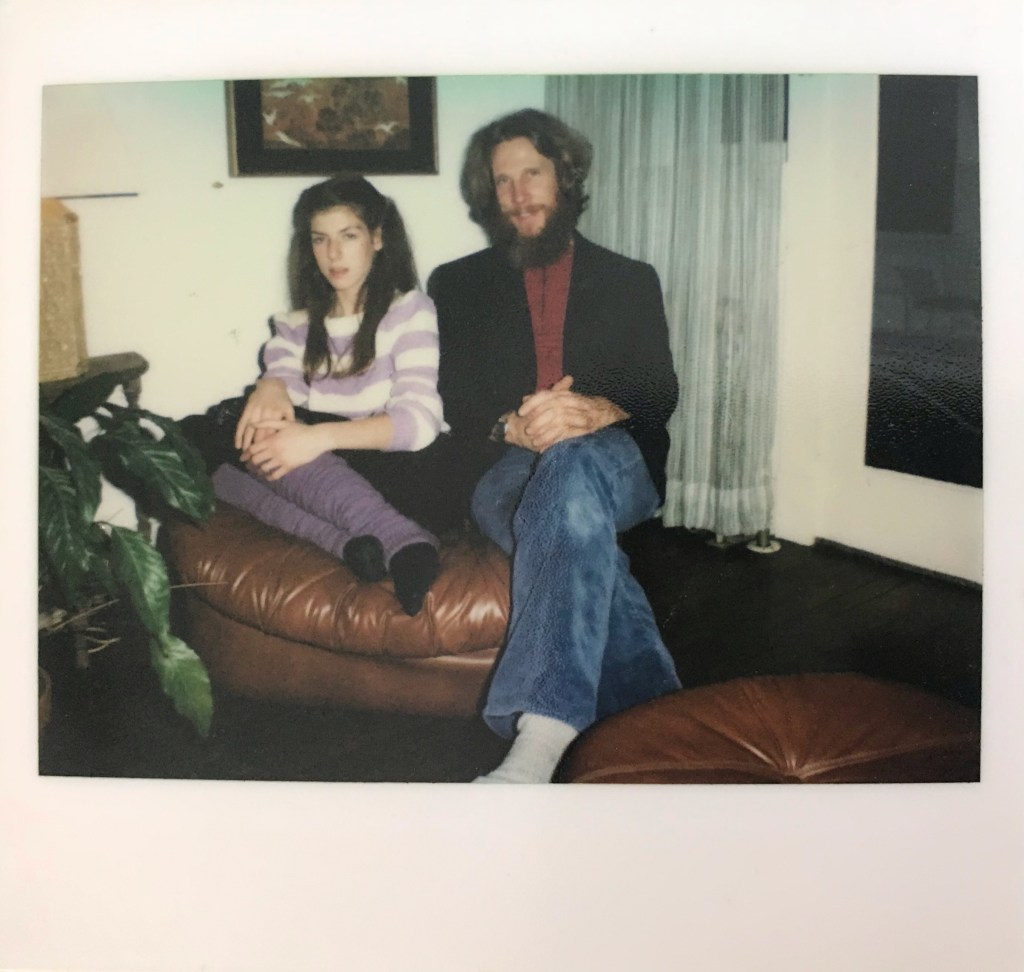

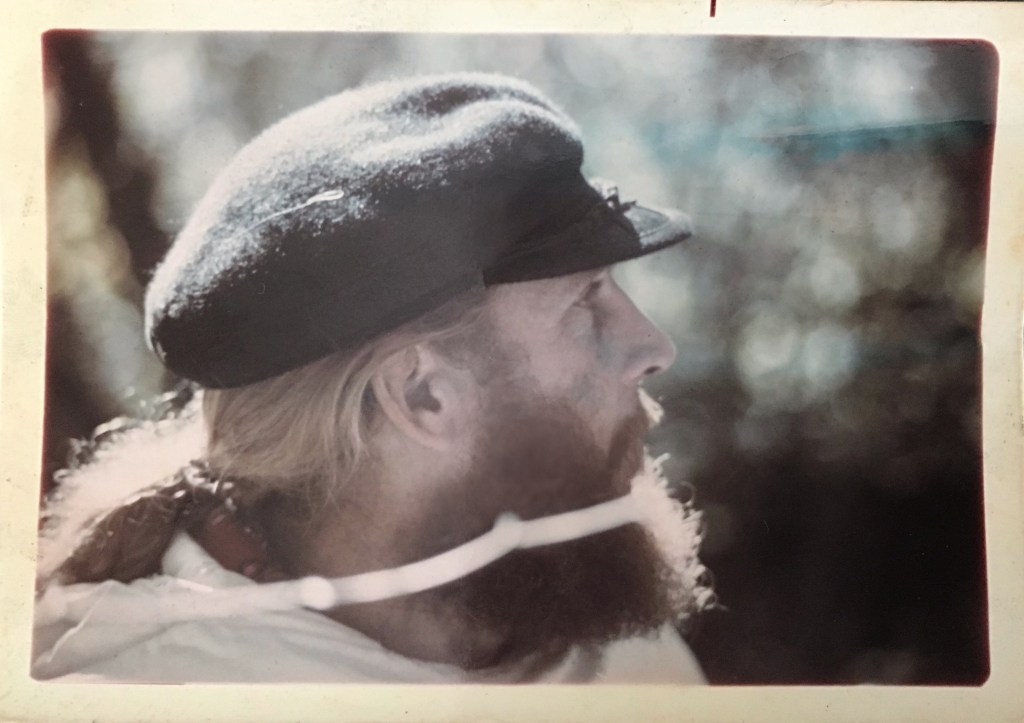


 It Takes One To Know One