Give Them The Big Ten!

The Concentric Rings of Existence

Dear Democrats, for the love of America, give them the Ten Commandments in the classroom! Then spend the time, effort and legal resources you would have spent on that fight to fight against the illegal seizure of our government, institutions, and, foremost, law abiding residents and civilians! I know, I know. Republicans’ insistence on displaying their religious texts in every classroom is one more power grab to assert their ideology and exercise dominance over others. No one is denying the obvious here. But since those religious texts are in the same Bible I read and have studied for my entire adult life, I’m asking you to hear me out on this one for a quick minute.

Not “If” But “Which” Religion Are You?

First of all, I don’t mind being called religious. I don’t mind when Bill Maher or Ricky Gervais make fun of and think they are superior to “Religious People,” or think that Religion is the cause of all war and conflict and every bad thing in the universe.

I don’t take it personally.

This is because I know something they are not yet aware of.

And you may not be aware of it either.

I know that Ricky is Religious.

Bill is too.

And whoever you are readin’ this,

I’m lookin’ at you too!

After near sixty years worth of human interaction on this big marble, one thing that has become unequivocally clear to me is that everyone is religious!

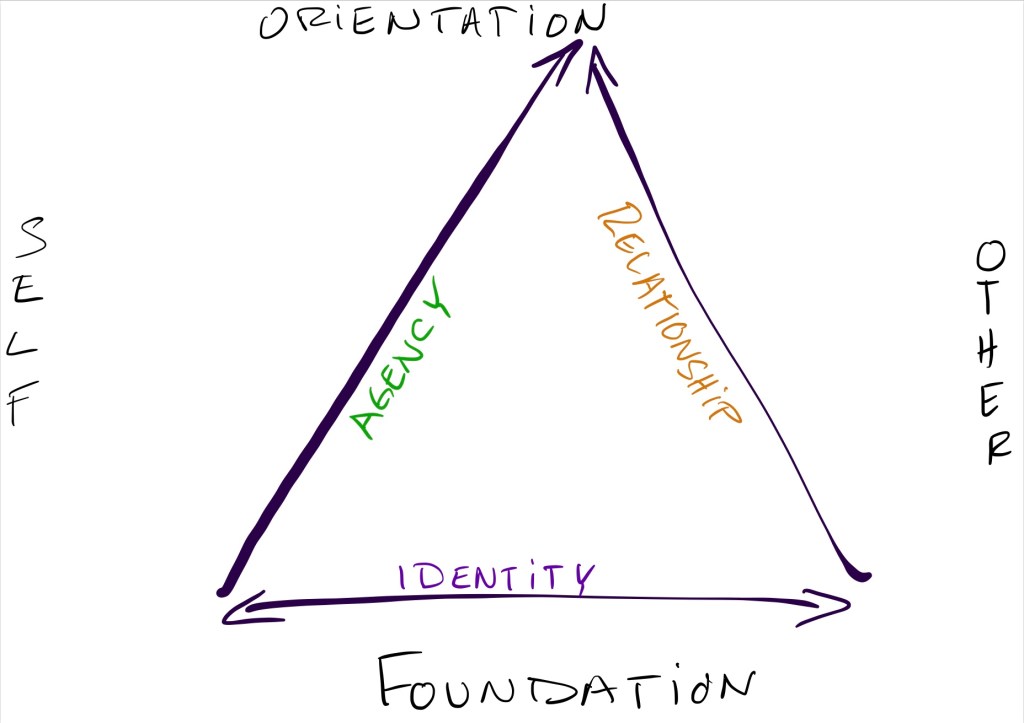
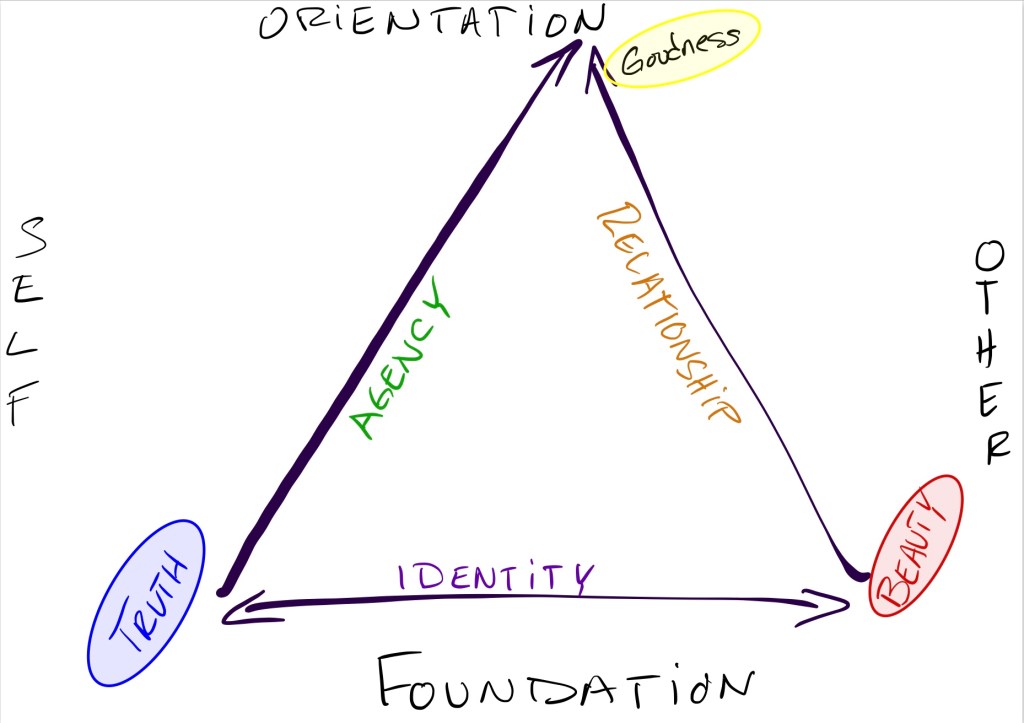
Everyone believes something about the three most basic dimensions of being alive. Either consciously or unconsciously, everyone is operating from some answer to these three questions:

– What is the essential nature and source of my being? (To what or whom do I owe my life?)

– What am I here for? (to what end do I put my effort and resources?) and

– How best can I coexist with all these other beings and things?

Everyone is operating on certain assumptions about these fundamental questions, and the various answers we come up with will create the processing algorithm which metabolizes all the input of our lived experiences and spits out patterns of behavior and ways of being in the world. Those with similar answers to these questions have, over the centuries, unionized and, for better or for worse, used this leverage sometimes for the good of the world and sometimes for selfish gain. But do not be fooled! Those that only have the social capital of one are no less ruled by their processing algorithm, and the world is not necessarily safer because of its singularity and lack of traditional pedigree. In fact, I find that it is the very lack of reflection and transparency about one’s algorithm, the actual answers to these three questions, that makes navigating coexistence such a tricky game of hopscotch. And, as I have learned the hard way, using words like Baptist, Lutheran, Atheist, Buddhist, etc, as shortcuts, doesn’t offer much help either.

That brings us back to the Ten Commandments. Since that third question is all about navigating relationships, ie a moral code (news flash: everybody’s got one), the real question ought to be, “Which commandments have been guiding the classrooms all this time?” In my teacher training, we learned to facilitate the class in a conversation around values and to agree on principles and behavioral expectations for the shared space of our classroom where everyone could feel safe, seen, and valued. These results were then shared in a letter to the parents inviting their input. If that is happening all around the country, fantastic! But it would be misleading to not also share that it was my own moral compass that steered and guided those conversations, influenced the outcomes, and encouraged and enforced adherence to our agreements.

So if I was a teacher in America today, and I was being forced to hang the Big Ten in my classroom, I wouldn’t hesitate to do it. But I wouldn’t just hang them up. I would facilitate a deep discussion on this first ever Declaration of Independence, and see if we might be able to imagine what kind of world this particular algorithm would produce. The result of that discussion might sound something like this:

Background, Context, Purpose: Don’t Leave Home Without ’em!

After getting them to do their own research and group work to understand when, where, and for whom these commandments were written, we would establish together that they were written for a large population of people who had escaped generations of slavery under the rule of a king who claimed to be god’s (Ra) representative on earth. We would discover they had been made to believe their sole purpose on this earth was to increase the security, wealth, and status of his empire, that they had been forced to work without ceasing to satisfy the ambitions of a driven overlord. We would discover that, as a means of coercive control, they had been separated from the source of their true identity and dignity, from both the means and the fruit of their own labor, from each other through divide and conquer tactics, and even, eventually, from their own offspring.

We would learn that the rules they lived by all those centuries, which they were terrified to break, were something along the lines of: Don’t dare question those who claim ownership, authority, and ultimate power over you! Don’t dare make demands, ask for what you need, or express (or even have) your own longings! Don’t dare slack off the pace of production, but rather you must work ever harder to out perform not only others but even yourself! Don’t EVER rise above your station! Don’t dare make a mistake! Don’t even think of conspiring with your fellow slaves to thwart our control! And most importantly, don’t ever speak up for yourself, talk about what harmed you, or bring any negative attention to the system!

We would learn that this group of former slaves would have to spend a long time unlearning these rules before they were ready to govern themselves in a way that they could all flourish both individually and as a whole. They would need a new way of thinking about themselves, their labor, and their relationships. It was during this time that Moses introduced them to the “New Rules for Free People,” otherwise known as the Big Ten.

New Rules For Free People

#1 You shall not have any other Gods before me.

⁃ No one else (man, beast, spirit, lesser god) may insert themselves between you and my infinite, generous, and benevolent self to subjugate and rule over and enslave you. There are no intermediaries to lay claim to and control your identity, your agency, and your attachments.

⁃ This is a declaration of their Freedom and Autonomy within the full expanse of the infinite reality!! This is placing them (us) in the widest possible circle well beyond anything we could possibly conceive of.

#2 You shall not make for yourself an idol (graven image).

you will also not sell yourself short of the full measure of goodness and glory of my infinite and eternal being. No settling for fixed, rigid, and limiting ideas of who you are and what you could be or what is possible or worthy of your strength, effort, and attention.

⁃ Just like no one else may draw a smaller circle for their existence, they should also not do that to themselves.

⁃ This gives them an Orientation for their own growth which is limitless

#3 You shall not take the name of the Lord in vain.

⁃ you will not invoke God’s name (authority) to bully others for your agenda. No borrowing His name to puff yourself up or add to your authority, conceal your real motives & intentions, intimidate & shame others, nor blame “God” when your plans go sideways.

⁃ This lays the Cost and Responsibility for their choices, actions, and outcomes squarely on their own shoulders. They, alone, are accountable for their lives.

⁃ But also, to know that anyone claiming to be God’s intermediary, is avoiding accountability for their own agenda and is using it as an effective tool for social control. To fall for it, is the quickest route to subservience and enslavement.

#4 Remember the Sabbath day and keep it holy.

⁃ A practice of regeneration and re-creation.

⁃ You are no longer slaves and machines, but creators and stewards, to steward not only your own home, garden, and field, but also your body, mind, and spirit.

⁃ No more hustle! No longer slaves to ambition (that horse which will never tire)… neither other’s nor your own!

⁃ This is about remembering Moderation and Sustainability and knowing where our true security, growth, and connection – our Sustenance – come from.

#5 Honor your father and your Mother that your days may be long upon the land which the Lord your God is giving you.

⁃ Honor is about giving weight to something. Understanding its importance and accounting for its significance.

⁃ (Once you are thriving in the land) Do not become complacent or take for granted or despise the life and inheritance (total package) you were handed, no matter how small or comparatively insignificant it may be, but instead

⁃ Appreciate the Source of your life , the obstacles that were already overcome so far to get you to this place (i.e. leaving Egypt and through the wilderness), and

Redeem it – create something meaningful and beautiful out of whatever it is you have to start with, no matter how meager that may be! Make it count!

Become worthy of this one precious life they gave you!

(These first five of the commandments make it clear that we are the ones who are ultimately responsible to grow our own tree, and that we owe no one an explanation for our existence, nor do we need to ask anyone’s permission to grow without ceasing in this world of infinite abundance.)

#6 You shall not murder

⁃ Shall not take a person’s life, Separate their body and soul.

⁃ Whether it is the quick killing of the body, or slowly draining the life out of the soul (soul sucking job), or any of the many ways in between.

#7 You shall not commit adultery

⁃ Shall not take, come between, Separate a person from their partner, their collaborator, their most intimate and fruitful relationship, and thereby

⁃ Disrupt the very foundation of the life and future they are building together. We must remember that this is about more than just a “romantic” or even intimate relationship. Families were an entire survival eco system, working together for their shared prosperity. Adultery is a hit at the innermost core of this necessary network, wreaking havoc on every area of the entire system.

#8 You shall not steal

⁃ Shall not Separate a person from the fruit of their labor and creation nor their means of survival and flourishing.

#9 You shall not bear false witness or testify against your neighbor.

⁃ Shall not Separate a person from their community through blaming, shaming, stigmatizing, and dishonoring. A behavior that begins already in kindergarten, and is wielded to great effect by every system of control and empire ever built.

#10 You shall not covet your neighbor’s house, wife, male or female servants, ox, donkey, or anything that belongs to your neighbor.

⁃ In my imaginary classroom, we could spend most of the year talking about just this one commandment. It is amazing to me how it so perfectly brings us full circle to the beginning, and addresses the heart of where all the problems begin.

⁃ You shall not covet your neighbor’s relationships, resources and power to effect change, nor their means of production, nor anything at all that belongs to someone else. I would get my class to make a long list of things that other’s have that we might want for ourselves, like Titles, Reputation, Good looks, Intelligence, Glam & Bling, Health, Abilities & Talents, Luck, Pedigree, Armies & Weapons, Mobility, exotic vacations, attention & accolades, their validation, admiration, and approval of us

⁃ Or summarized, their Security, Prosperity, and Stature nor the (ill-gotten) means by which they got them.

Lost in Illogical Translation

I can see how casting only a side glance at this last commandment, one could possibly jump to some wrong conclusions. I was taken aback, however, to hear even someone like Yuval Noah Harari, who is otherwise known to be deep thinking, astute, and articulate, make one of these superficial assumptions about this commandment and, by doing so, flipped the whole meaning of it on its head. In one of the worst cases of not only logical fallacy, but also failure to understand the context, Harari, on Bill Maher’s talkshow no less, makes the claim that because this commandment does not outright forbid slavery and instead only the coveting of slaves, it is actually not just condoning the practice of slavery, but, he claims, “endorses” it! He makes this point in support of his larger argument that the man made American constitution is a better example of a unifying text, since it can be amended and adapt to the times, in contrast to the Big Ten, which cannot, since they are a definitive declaration from an immutable God. Thus a constitution can eventually be amended to outlaw slavery altogether, where as the Bible cannot and never does.

To Harari’s misinterpretation we can add another possible and far more logical one. It is anyone’s right (and I believe duty) to ask of such a Verbot, “whom does this serve?” And it would be a far more reasonable assumption than the one that Harari makes, to see such a command as primarily serving the wealthy and powerful, acting as a kind of spiritual e-fence to protect their power and wealth from those without any, by declaring the latter’s discontent a moral and spiritual failing. I have much more sympathy for this argument than Harari’s, and can see how an isolated reading of the text by a beginner might lead someone here. But for both, these assertions come from taking the text out of its immediate and larger context, for which a beginner can be forgiven. I would have expected more from Harari.

Harari’s glaring leap in logic is so obvious in fact, that when I asked Chat GPT for the name of the logical fallacy (just checking my bases here) of inferring a positive from the absence of a negative, Argument from Silence and Negative Proof Fallacy, Chat GPT used Harari’s claim about slavery as a textbook example of these fallacies without my having even brought up this case! Add to these the False Dichotomy or False Dilemma fallacy (assuming there are only two options, discounting the possibility that something may, in fact, be neutral, irrelevant, unaddressed, or something else entirely), and you may understand why I am seriously considering removing Homo Deus from my “To Read” stack! If you need any further proof that Harari’s assertions are not only unoriginal, but have been refuted for millennia, you only need to ask Chat to give you a list of that long tradition of Rabbinical and Church fathers’ teachings who have already made any argument I could make here.

But the, let’s call it, “Opiate of the People” argument, does actually force us to dig a little deeper. Does the tenth commandment keep people out of slavery, or does it simply keep them from complaining about their own disenfranchisement? To answer this question, as well as Harari’s assertion, we must remember what we started off with, namely, that the Ten Commandments are not an arbitrary laundry list of clean and dirty behavior. It is an answer to the three basic questions we posed at the beginning. It is code for an Algorithm meant to give autonomous human beings a relational pattern to best coexist with other autonomous human beings, an orientation for where and to which end to best invest their resources and labor, and a measure for how to place and assess themselves in the larger scope of things between where they have come from and where they are headed which best accounts for their true nature.

And to understand the essence and thrust of this algorithm, we must remember the context in which it was given.

⁃ These commandments were not given to Israel after entering the Promise land, after their first victories, at the height of the Davidic Kingdom, nor even upon their return from exile. They were given after escaping slavery in Egypt!

⁃ They were given by Moses, who chose to leave the position and wealth he had in Egypt for a counter-cultural narrative, an entirely different algorithm!

⁃ These ten commandments were written for a people who had never known freedom, did not even know what freedom was or looked like or felt like, and indeed, were already confusing it with licentiousness by the time Moses came down the mountain with the tablets. They were written for those who only knew of two kinds of people: those who were slaves and those who had slaves. This commandment is telling these former slaves who had spent their lives dreaming of being the other kind of people, that there is, in fact, a third option, to be the kind of person who does not rely on the stolen labor of others for their own flourishing.

⁃ To say that the commandments “endorse” slavery because it does not explicitly forbid it in name, or that it guards the Haves from the discontent of the Have Nots is to miss the whole point not only of the tenth commandment, but of this entire Decalogue!

All ten commandments are solely and entirely about keeping them out of slavery…both being enslaved and enslaving others!

It all ends (and begins again) with the tenth commandment

It is not enough to say that coveting (desiring, setting your heart on, lusting after) is what leads to these other behaviors listed in the previous commands and, being the root of the thing, is therefore problematic. Many people covet who do not kill nor steal. It is actually much worse than that.

In the very act of desiring and craving what belongs to and is within someone else’s influence, we abandon and leave defenseless ALL that is within our influence! We are literally investing our attention, imagination, emotional and cognitive energies into what our neighbor has already grown, (or stolen, extrapolated, or extorted), rather than investing those essential resources into the growth and flourishing of all that is already under our agency. We are in a real sense emotionally and cognitively squatting in someone else’s life rather than fully inhabiting our own life. This not only makes us an intruder where we are not wanted, but it also means we are absent from the one and only place we need to be, and where we are sorely needed to nurture, protect, and elevate what does belong within our province. Coveting what our neighbor is or has or does is at its core self-abandonment and betrayal.

With our own lives unguarded in this way, we ourselves become vulnerable to marauders. Those predators that would vandal what we have left unattended, plant weeds where we have failed to plant a useful crop, and auction off to the highest bidders what we have deemed not worthy enough for our investment. And piece by piece, we lose the sovereignty over our lives, since the fastest way to give someone control over your life is to want what they have.

Becoming and Unbecoming a Singularity

But even more profound and disturbing is the trajectory and ultimate objective of this insatiable appetite. The command does not forbid the Israelites from desiring and wanting good things: a place of one’s own, collaborative and intimate relationships, to enjoy the fruits of one’s labor, or even to create and possess beautiful things. Indeed, it has been God’s promise up to this point to give them all of this in the promise land. What it says is to not covet these things that belong to someone else! In other words, to allow the kind of good things which we want for ourselves to also belong to others, to allow for some to remain outside of our province and control. This command counters an internal FOMO, an urge to possess every good thing we encounter, to consume it, ascribe it to ourselves, control it, and make it work to our favor and advantage, and if we can’t, to diminish and destroy it. We would carry on like this until we were singularly in possession and control of all there is that is desirable, having become devouring entities that can allow no good thing to exist outside of our own dominion. (Eve, David w/Bathsheba)

This is the exact opposite of the very nature of the God described in the first two chapters of Genesis, who, while already existing as a singularity of all that is good, created autonomous beings with a will of their own they were free to excersize outside the bounds of divine control! Coveting is the very antithesis of the divine drive to share the abundance of existence with others whom it chooses to know intimately and collaboratively as autonomous beings rather than control coercively as subservients.

Coveting is an outside in movement, where genuine growth and development is an inside out job. The one becomes an all engulfing vortex, a soul sucking, life suffocating, bottomless black hole which drags down and enslaves resources, people, communities, and whole societies into feeding its monolithic structure. Genuine sovereignty, on the other hand, seeds, waters, prunes, and releases what it has grown from within itself, networking with other willing sovereignties to create a thriving and diverse ecosystem.

These second five commandments let us know that our growth may not come at the expense of someone else’s existence. Beginning at the inner most ring of a person’s being (soul/body) and working its way out to intimate partner/co-founder of family line, then to the fruit of their creativity & intentions & labor, to finally their place in the wider community, these address in order how a person is rooted and grows in the world and their inalienable right to also make the most of whatever they were given.

Conclusion

The Israelites still bore the scars on their bodies, in their minds, and in their souls of that first insatiable and brutal algorithm, the commandments of slavery. Now that they had escaped it, they were being asked to place their faith in an entirely new algorithm. A reordering of relationships which challenged them to become personally sovereign without becoming controlling overlords, to embrace their freedom as well as the responsibility that came with it, to transform and multiply what they were given instead of subtracting and extracting from others, and to have a sober understanding of who they are by appreciating both where they had come from and just how far the road stretched out ahead of them before they would ever cross the finish line of moral purity.

Slavery has no place in this algorithm.

Seeing that these Rules for a Free People are antithetical to the whole direction the Republican Party is taking our country, it is hard for me to see the upside for them in having the Big Ten in every classroom. But if that is what they want, I think we should give it to them. I think every child in America ought to discover for themselves just how shamelessly these charlatans are playing by an entirely different set of rules than the ones revealed to keep us all free.

To Forgive or To Forgive…

“I will always be guilty,” he said matter of factly. “Nothing changes that.”

I have forgotten the exact question I had asked him. Maybe I had asked if he felt God had forgiven him or if he could accept that he had been forgiven, or something that, even then, felt silly the moment I heard the sound of my voice. Alistair Little was not a man who couched or minced his words, nor did he let euphemisms do the heavy lifting when talking about his past. Little’s story can be read in online articles, his book, “Give a Boy a Gun,” and seen in a film starring Liam Neeson (as Little) and James Nesbit, called Five Minutes of Heaven. When he was a 17 year old UVF member, the man having lunch next to me at this peace center in Northern Ireland had shot a catholic man dead in his home. The victim’s younger brother, who had been playing in the street, saw it all through the window. It was a terrible trauma and eventually dissolved that whole family. Little served twelve years of a life sentence as a political prisoner, and since his release, has been doing the work of reconciliation among victims, survivors, and perpetrators of political conflict in Ireland and abroad. Our paths converged when I had the privilege to take his and Wilhelm Verwoerd’s workshop as part of my M.Phil. in Conflict Resolution & Reconciliation.

This memory resurfaced as I have recently had reasons to have a good hard think on the word forgiveness and how often it is used in a number of different ways that, in my view, undermine its real meaning. More often than not, it is this misunderstanding of what forgiveness is and isn’t that actually gets in the way of healthy boundary setting and real, wholehearted reconciliation. Living amongst a flawed human race myself, I cannot escape the need to forgive and, truth be told, be forgiven. So, it serves me well to take stock if I am dealing in the genuine article, or if I have been duped by one of these counterfit versions of forgiveness. Little’s transformative journey from committing a heinous crime to being a force of nature for reconciliation could not have happened without forgiveness, even if he may not even use that word, and the memory of my encounter with him comes up just in time for his story to serve as a good ‘authentication tool’ against which to compare these pseudo versions of forgiveness.

Pseudo Forgiveness

These substitute usages of forgiveness apply to both the forgiveness we are offering as well as the forgiveness we ask/demand of others. Here is a short list: Forgiveness as a…

Get Out of Jail Free Card: Of course this is probably the most common and the most obvious miss-use of the concept. Probably since Constantine, humans small and tall, from our very own children all the way up to mega-church pastors, have effectively been pulling out the forgiveness card when caught in both minor and severe transgressions. The person who is quick to invoke this core Christian duty usually has had too little time to actually have even begun a truly transformative paradigm shift. Being more concerned with the likely consequences of their actions, a plea for forgiveness can be a pragmatic tool to bargain a person’s way out of any social, financial, or physical pain which may be coming their way. Forgiveness becomes a magic eraser which disappears any logical, natural, and causal lines connecting behavior with negative outcomes. Besides doing absolutely less than nothing to move the relationship needle toward genuine reconciliation, this Get-out-of-jail-free-forgiveness, if granted, robs the user of one of life’s most valuable learning and character development tools: the pain of consequences. Any wisdom any of us have has not come purely from theory and book learning. We have gained it the hard way, through trial and error, through experience, through the hard knocks of bad choices. Taking those knocks away from someone obstructs the growth of wisdom, character, and maturity and is likely to breed entitlement instead.

A Muzzle:. “Why can’t you just forgive and forget. Why can’t you just let it go?!” When we say this to someone who is calling us out and asking us to do better, we are leveraging forgiveness as a mouth gag to anyone who would want to hold us accountable for our actions. It implies that bringing it up at all is already a failure to forgive. When we say this to someone, what we are really saying is that we want them to privately do all the work to reconcile our differences. We don’t want to know anything about it. Behind this is the need to remain flawless in our own eyes, so if someone has a beef with us, it can only mean that they are unforgiving (if you are a christian) or intolerant (if you are a liberal). But beyond that, both the core teaching of forgiveness in the Christian tradition and the core value of tolerance in Liberal Humanism are often wielded as extremely effective tools to squelch dissonance and maintain dominance and control in social/political groups.

A Witness Relocation program: For those who procure this kind of forgiveness, it means not only do they get a whole new identity (“You are a new creation in Christ”), but also they receive a whole new back story! Not only are we no longer one who cheats on their wife, commits murder, or skims from the top, but we never were that person! In this way of understanding forgiveness, being forgiven means we get to tear out all of those unflattering pages and snap-shots of our story, put them through the shredder, and just leave the wholesome, flattering, respectable bits in. They are never to be spoken of again. They are the “sins” that shall not be named! In groups practicing this understanding of forgiveness, everyone is a generic sinner, “the worst of sinners” actually, but no one has ever even made a single, concrete, nameable mistake, let alone done anything that would put a speck on their wholesome, respectable, good christian/good liberal image. They all just slipped in through the side door and took a seat in the back pew as if they had been among the saints this whole time.

In the new gender-cult, there is a similar dogma called “dead-naming.” Here it is not only the person transitioning to a new identity who hustles to keep their past identity on the down-low, but the entire community and world around them that must be forgiven for having gotten it wrong to begin with! It is everyone else who must delete every possible trace of a person’s pre-transition selves from our memories, perceptions, and experiences, if we want any crumb of relationship with them going forward. In both cases, the past identity is whitewashed of everything a person finds intolerable about themselves and is unwilling to integrate into a new, shiny, and allegedly more worthy identity.

A Jack-in-the-Box: Being in a relationship with a person practicing this kind of forgiveness seems too good to be true…because it is too good to be true. This person appears to have the capacity to overlook (forgive) (tolerate) all of our shortcomings, annoying habits, Faux pas’, and even more serious transgressions. This person can seem to be the model of tolerance right up until you have to draw a boundary or ask them to do better in some area. Immediately the music stops and, BOING!, out springs this very ugly, unflattering version of you marked and blemished with every-single-thing-you-ever-did-or-didn’t-do that hurt, disappointed, or irritated this person at some point in your relationship with them. My brother calls them, “Whatabouters,” because if you ever bring up something that bothers you about their behavior, they counter with, “Well, what about when you…” (full discloser: my brother and I did this with each other for years while we were growing up together, and I can neither confirm nor deny that my husband and I have done this!). As it turns out, they were not even in a relationship with you this whole time, but with this simulated-monster of you they kept to themselves – and everyone else they would show it to except you. In this way, they would never dare risk loosing your favor by speaking up for themselves, but all the while in their own mind, they maintain a steady sense of patronizing superiority and hold you in private contempt and maybe resentment. … that is, until you break the “contract” and BOING!

The “Free Zone”: In the game Capture the Flag, each team has a designated side where they hang their flag. The goal of the game is to be the first team to capture the opposing team’s flag (which is supposed to be visible and accessible). Only to do so, a player must venture onto the opposing side of the field/landscape where they run the risk of being captured and “imprisoned.” To get free again, another teammate must tag them, thus risking their own freedom. Team members are only safe on their team’s section of the field or in the designated “Free Zone” in-between the two sides. There are always players who hang out in the free zone because they are either afraid of getting caught, if they move into the ‘home territory of the other team, or they are afraid someone might steal their own team flag, if they do not patrol their home border.

Of course the game is only fun if all the players are willing to take risks, and it is not really worth playing at all, if all the players just hang out in the free zone. But this is how many people live relationships. In these groups, Forgiveness or Tolerance is this “free zone.” Here, only safe topics are allowed, the kind that do not cause any tension at all. This, by necessity, excludes most of what truly matters to people: religion, politics, values, struggles, our vision for how things could be. The “flag” of their true identity is safely hidden away on their home turf. If someone behaves in a way that is or seems unacceptable to someone, it is not discussed in the free zone. It is brought behind the line to our home-side of the field and tallied there against the other team without the offenders knowledge. The game is just one very long stalemate, with at least some players hoping that the tally will fall in their favor when the game is “officially” scored at the very end.

This is the cowards version of forgiveness (or the liberal’s Tolerance). It is not based on generosity, but on mitigating loss, competing morality, and image-protection. It is peace without justice, which is no peace at all. In this Free-Zone there is a lack of wholehearted integrity, a lack of growth, and little if any movement toward mutuality, true collaboration, and intimacy. Instead, there is just light entertainment and a polite, superficial, and often unspoken agreement to stay clear of any topic that creates tension or calls into question our own or someone else’s flawless Avatar.

It takes courage to wade deeper onto the other’s ‘home field’ in generous candor to say what we really think and feel about the impact they are having on us and to get to the “flag” of real, authentic relationship with the actual person behind their projected, idealized image. And it takes courage to let others onto our home field, to let them see our scratch-pad where we are still working things out before we deliver a more palatable version of ourselves to the free zone, and to also hear what impact we are having on our community and world.

None of the above scenarios are what I would call true forgiveness or tolerance, and whether we find ourselves on the receiving end or the granting end, they do not do the job that real forgiveness is needed to do. In actuality, all these tactics are just your standard ole Conflict Avoidance masquerading as forgiveness/tolerance. In one way or the other, they are simply another means that we try to avoid one or more of the Big Three nuisances of being human: Responsibility, Limitations, and Discomfort (pain, loss, effort) and the inner conflicts that they create for us while living in a world where everything is so unlike us in all too many ways that matter. For conflict avoiders, it is more often than not the fear of losing favor with others (to not be good in their eyes) which is in the driver’s seat, and so they fall into a pattern of ignoring or masking their own limitations (boundaries, insufficiencies, wants, needs, values, purpose), while also shouldering responsibilities that belong to others and/or dodging taking 100% responsibility for themselves and the impact they have on their community and the world (blaming, excusing). But none of that sounds very nice, so it gets dressed up as forgiveness/tolerance.

I don’t mind telling you that I have lived for far too long in relationships on both sides of this kind of conflict-avoidance-forgiveness-tolerance, and I can report back that it is a cheap knock-off of the original! But buying into these street-vender versions of forgiveness is much worse than buying a fake Birkin bag. When we forgo engaging in the conflict necessary to practice real forgiveness, we miss out on the three most valuable things there are: Our Integrity, our growth, and movement toward mutuality and intimacy with others. So, for me, in any and all of my relationships, doing conflict has become a non-negotiable.

The Real Thing

Alistair Little is, of everyone I have ever met, a No Bullshit guy. I experienced more candor in that one week workshop than I had ever experienced in most of the long relationships I have had, some of them for almost my entire life. And how could he not be? When working with tough-as-nails, Irish ex-combatants who had suffered tremendous loss at each other’s hands, one cannot tip-toe around the bloodshed. Polite & Superficial aren’t going to deliver reconciliation. Alistair may or may not have used the word forgiven to describe himself, but his answer to me that day clearly indicated that he had not been duped by the knock-off version of it. “I will always be guilty.” “Nothing will change that.”

Guilt is just a shorter word for responsibility. It is the responsibility for the past, what we have done and left undone. In other words, he was saying that forgiveness does not absolve him of the responsibility for what he had done. “I will always be guilty.” It is a simple statement of fact without any emotions necessarily tied to it. He murdered a man. That will always be part of his story. An act that has far reaching ramifications into the future.

To acknowledge my guilt means I continue to take responsibility for my past and present self, no matter how unflattering or truly awful it may be, by owning it and transforming it into something meaningful and beautiful for community. That is a job that never ends. And I would say Alistair Little’s life is as good of an example of this as I have ever come across. His acceptance and integration of his past, his ongoing transformational growth, and his offering this wisdom and insight in generous candor for the service of healing the environment that had seeded his own violence are all the evidence I need to know that he is dealing in the genuine article of forgiveness.

How it Works

I think mostly forgiveness is thought of as letting go of negative feelings toward someone (and this someone can also be ourselves) who has harmed or disappointed us in some way – feelings of grief, resentment, irritation, animosity, anger, vengeance, contempt, or dread, for example. But I have wrestled with some of those feelings in some relationships for many years and have thrown everything at them, including the pseudo-forgiveness’s I’ve listed above, only to have these feelings compounded rather than diminish. I have come to suspect that it is a fool’s errand to keep trying to dissipate emotions while ignoring what it is exactly that is causing them. Like trying to relieve the pain of a blister while still wearing the shoes you love but that are simply too small. Those feelings tell us that something is amiss in a relationship, that there is a disconnect that is compromising either our integrity, our flourishing, or our need for meaningful connection – or all of the above. This disconnect will have to be addressed if we ever hope to have those negative feelings dry up or, better still, transformed into empathy and compassion.

In this light, forgiveness is not an act of letting go of our negative feelings toward the other (the painful blister), which I believe is not possible anyway, but an act of letting go of our fantasy about the other as well as the fantasy about ourselves. To let go of the fantasy about the other is to let go of the idealized image that we have of who they should/could be to us or how they should have behaved (a shoe that looks good and fits comfortably!) but fail to live up to. This image can be what they project and want us to believe about themselves (The Wizard of Oz), or what we project onto them (Nate’s Ted Lasso). To let go of the fantasy about ourselves is to let go of the idealized image of ourselves as being more magnanimous than we are (Grandiosity). It means letting go of the idea that by performing forgiveness and tolerance and inclusion for people whose behavior toward us consistently demonstrates their lack of interest in who we actually are, their need to outdo us (in status, achievement, or even morality), and how little we matter to them and factor into their priorities, we can somehow manage to win them into a relationship where we finally feel seen, supported, and included. Ironically, the more magnanimous and inclusive we strive to appear, the smaller our actual selves become, since it is only through self-betrayal (denying our limitations), self-diminishment (staying small), and self-exclusion (staying silent), that we are able to maintain the farce of community.

So, in forgiving someone, and even ourselves, we are letting go of the fantasy of who they (we) ought to be and acknowledging the reality of who they are and what they are actually capable or willing to offer us. We accept not only the limitations, inability, and/or unwillingness of the other to meet our needs, wants, expectations, and boundaries, but also the space (gap) which that inevitably creates between us! It does not fill that space with more effort, skilling up to better defend ourselves or disarm the other, coddling, badgering, pretending, exceeding/ignoring our own limitations (boundaries), a continuous shouldering of the other’s responsibility, or resentment, hellfire, and fury. In other words, forgiveness relinquishes the insistence that the other be something they are not yet, and may never become, while also maintaining the integrity of one’s own identity by not trying to fill, erase, or ignore the space created between those two realities. It is only once we have done this, that we are able to appropriately redefine the relationship in a way that no longer compromises our integrity, limits our growth, nor cheats us out of meaningful connection.

This space which gives us all room to both acknowledge and transform who we really are, some might call the Growth Mindset. I call it a guilt/grace paradigm, and it is the practice of forgiveness which unlocks that space for us and for others. This practice of forgiveness, which acknowledges and allows for the gap between where we actually end and where they actually begin, recognizes and honors both our and the other’s worthiness and dignity to exist as imperfect, not fully matured human beings, it holds each of us responsible for our own limitations as well as our transformational growth, and it invites the other into an authentic, better quality, and mutually satisfying relationship. Forgiveness stands with arms open wide as an invitation to the other to recognize our worth as the reality (boundaries/limitations) we are, share and pursue values that will enable us both to flourish and grow to full maturity, and to move toward mutuality, collaboration, and intimacy with us.

But this is not yet reconciliation.

Forgiveness is only the invitation.

Reconciliation can only happen when that invitation is accepted.

Below I’ve tried to illustrate what this looks like to me:

Forgiveness :

When we are forgiven it…

  • Changes the future not the past
  • Releases us from retributive punishment & condemnation (contempt) for our choices, not from the consequences of our choices
  • Frees us from being limited to our past not from the responsibility for that past

When we forgive we…

  • …Open the possibility to create/restore authentic relationship (each as they actually are), not idealized images & shared fantasy
  • …Cancel an unpayable debt from the past as an investment in a generative future (either together or apart!!), we do not keep upping the anti on a losing hand!
  • …Relinquish the insistence that the other be something they are not yet and may never become, while maintaining the integrity of one’s own identity by not trying to fill, erase, or ignore the space/difference created between those two realities.
  • …Keep the path clear and open for the other to grow into a person of wholehearted integrity who respects our boundaries, shares our values & purpose, and wants meaningful connection, instead of canceling for good those who have failed us. (Murdering someone in your heart = dead to me)
  • …Have an inner attitude of Standing with arms open wide in generous candor as an invitation to the other to recognize our worth as the reality (boundaries/limitations) we are, to share and pursue values that will enable us both to flourish and grow to full maturity, and to move toward mutuality, collaboration, and intimacy.

Wrap up…

Forgiveness does not erase what we or others have done or left undone (if it did, we wouldn’t have a Bible at all!). It does not pretend that wrong doing never happened or that it does not elicit a strong emotional response in us. And it is not a vow of silence that must be kept to protect someone else’s image and reputation. It is not a Witness-Relocation Program nor a Get-Out-of-Jail-Free Card. Rather, forgiveness is the open window which lets the fresh air and sunlight in, giving us the space and visibility to begin exactly where we are to name the mess for what it is without fear of condemnation and retribution. In this Guilt/Grace paradigm (Growth mindset), I do not have to be forever stuck being the worst version of myself, living under the fear of exposure, shame and pay-back, nor do I need to spend valuable resources keeping my flaws hidden behind a perfect image. Rather, I know my limitations, mistakes, and ugly moments (and those of other’s) can be transformed into something that is generative and connective, when I acknowledge them and integrate them into the story of who I am, do what I can to regain trust wherever it has been broken, and invest my energies into creating a more just and beautiful world.

Dear Trans Ally,

(This is carried over from comments on a facebook post)

Hi again Ben! Thank you for engaging with the post and even more so with my comments. I really appreciate that.

First, I want to say that it sounds like you know personally and care about trans identifying people. There cannot be enough of that in the world, so that makes me glad to hear that you are willing to carry their concerns in this way. I too have a trans person in my life, who, though we seemed to be estranged at the moment, still matters very much to me and whom I care about more than I care about most people in the world, and it grieves me deeply and has cost me a great deal to be in conflict with them. It is because of this person that I began paying attention to this issue in the first place.

You make several points in your comment, many of which, unfortunately, I must contend with. I thought it easiest to just go through them one by one here on my blog, rather than over tax the comments on facebook. I hope that is ok!

1.) Ben: I, as I noted, live in the SF Bay Area. As a result of living here I have had the chance to know and be friends with many trans-women and trans-men. Not one of them that chose to share their story with me had reasons for transitioning anything like that.

Lee: No doubt every Trans identifying person has a unique story all their own, and I am sorry if anything I have said has led you to believe that I know or question the motives of Trans identifying people as a whole for making what I can only imagine are the most excruciating kinds of decisions a person can possibly make. That is in no way my intention when I criticize self-id specifically and queer theory in general.

But it is necessary to point out what the real-world consequences for women and children are when those who advocate self-id drill down on the misnomer that “Trans women are women,” and then insist that this means no door can be closed to them. There are many trans people who are just as appalled at this development, but unfortunately, ever more men (dysphoric or not) are taking the new, politically correct mantra to its logical conclusion ad absurdum. Sports, prisons, shelters, hospitals, changing rooms, quotas, criminal statistics, to name only some of the areas effected.

2) If you believe science points to a binary system of sexuality you are definitely not reading the same articles I am. From what I have read both biological and personality traits related to sex and gender exist on a spectrum, not within a binary. Yes most of us express within the binary due to biological averages and societal pressures but definitely not all of us.

2.)”Not reading same science”: where have I heard that before? Oh, yeah, climate change deniers, creationists, covid-deniers, and flat-earthers.🥴 Of course this kind of statement pulls the plug on any dialogue. To simply claim a “different science” as an authoritative voice to again try to silence legitimate questions and concerns. Science has and still does acknowledge only two sexes. I won’t dive into the actual science of sexed bodies (Brett Weinstein & Heather Heying, evolutionary biologists, do that better than I can in their book “A Hunter Gatherers Guide to the 21st Century,” as does Helen Joyce in “Trans.” My point is that THIS has been and IS the accepted science, and until there is sufficient, broad-based, independently peer reviewed reasons to over-turn it, which certainly has happened in the past in many areas, I, nor is anyone, obliged, nor likely, to suppress the overwhelming amount of salient reasons to keep the categories male and female as they are, as strictly describing biological bodies (which can be objectively verified) and not inner feelings (which cannot). Again, it is a most useful category, has considerable social, reproductive, statistical, and medical implications, and is one that I believe does more harm than good to erase.

What I believe it is less helpful to do is to attach extremely narrow, role-specific, and confining behavioral definitions to our sexed bodies, and then to blame a person’s body for not aligning with that stereotype. This is, and has been, the main tenant of feminism. I think Queer theory is making a confused jumble out of several different kinds of categories: the physical realities we all face (as healthy/normative & non-normative); the force of sex-roles in evolution; impossible, idealized stereotypes; hyper-sexualization of our culture; personality traits (as listed by either the big 5 or Cloninger’s 4 habit systems for example); Character (again, see Cloninger, Seligman, the Stoics, or just about any religion); the process and states of becoming/being an adult/not yet being an adult; individuation & belonging vs non-conformity & conformity (cynicism / group-think); Extroversion vs. Introversion; self-ideation (narcissism) vs self-transcendence (having values far above and outside of the self/self-forgetfulness (flow)); high vs. low sensitivity; intuitional vs. rational; Trauma and our responses to that trauma; attachment theory; and, and, and. All of these and more play a role in forming our personalities and how we express those personalities. And yet Queer theory wants to force all of these aspects of our identity and make them thread this one tiny needle, the relatively recently developed concept of “Gender,” making that the arbiter of absolutely everything else. I think it is tragic that we have a whole generation of young people pre-occupied with trying to pin down some unique and more eccentric gender than the next person, rather than learning how to come to terms with the reality they were born into (time, location, family, body), internalizing responsibility for positive, transformational growth for themselves and their immediate communities, and learning how to collaborate creatively and seek healthy, intimate friendship with those who may be very different from themselves, physically, cognitively, emotionally, economically, ideologically, and geographically.

So I do not think in terms of gender (except when I am speaking German, and I stumble over every noun!). I think in terms of men and women. And within those two groups, there is an infinite and fabulous assortment of individuals. And I suppose many of the traits, proclivities, and limitations these men and women have, and the contributions they make, overlap in a myriad of ways in all kinds of Venn diagrams that are always shifting and reconfiguring- much like a kaleidoscope. And though some might find it amusing to give every new variance a specific name, it is a fools errand to bully the entire world at gun-point to submit to this new and mercurial nomenclature.

3) Making other oppressed people your enemies is the oldest trick in the book.

3) “Making other oppressed people your enemies…” you lost me here. I’m not sure how you got here? From our conversation so far, you began your first comment on my post by not only aligning yourself with those in the Bay area who revile women who insist on their right to name themselves & protect their own (and their children’s) interests and boundaries, but also by condoning the aggressive and pernicious use of the slurs TERF & SWERF to dismiss, intimidate, and silence us. I believe labeling people in that way is very seductive, but never productive (just as true of using the word “woke” in the same derogatory way).

I have made no-one my enemy. I work very hard to keep my heart open, curious, and soft toward even those who treat me as their enemy. It is a spiritual practice I take very seriously, and I imagine it as a posture of standing with my arms open wide (as if on a cross) in an invitation to embrace, embrace me in my limitations, my interests, my boundaries (“This is not OK for me!”), my unique vantage point, my hopes and dreams, my unique contributions, my vision for what a community of just-harmony (beauty) might look like, and my failures to live up to that vision. And for those who cannot accept this invitation to embrace in vulnerability, to let them go in peace and forgiveness and the hope our journeys will one day lead us closer in the future. And though I often tire of holding those “inner-arms” up, I am deliberate about being held accountable to re-assuming this posture when I have let them fall.

We may be in conflict over this issue, but that need not make us enemies. It only means we have “difference with tension,” the best definition of conflict I have yet come across. Our interests appear to be tugging in different directions causing us to feel a tension on whatever chord there may be that connects us (in our case our shared past at high-school and facebook). The tension is uncomfortable, and the temptation is to relieve the tension by either dropping my own hold on the chord (negating/silencing myself) or severing the other from the chord (negating/silencing the other). I believe conflict, difference with tension, always brings a revelatory possibility with it. If we stay the course, withstand the tension while looking for a way forward, we might just find a greener pasture for all of us which may well surpass the kinds of solutions either one of us can imagine alone. And usually, that means a willingness to go wide, by gathering as much information as possible from all interested parties, and deep, going below the surface and getting to the actual heart or well-spring of the problem by finding out what the real unmet needs driving this movement and counter movement are.

4)Feminism is constantly being attacked by the ideologies and power centers of the status quo that want to discredit it. Those attackers exploit the topics of the day to focus attention on flashy divisive issues and away from issues that affect their power, like abortion rights or equal compensation. Of course a wedge has developed over transitioning. It’s an easily exploitable issue focused on a small group of people who do not fit the status quo and don’t have much power to fight back at a cultural scale.

Here we have some overlap. Though this does sound a bit like “mansplaining” -you, as a man, telling me, a woman who has born the stigma and consequences of being a (sometimes the only vocal) feminist in my conservative family and communities for a couple of decades now, about how unpopular feminism is! I know, I know! Believe me I know!

And, yes, I am very perturbed that instead of pushing forward on the already exhausting list of issues that women and girls are up against because of our sexed bodies and because of male entitlement, male appeasement, and male violence, we find ourselves faced with yet another form of male entitlement, infringement, and violence, which is targeting our economic livelihoods, our reproductive capabilities & selections, and even our personal sovereignty! But let me ask you this: who is diverting whose attention here? It is not Radical Feminists who have the infinite funds that have been bankrolling and secretly lobbying state and industrial institutions over the last decade to bring about such a dramatic cultural shift in record-breaking time. Being a “Trans-Ally” is the new virtue signaling for the Elite-left, the ‘smoke & mirrors’ that keeps those with power and money from having to address any of the issues that would actually cost them some skin (reproductive care and protection, maternity leave, pre+post natal care, domestic violence, equal pay, equal representation, and on and on). “Trans-Rights” is to the Elite Left, what ‘Pro-Life’ is to the Right, and both are harming women and allowing the rich to get richer. And just now SCOTUS overturned Roe v. Wade!)

5) Insisting that people are defined as who you say they are not who they say they are does not have a good history around here, in San Francisco and Berkeley. We’ve all seen directly how those concepts are regularly used against people, especially those in marginalized groups.

Gender is a concept. Sex is a reality. No one gets to define themselves alone. It sucks, but it is the truth. We don’t live in a vacuum, and whether we like it or not, our identities will always be shaped as much by others as by ourselves. (“Am ‘du’ werde ich mich selbst!”) “Only on the ‘other’ do I become myself!” Only narcissists claim absolute editorial control of their identities. I am observing and naming what I see, the physical and tangible reality that I have access to, and responding in a way that is prudent, safe, and, I believe, empowering for both men and women. I have the personal sovereignty to do that. So do you. Any trans-woman who refuses to acknowledge and take responsibility for the obvious negative implications self-id has for women’s protected status will never be woman enough for me. I have empathy for the tension they feel, but anyone trying to relieve that tension by replacing definitions and removing protections from women rather than the more difficult task of stretching the perimeter of how men can express themselves is avoiding the task of growing-up and shifting the costs for their inner conflict onto women and girls specifically and onto society as a whole, and it will have disastrous consequences if it continues.

6) Is there a discussion to be had about what being trans means and how that relates to feminism? Sure, with trans people included in the dialog.

I am not sure if you have just not been following what has transpired the last 5-10 years, which is completely understandable (I was totally oblivious until two years ago!), or which window you are looking out of, but insinuating that trans people are being kept out of the conversation is flipping reality on its head. Unless you mean the trans people who are speaking out against self-id and de-transitioners, who are just as reviled by those pushing queer ideology as we women are. This whole ‘discussion’ began as a secret lobby campaign by trans activists, and once the reality of the institutional capture of their successful lobbying became visible to regular people who were alarmed over the implications for women and children of this new ‘group think,’ that had come about without any input from women’s rights activists, these women’s activists have been most aggressively and violently bullied, hounded, and smeared in every way possible to try and completely silence any contrary input. On top of that, the most aggressive and most vocal trans-activists have refused to come to the table with people like Julie Bindel, Helen Joyce, and Kathleen Stock, all solid liberals, to have good faith dialogue! I will give you the benefit of the doubt on this one, and assume you just don’t know, because otherwise, this would be just about the most infuriating part of your comments.

If someone is starting from the position of having already decided who can be part of the conversation or adopts TERF as a badge of honor, making it part of their identity to exclude someone we will have a hard time finding common ground even if on many things we have similar goals.

Again, I really don’t know what to do with this. You brought up TERF as a slur, and I wrote that these kinds of labels are cheap and only meant to silence the other. Now you are turning it around and insinuating that I not only consider myself a TERF (which I don’t), but that I wear it as a badge of honor? If I was less gracious, I could believe that you were deliberately trying to turn the tables on me. Women did not come up with the term TERF. Because women who are honestly and prudently looking at the Big Picture and asking good questions about what the ramifications are for self-id and the life-long medicalization of children in all areas of our society, know that finding a way forward that helps dysphoric people live their best lives, while not jeopardizing anyone else’s, is not at all exclusionary of trans people, period! Continuing to insist that I, and others who hold my views, are trying to exclude anyone is a character smear and is simply unacceptable.

They are questioning others validity as people because they don’t fit into their classification system. I don’t understand that.

That is a pretty huge jump to go from “humans that have penises are not women” equals “humans with penises that think they are women are not people”! I know that I am not saying that, thinking that, or in anyway supporting the dehumanization of trans people, so I am wondering how you got there? I wish I could say it went both ways. But women who are against self-id, the medicalization of children, and affirmative only mental health care have faced the most vile forms of verbal abuse, ostracization, threats of violence and actual violence for stating things that are facts believed for thousands and thousands of years, and for daring to question if what seems good to trans activists is actually good for women, children, or even trans-people themselves.

Look, if there is one thing I have learned in my 56 years on this earth, and believe me, I have learned it the hard way, it is this:

It is NOT MY JOB TO VALIDATE anyone’s idea of themselves!!

Not my boss’s, not a pastor’s, not my husband’s, not even my own children’s! To assume it is anyone’s job to validate your idea of your identity (“or else!”), or even your worth, is abusive and manipulative. This need for validation is the foundation of co-dependent and abusive relationships. I believe every person is a precious child of God and I do my fallible best to treat them as such, but as far as our self-worth is concerned, each of us has to figure that shit out on our own. It’s called growing up: 1) Accepting the reality of my situation with all its light & shadows, plusses & minuses, opportunities & limitations; 2) internalizing responsibility to creatively move myself and community to more fully realize our inherent potential; and 3) reaching out for mutually edifying and collaborative relationships. I am happy to welcome anyone who is committed to this journey, and I stand with outstretched arms inviting every man and woman to join it.

Farce

I looked it up just to be sure and, it turns out, I’ve been using the word wrong all these years. In my online dictionary I find, “farce: mixture of ground raw chicken and mushrooms with pistachios and truffles and onions and parsley and lots of butter and bound with eggs.” The verb? “To fill with a stuffing while cooking.” Imagine my surprise to read those words! But of course that is not all. I’m told that it refers to “a comedy characterized by broad satire and improbable situation,” and was originally (1530) the “comic interlude in a mystery play,” and later, “was extended to the impromptu buffoonery among actors that was a feature of religious stage plays.” Webster says, “Such farces—which included clowning, acrobatics, reversal of social roles, and indecency—soon developed into a distinct dramatic genre and spread rapidly in various forms throughout Europe.” It is Websters list of synonyms and example usages that helps me to recognize the word again, “caricature, cartoon, joke, mockery, parody, sham, travesty.” Something so exaggerated and obviously not true, so as to be ridiculous and something one could laugh about knowing that no one would ever mistake it for a reality. Something so far fetched as saying that the bread, celery, onions, butter, and sage, which you put inside the turkey, is the turkey.

Perhaps this is just the prompt word I’ve been waiting for to get me to open up about something which I haven’t yet felt ready to talk about publicly. Something that, had you suggested to me four years ago that this was happening, or even could happen, I would have assumed you were a Christian conservative on a routine mission to smear feminists by exaggerating the impact of their efforts to distinguish between gender (sex-roles) and sex (anatomy + biology), which they did in the hope of loosening the extremely confining grip that the one has historically had on the other. I would have been baffled at the enormous cognitive-leap that person would have had to make to hold feminism’s claim, which holds that gender is a (mostly) mutable social construct and sex (our body) is an immutable reality with real world consequence, for creating a paradigm that would insist the exact opposite view. I would have assumed that tossing such an outrageous extrapolation into a discussion about the correlation between the doctrine of male headship and the violence and oppression that women face the world over was a last ditch attempt to avoid taking responsibility for an endless and suffocating list of woes that women face because of male dominance, by diverting attention instead to a non-issue.

I know I would have thought this, because four years ago just such a young, conservative, self-identifying-christian, trump supporter tried to divert my feminist arguments in exactly this way right in my very own living room, and that is precisely what I thought. With no little side dish of condescension, I dismissed his objection -that academics and a growing number of people were denying the reality of dimorphic sexed bodies- as an ignorant parroting of a straw-man argument that reeked of paranoia. I told him then that not a single person had ever made such a claim to me, which was not untrue at the time, but that, in contrast, over a lifetime that spanned more than half a century, I had been privy to, had witnessed, and had experienced first hand, a maelstrom of male violence, sexual predation, exclusion, exploitation, silencing, discrimination, stalking, lewd propositioning and voyeurism. Those were the problems that concerned me greatly, for myself, for my daughters, and for women the world over, and the reason I was, and still am, devoted to challenging this pernicious doctrine of male headship within the church.

That was four years ago.

I don’t enjoy eating my own words, especially when they were served with such a spicy sauce, but I have since had to chew and swallow at least my assumption that my young cousin’s last ditch argument was a “non-issue.” Since that day, my little Homemaker-in-Bavaria-Bubble has burst wide open, and I am… I am so many, many strong emotions that I cannot even find enough synonyms to adequately describe the tumult inside of me, and it feels dangerous even to try to express it. Dangerous not because I fear losing the favor of a whole swath of on-and-offline family and acquaintances, which I am sure to, nor, as my daughter warns me, because I will most likely ruin any chance I might have still had at a successful anything-career, though those things and worse are happening to women with more convincing Liberal track-records than myself. I have survived that kind of relational proscription before, and I will survive it again. Nor has it been a matter of incertitude, the fear of getting this one wrong, the fear I could be hoarding privileges and excluding anyone from some good thing, or of causing unnecessary harm. My eyes are wide open, my ears are listening, my heart remains empathetic, curious, and generous toward people who are truly suffering, and yet, in all the ways that we know what we know, I know the Emperor being paraded here is actually naked.

No, the danger I fear, which has kept me social-media-silent these last couple of years about the aggressive Queer Theory that has captured the institutional West, comes from my own inner storm of feelings. They are like wild and angry bulls, which once let out of their pen, will trample and buck off any living thing in their path. Even now, writing this piece feels like riding all of these bulls at once, every word an enormous effort to bridle the fury, incredulity, and bafflement I feel. Sarcasm and searing remarks are chomping at the bit, ready to tear into the inconsistencies, the hypocrisies, the cowardice, and the cognitive dissonance of those aggressively pushing and those so easily buying into this novel and, I believe, harmful Queer cult. I am afraid that this herd of emotions will stampede me headlong off the cliff and into the black abyss of online outrage. I fear I could be lost in endless caves of discourse following the hollow sound of my own echo chambers. And I fear that there is a good chance that I could be swallowed whole by the quicksand of my own self-righteousness. It is not the ire and contempt of others I fear, but my own ire and contempt. So I’ve stayed silent.

But the cauldron of emotions has not dissipated. Worse, my silence has not protected me from any of these outcomes toward which they harry me, and yet all the while, the number of those who think that this is what everyone believes grows and grows. I realize also, the longer I wait to speak out, the more the inner pressure builds to reconcile my online perception with what is actually going on inside of me. Having written long letters pleading with my conservative christian relatives to speak out against the farce of the Trump presidency, and openly chastising Evangelicals for having supported him, I can no longer say nothing about the farce of this current administration pushing the queer agenda and remain in my integrity.

I will simply have to learn to ride the bull, bridle and saddle the stallions, and do my part to steer people away from this harmful ideology: a deep pocketed agenda which is enticing an ever younger, ever greater number, and ever more female population into invasive, permanent, and detrimental medical and pharmaceutical interventions and life time care, is sowing identity confusion even among the very young, is creating an environment of egregious safe-guarding violations, is robbing women of medals, titles, platforms, their sex-based rights, and our very nomenclature, and is promoting a general culture of social-upheaval and division – all based on a premise that is both unscientific and counterintuitive. A textbook case of gaslighting.

And therein lies the fountain of this flood of negative emotions churning inside of me. Here is the source of the loud and frantic, “How Dare You!” that wells up in me when I see the New York Times and the Washington post headlines declaring Rachel Levine, a man, to be the first female four star general; when I see male athletes holding gold medals in women’s competitions; when I read about male sexual predators being housed in women’s prisons; parents being denied their duty of care; lesbians being bullied into dating “women with penises;” Doctors and therapists being bullied into “Affirmative Care” only practices, when I see that children who do not fit the extreme gender stereo types that our culture pushes (and from and into which the trans-movement, ironically enough, feeds like a parasite) are told they are in the wrong body.

IN THE WRONG BODY!!

Just say that out-loud once to shatter the myth of a benevolent ideology.

And to object to these things makes me the unkind one?

Has everyone gone completely mad?

The sheer gall of anyone at all to believe they have the right to tell me, or any of us, to discount, distrust, and outright deny what I see, hear, feel, and discern in order to cushion those with fragile identities from facing their own reality. To assume that I will so cheaply abandon almost sixty years of experience, of learning to trust my own wisdom about the world, of hard-won relational acumen, and a radar for predators that has served me well since I was a very young girl, and simply trade it in for another’s “inner-feeling” as if I were a blind, deaf, and dumb headless turkey, is the height of impudence. And to legislate and mandate that girls and the most vulnerable women (victims of sexual assault, domestic abuse survivors, the institutionalized and incarcerated) should immediately drop their guard and suppress their instinct for danger the moment some man chooses a new pronoun, is not only utterly hypocritical, but also downright misogynistic.

Four years ago, when I was presented a picture of a Liberal Dystopia that denied the reality of our sexed biology, it sounded so outrageous and exaggerated and obviously not true, that I believed only the Extreme Right could come up with something so ridiculous with which to smear the Left. I laughed it off as a farce, thinking that no one could ever mistake gender (the cultural and ever changing sex-roles) for sex (our biological bodies). That would be as far fetched as saying that the bread, celery, onions, butter, and sage, which you put inside the turkey, is the turkey.

Four years later, and I believe that Queer Theory will go down in history as the Great Gaslighting of the Twenty First Century.

(For a calmer, comprehensive, informed, and factual picture of the havoc this ideology is wreaking, please read Helen Joyce’s book, Trans, or listen to the podcast Transparency, hosted by two trans-men, who are having the conversations I wish I could be having with my trans-sibling. I so appreciate their wisdom, self-awareness, vulnerability, and courage to speak truth in such a hostile culture.)

My Striving and Me (part II)

(This is the second part of To Strive or Not to Strive)

When I listen to Bilyeu and hear this oh so familiar clarion call to chase your goals with “these ten rules and this secret sauce,” I can’t help but wonder how my life has stacked up to my own dreams. I am no stranger to having caught a ‘vision’ for/of my future: the resonance I felt around teachers, speakers, and preachers even from as young as four or five; the inspiration and sense of kinship I feel when reading certain authors; the pure delight that these wordsmiths seem to forge in me; and the confirmation I received of my own abilities for writing/teaching/preaching during my time at college. But in the years since, I have had to contend with an undercurrent of panic fueled by the thought that I have somehow missed my calling, have squandered my gifts and training, and have receded into obscurity, having not filled in my spot of the grand puzzle.

I have so often flagellated my conscience for not hustling harder to make this future happen… that I have not already written my book, not already become a public speaker, not already unleashed a movement. I berate myself for getting distracted by the circumstances and the needs that those circumstances presented. Never-mind that these ‘distractions’ were that I fell in love, threw all my energies into raising a family, tried to form deep community, lived in several foreign countries and learned a few languages, followed my curiosity and my interests for designing spaces and events, worked for years for free to fulfill other people’s goals- I let them shift my focus away from pursuing this one vision of myself and my gifts!

Over the decades, I have felt the excruciating pressure of multiple longings and interests competing for my limited time and attention, and no matter which thing I focus on, feeling a sense of guilt and restlessness for neglecting the others. I have so often anxiously suffered under that sense of urgency to reach all of those goals before crossing that final finish line, before my time is up. Sometimes it seems to me that all these other needs and longings have led me down a different path entirely, have somehow stolen something from me… my future perhaps?

Compounding this dilemma, is the sad fact that I am the slowest human being alive. Implementing any one of the million ideas, the possible worlds that exist in my head, is an excruciatingly slow process. The ideas are backed up for miles and miles, each waiting impatiently for their day to be born into this time-space-matter matrix we call life. And just as waiting on too many tables always put me in the weeds and would find me in the walk-in fridge cussing and crying before the night was over, my inability to keep up with the onslaught of things going on both in my head and around me often overwhelms me. Because of this, I experience this creative process as a kind of hustle, an anxious striving, and always a race, not always against others, but always against the clock.

So the discussion that Dr. Lembke and Bilyeu have had is deeply relevant to me and touches on this irksome question about pursuing any goals of any kind, having any images at all to aim for, even as trail markers along the way, as we are guided by a worthy, universal, and truly infinite North Star. Does every image trap us in a dopamine-induced hustle for a finite identity based on a comparative/competitive measure/orientation? Is every creative idea an image casting on the pavement ahead of us, like hopscotch, that pulls us to scuttle and scurry after it? Every new thought and idea of what could be taunting the shortcomings of our current reality?

This is what I have struggled against for what seems like my whole life. The image of the idea in my head drawing the yardstick, the finish line, plum line for the reality that I struggle to make it become. The longing for a beautiful home, a worthy goal or a hustle for the hit of dopamine that status and comfort can give? The dream of a lovely garden, an expression of creativity, or a refusal to be content with things as they are? The vision for a certain kind of loving, intimate community, a new reality worth the effort and conflict, or proof of my intolerance for human fallibility? The log-jam of things to write about, raw ideas needing only the logic and language I can give them, or simply a restless spirit and an over active imagination? The impulse to preach/teach, a promise of certain contribution, or a pipe-dream that taunts me with FOMO? Change the world, or be content with the way it is? Lord knows the people telling me to leave well enough alone are stacked a mile high and more than fifty years deep.

A New Perspective

But while contemplating this conversation with Dr. Lembke and Bilyeu, I had a new thought, and for the first time I can remember, I can begin to feel the pressure lifting. This new thought rises up from a deep well I dug a long time ago and which has quietly sustained me all these years. This well is filled with the imperfect, but invaluable narrative and propositional wisdom which has been passed along through millennia like a precious family heirloom. Filtered? Worn? Problematic? Contextualized? Misappropriated? Shocking? Yes, I think so. And yet, I have always been able to trace within it, as if my finger were tracing a red thread, the very questions I ask of myself and the world today: Am I enough? Why am I here? And Where do I belong? And like a weary and bedraggled currier, it offers me a gulp of water it has smuggled through 3000 years of rough terrain, and instantly and instinctively I know that it is curative.

I am talking about the account of a shepherd boy’s rise to the throne in the Judeo/Christian traditional literature. In this narrative, when David is anointed in secret by Samuel to be king of Israel, he is still a boy tending his father’s sheep, and it isn’t until many years and many trials later that it actually came about. Joseph’s dream of ruling over his brothers is another such narrative. There are many other times the Universe seems to give people a peek into their future, though they still have a long way to go to get there, and if you are caught up on your quantum theory, it is no longer far fetched to believe this is possible. But even if the narrative is a fiction, a myth to transport a deeper truth, what is the wisdom it wants to convey? What is the medicine it offers me?

What is the message of such a future glimpse? “Here, you should strive to be king! And all of your priorities and everything you do should be oriented toward achieving this goal!”? Get yourself an MBA at King School, do these ten things and add this special sauce so you can claim your crown? I don’t think so. There is no indication in the narrative that David is being told what he should do or what should happen, but instead it relays what will happen. It is a promise. It is drawing back the curtains and saying, “look, this is in your future, for certain, so whatever else comes your way, whatever obstacles or apparent detours you may face, whatever menial chores, whatever or whoever conspires against you, whatever obligations or needs you will be asked to fulfill, don’t worry, it is not a fools errand! Because the outcome is already secured, you are free to give your full attention, commitment, and engagement to the moment by moment, the step by step of your life as it unfolds before you. You do not have to hustle for this future you have glimpsed. It already exists.”

The promise, the sneak peak, was not a finish line to ‘cross or be doomed’ with which God goaded him. It was not a Vision-carrot to increase motivation and participation in company goals. It was not a fix point of orientation around which to plot and scheme and prioritize the people, places and things of his life, so as to orchestrate that end. It was an “It is done” declaration that would be a go-to well of comfort and hope in the midst of the extraordinary hardships, challenges, and drudgery that David would face in the years that preceded his wearing the crown. Ascending the throne was not something David achieved. He became King. He grew into a sovereign able to exorcise authority on this level through a curriculum David would not have chosen nor have known to create for himself. In so far as David rose to face each of the challenges that confronted him, doing what seemed to be the right thing to do to the best of his knowledge and abilities for himself and his people (or sheep as it were) at that time, he collaborated in that process…leaving the outcomes to God, or fate, as you will.

So what if I have gotten it backwards all these years? What if this thread of longing and intuition I have had my whole life about the kind of work I should be doing, which has goaded me for as many years, was actually just a promise of what the fact of what some part of my future would look like? What if it was meant as an assurance to help me relax into my life, with all the unexpected bends and twists that it would have, and not panic about meeting the myriad of markers that are held out to us to gain “worthiness” points in this world? What if it was never meant to drive me to scurry along this yellow brick road toward some ambitious goal in the future so I will win the prize? What if instead, God was saying, this whole area is filled out already! This is who you are, past, present, and future, and it is enough! You are free to take it one step at a time, one challenge at a time, at your own pace. You are free to live in the moment of it, even while you and the universe move toward the future together in a collaborative dance. There is no hurry. There is no scarcity of time, because you will get there exactly when you need to.

Just because David was anointed King long before he would be King, God never said that is all that he will be. It is like David only got a glimpse behind the last window of the advent calendar, but that didn’t mean that there weren’t other windows, or that the same kind of chocolate would be behind every other door. Or in other words, we want to make a B-line from where we are now to some marker of success or fruitfulness on a distant horizon. We want to cut across the grass, so to speak. If we take that route, all we have from our lives is that one, well worn path and perhaps a significant amount of time being “ahead” of others and smugly waiting for them to catch up – or hoping they never do. This kind of hustle may get some somewhere faster, but almost always by externalizing the cost of their lives or denying and excluding other pressing needs. But just as disturbing, by having such a laser focus on some marker of success, we could be denying the fullness, depth, and dimension our life could have had, had we been fully present for all of it.

Life as a Spiral

What if instead of cutting across the grass, we are meant to weave a spiral out of what we’ve been given, the way one would crochet a round area rug from leftover scraps of material? Each crochet loop tightly stitched to the row that came before and the one that comes after, going around and around in a spiral, one stitch at at time. By the end, we will have a multi-colored, rich tapestry, full of unexpected things, hard things, joyful things. At any given point along our journey, we are what we have woven out of the scraps life has given us, and what we have woven forms the basis for what comes next. In this way our identity is our foundation not our orientation.

But if we were shown any one part of it, say a short stretch made from a silk tie, or worse yet, see someone else’s rug made of desirable fabric, we may come to believe that our whole rug should be made from that yellow and blue striped silk, spend our lives looking for this particular fabric, be willing to pay exorbitant prices for it, and waste all the good fabric we already had. That is the hustle. The striving.

So what could be a worthy orientation for our lives? I think to truly be a worthy North Star, it must be values that are infinite, eternal, and universal. It must give us the questions we can ask ourselves in any and every situation to help guide us. It must leave the door open for others, especially the least of these (anyone who is not/will not be instrumental to our ego-goals), to shape the answers to the question what is good at any given time. For me that leaves Truth, Goodness, and Beauty, in that order, as worthy points for a North Star. Not trying to Be Right, Good, or Beautiful (harmony of just relationships), but seeking them like water or oxygen to nourish a thirsty and gasping soul. My curiosity, my creativity, my energies, my attention, my resources, my competencies all attuned to seek and create these realities in my immediate vicinity, in others, in my circumstances, even in my enemies, as one would precious minerals, no telling where it may lead me save for the few reassuring glimpses I have tucked away in my heart. These are the magnets that draw me forward, as I stitch row for row on what came before, who I was every bit a part of who I am as the new creation I am becoming moment by moment. In this way, I weave a life that accepts the givenness of things even while I reach toward connection and grow in ways that are true and good and just for me and my neighbor.

Full Circle

The narrative in no way whitewashes David’s grave moral failings, and yet, in the final equation, it tells us that God chose David to be King because he had a heart after God’s own heart. Maybe another way of saying this is that David navigated his daily life oriented toward the North Star of the infinite, eternal, and universal principles of Truth, Goodness, and Beauty, because that is what was most valuable to him. Even when looking into the mirror of truth meant seeing the ugliest things about himself and what he had done, he did not look away, nor did he expunge the public record of it. He was able to do this because he was deeply and securely grounded in the knowledge and acceptance that his past, present, and future self, his Identity, were in the hands of a power greater and more benevolent than himself, and would be enough.

Though Dr. Lembke and Bilyeu’s conversation was about understanding and moderating dopamine, the neurochemical responsible for motivation, at the heart of their exchange, I believe, is the age old duality between what is and what is not yet. The reality we are born into and the world we are creating. The centripetal forces that pull us around and around what is known, and the centrifugal forces that pull us out into that which is not yet known. To err one way is to circle in place like a broken record, to stagnate, to wither, and become irrelevant. To err the other way is to chase a mirage, dissociate, become unmoored, and be lost to chaos. I think what we are avoiding in our endless over-consumption of easy dopamine (and I am thinking of my own eating, binging, and shopping habits!) is the unique pain that each of these two forces brings with them. I wonder if the kind of balance that Dr. Anne Lembke is advocating is to allow both forces to act on our lives in a way that produces a stable but growing spiral. Not just chasing for the sake of chasing. Not just resting on our laurels, or on those that came before us. We form a solid and stable spiral by leaning into the promise and the pain of both of these forces. Facing what has come before and what is with radical honesty, embracing this imperfect reality with grace and compassion, and salvaging and curating whatever good we can with gratitude, while also allowing curiosity, creativity, and empathy to pull us outside ourselves so we may venture into the risk of failure and danger, as well as all the novel truth, goodness, and beauty that still lay waiting to be both discovered in and given to the world.

To Strive or Not to Strive?

Recently I watched a podcast with Dr. Anna Lembke and Tom Bilyeu centering her book Dopamine Nation. In the book, Dr. Lembke describes how our pain-pleasure system has adapted to never be satisfied, making us always want more, so as to keep us pursuing food in a pre-modern world of scarcity. Now in our modern society of plenty, we are flooding that system with readily available substances and behaviors which throws this delicate balance (Homeostasis) into chaos. Dr. Lembke explains the role the neural-transmitter, Dopamine, plays in our co-located, pain-pleasure pathway; why too much pleasure is actually stressing us out and leads to dopamine-deficit states; how in the long run this decreases our sensitivity to pleasure (needing more and more stimulus for less and less reward) and increases our sensitivity for pain (it becomes stronger for longer); and how all this leads to addictions and robs us of meaning, vitality, and well being. But Dr. Lembke also draws on her many years of clinical practice to reveal how through a life of radical honesty, self-transcendence, and a time of abstinence, we can reset our baseline for a healthier life of balanced expectations when it has gone awol. It is worth hearing at least her concise explanation in this short clip, if not the entire podcast.

Though in the interview Dr. Lembke is given enough space to expound on her research, she was gently and politely resisting the reframing of her conclusions throughout, since Bilyeu had hijacked them before she had said her first word. They continued back and forth, amicably, but she was not able to entirely winnow out his chaff from her grain. With the last words of the interview, Dr. Lembke says, “What I’ve loved about this conversation is how much you and I agree, and yet there is still this strange kind of friction where we don’t agree and I still don’t quite know where it is.” That Bilyeu managed to evade Dr. Lembke’s probes into his work/life philosophy was dissatisfying, and I was left with the urge to have a go myself at working out what was causing that friction.

Though all I know about dopamine is what I have learned from Dr. Lembke’s book and subsequent podcast interviews, I have thought about and wrestled with the issues at the heart of their differing approaches to this information for so many years now, I can’t remember not thinking about it. How it shows up in our understanding of ourselves, our relationships, to the pursuit of excellence vs. perfectionism, growth mindset vs. fixed mindset, and its impact on setting boundaries and when, how and why we do or don’t do that. That dopamine plays a role in this push and pull of our pain-pleasure-motivation system is new to me, but the dilemma has always been there. Essentially Dr. Lembke and Tom Bilyeu are pushing back and forth between the duality of being and becoming. And though Dr. Lembke’s research is incredibly helpful in understanding the mechanics of motivation, how we are pulled forward or stay stuck, these mechanics in and of themselves don’t resolve the issue entirely, as their conversation shows.

Having listened to this interview twice, once while transcribing most of it, my professional layman’s opinion is that Bilyeu has gotten everything upside down. His self-descriptions sound a bit like the reciting of paragraphs from a catechism, principles that he is intentionally applying to reach an outcome. And though these principles in and of themselves are not untrue, they don’t seem to add up in a one size fits all kind of way. On a few points in the conversation, Dr. Lembke remarks that they seem to agree on some basic principles and yet they end up at completely different conclusions, which, understandably, confuses her. I believe this is because Bilyeu has slotted these, almost right, principles under the wrong headings on his work/life’s philosophical ‘canvas’. In fact, they are in reverse order of where they need to be to have a healthy, balanced, and fruitful life.

I say canvas because I often think in pictures. I am a designer, so I know that I haven’t understood something until I can see a picture of how all the different pieces stand in relationship to each other. What follows is an analytical tool to help visualize the different pieces of their conversation and to locate the disconnect.

The Conceptual Canvas

The headings of this philosophical, conceptual canvas, as I’m calling it, are Foundation, Orientation, and the Guardrails. Like the four sides of a rectangular canvas, the Foundation is the bottom side, the Orientation, the top, and the guardrails are the left and right sides. The Foundation refers to the ideas, principles, inner-dogmas, conscious or unconscious beliefs, and assumptions about ourselves and the way the world works upon which our lives are erected. The Orientation denotes what we are reaching for, which direction we are pointed, where we are headed. Orientation is the focal point of our attention, efforts, and resources, and reveals what is most valuable to us. The Guardrails channel the abstract of our values and beliefs into reality by hedging them with the particulars of our life and the context in which we live. In other words, how our foundation and orientation show up in real time and what their impact is on us and the world. These are the four directions or dimensions which form the conceptual canvas or space within which our lives unfold.

It is within this conceptual space that we try to answer three existential questions about our lives. 1) Am I enough? A question of Being, of Identity. 2)Why am I here (what am I here to do)? A question of becoming, of Agency. And 3) where do I fit in? A question of belonging, or Relationship. I imagine these three existential questions being represented by a triangle on our larger conceptual canvas. But it is how we “draw” our triangle in this space that makes all the difference, as I plan to argue.

The Conceptual Canvas Applied to Bilyeu

His Foundation

Bilyeu is a You-Tube, life and business coach, who appears to be a start up, go-getter kind of guy. Throughout the conversation Bilyeu talks openly about the beliefs, methods, and systems upon which he constructs his life. He is especially excited by this research because it confirms the path he had taken out of his own stuckness, which he did by hacking his Dopamine-motivational system. The most important thing, he explains to his guest, the dopamine expert, is the pursuit. Dopamine is about wanting something, and he has “become good at tying wanting something to a flood of dopamine.” His own life began to change when he realized that his brain is a chemical cocktail which could be managed by ensuring that he attaches his internal rewards only to sincere pursuit and not to actually attaining any specific goals. In this way, Bilyeu believes he can create a self-perpetuating motivation for a productive life. He gives himself those internal rewards, kudos, (I’m ok!) for working long and hard (striving) toward the goal, even if his particular efforts have failed. At a later point in the conversation, Dr. Lembke observes that Bilyeu sets a lot of stock in his will, which Bilyeu confirms saying, “I worship my will.” Bilyeu’s foundation is a belief that through striving, exercising his will, and cleverly manning his biological systems, he can orchestrate a worthy life which others will want to emulate.

His Orientation

Key to sustaining this motivational loop, Bilyeu expounds further, is having a goal that is so far away, that he will always have something to strive for and not risk attaching rewards to the actual attaining of something. One must set a “North Star,” a goal so high and unlikely that it sounds absurd to anyone who hears it. This is Bilyeu’s orientation. What he pours his time, energy, efforts, and attention into. It is the measure and crucible for deciding both what trade offs he will make throughout his life, and when he can stop pursuing, or in his case, striving. Bilyeu’s “unattainable” goal? To be the next Disney.

His Guardrails

But after push back from Dr. Lemke that this sounds like a recipe for addiction, Bilyeu offers qualifiers to this goal. Since nature crafted humans to be the ultimate seekers, quoting Dr. Lembke, Bilyeu recognizes that we have to choose wisely what we seek. The goal must be exciting (something to get us out of bed) and honorable, elevating rather than harming ourselves or others. With these guardrails, Bilyeu makes the case that he can evade the trap of addiction that this modern eco system of abundance poses for our ancient reward-deficit pathway.

Gentle Pushback

Dr. Lembke’s intuition was to be skeptical of Bilyeu’s ambition right from the start of their interview, and more than hinted that this sounded like a kind of addiction in and of itself and not the balance that she is advocating for in her book. Her own personal conclusion to her research and extensive clinical experience is that, though it is good for us to do hard things, it is not about ‘striving,’ working harder and longer, to reach some specific goal, no matter how far away, but more “doing the small things,” and in calibrating the immediate of our lives in being present, intentional, and having realistic expectations about how hard and difficult life can be. Life can be a drudgery, Dr. Lembke admits, is filled with hardship, and is costly, and we should resist the urge to escape that pain by indulging in easy to access and potent dopamine providers (alcohol, drugs, sex, porn, work, food, our phones, binge watching, body modifications, novelty seeking, high-risk activities, etc). She pushes back against the prevailing message of our time, that the goal in life is to always be happy and feel good, and that pain, effort, and suffering are things to avoid, overcome, hack, and medicate any way possible.

As I watched and then studied their conversation, I found myself not only drawn to Dr. Lembke’s person and manner, but also in agreement with her intuitive suspicion that something wasn’t quite right with Bilyeu’s life strategy, even though many of the things he said also ring true. Though how Bilyeu lives his life is none of my business and he has certainly not asked me for my thoughts, there are so many Bilyeus out in the world, and their message is so pervasive, that I feel almost compelled to “fix it.” In a nut shell, I think Bilyeu’s existential triangle needs to be flipped inside the conceptual canvas of Orientation, Foundation, and the two Guardrails.

Problems with His Orientation

Bilyeu is almost right in his wisdom to have a goal so far away that he knows he will never reach it in his lifetime. That means there is always movement and progress. There will never be a moment where he doesn’t have some reason/motivation to take another step forward, solve another problem, move into new territory. That is the basic precept of the Growth Mindset. There will always be another step forward, another horizon. It keeps us from becoming bored, complacent, smug, stale, stagnant…and dead. And it keeps him moving for sure. In another interview, Bilyeu reveals that he has optimized his work week at 93 hours! 94 hours would be too many, but 93 hours is just the right amount for him, he assures.

But I see at least three problems with Bilyeu’s hack. First, and most obvious to me, is that Bilyeu’s “North Star” is too Close. It is not nearly far enough away. It is more like the Moon than a North Star. The moon is unattainable for most of us, but some have actually made it there. He could, theoretically, actually become the next Disney (whatever he thinks that means, I can only guess). It is a goal, not a fixed point by which to navigate. I have never heard of anyone navigating by the moon. Presumably, even the real Disney navigated by some other celestial marker much farther off than any of the milestones he, himself, reached.

Second, it fails the North Star test because it is Comparative. Actually what Bilyeu is saying, is that he wants to tie a record that has already been broken, or maybe actually break that record (be even better than Disney?). It is two very different things to navigate your ship by the North Star on the open seas of the reality of this earth in the here and now, than it is to try and get to the North Star, or in his case, the moon. The second is a race. He is saying he wants to occupy a singular, rarified place in the future history of mankind. The person who ushered in a new era (receive the one gold medal). That of course means he would have to cross that finish line first (a race against time). In order for him to be the next Disney, no one else can be (a race against others). Anna Lembke recognizes and reflects back to Bilyeu that, “I think where the gap is, is that the thing you are trying to get is a materialistic, king of the mountain kind of thing. ‘I am going to be king of this mountain.’” It is a measure dependent on scarcity. There is only space for one at the top. The measure used to define success is still other people. The standard they have set, the mould they have created, which is static rather than dynamic, since it is already finished, and will never suit someone else entirely, never be a perfect fit for anyone else.

Third, it is too Cramped. In a number of ways, Bilyeu’s goal of becoming the next Disney, in all its outlandishness, is not broad enough. Its scope is too specific and narrow.

• Picking this one spot on the horizon and focussing solely on it has the danger of being an Inflexible Tunnel vision. It excludes multiple other spontaneous or important and urgent ways of being and serving that may be presented to him in the course of his life that might need to be prioritized over his becoming the next Disney (Olympian, Academy award winner, Steve Jobs) in any given moment. Whether changing the diapers of a new born, caring for a sick parent, helping someone who has been left for dead by the side of the road, or his own needs for recreation and connection. How does such a North Star help him navigate the kind of son, husband, friend or father he wants/needs to be?

• It is Elitist and Exploitative. Since decisions and action are always defined by an Image in the future rather than a present, observable or expressed need or curiosity, other individuals, community, society, and the planet are excluded from giving input into what his priorities might need to be at any given moment, or even in what a worthy vision might be to begin with. At one point in the interview, he says he believes in a collaboration of equals and wants to create a culture of good soil for honest feedback. However, he is creating this only in the context of serving the goal he has already committed to- only as an extension of his self-Image of being the next Disney- which is, in essence, an ego image. That is not the same as a collaboration of equals toward a more universal understanding of the Good for all, which includes what is good for others also. There is, at the very least, an element of exploitation involved. Is the world crying out for another entertainment empire? Is that all that the people closest to him, or impacted by him, need him to be?

• It is precarious. It is based on a fixed and specific set of circumstances which could change at any moment. The wording for a North Star kind of orientation should be something that we can pursue in any circumstance, at any time, in all places, with anyone. If he was in a plane crash on a deserted island, would his North Star give him orientation? Would it help him know what needed to be done, and what was needed from him? Would he be able to recalibrate and allow the immediate and expressed needs of the circumstances, together with his competences and resources, chart the course for decision making and action? I am not saying that he should not pursue what may actually be a good thing for him to pursue. I am saying that this is not tall enough to be the center tent pole of his life because it does not make space for all the other good he may want or need to pursue over the course of his lifetime.

Ultimately, his goal is an Identity, to be the next Disney, to be the next man on the moon, king of some mountain, the next olympic gold champion, the next mother Theresa, the best Mom on the block. To be the North Star. When we make our identity, even our future identity, even one we believe is unattainable, even if we believe it serves mankind on the grandest of scales, our orientation, it never actually serves anything outside of ourselves!! We are serving our own ego, Hubris, and no one else. No wonder the attaining never brings him satisfaction, because striving for an identity never does. The “rewards” just fall out of the bottom, because there is no foundation based in the reality of his actual and true present self. It is an ego goal. His answer to the question, “who am I?” is, “I am the next Disney in the making.” His identity is defined only in relation to the idea he has of himself, rather than to the accumulation of circumstances, experiences, choices and relationships that have been his life thus far, or even how he is showing up in that very moment and the impact he is actually having currently.

Whether or not he ever attains the goal, in his mind, his identity is about what he will fashion himself to be, not what he is or was, but about what he will make happen. Either it will become a “fixation”(compulsion) urging him to hurry ahead of his own pace, ignore his own limitations, or it could quite possibly become a defining limitation, putting a cap on how far he feels he must go. In that case, it becomes a brittle fixed identity, limiting him to become only that thing, becoming overly sensitive to anything that might question him or challenge him to become more or something else. The hustle to prop up/maintain and defend that identity is his Dopamine addiction, his hedonic treadmill.

Problems with His Foundation

Whenever our understanding about ourselves is based on a projected image, either an idealized portrait we curate or a future self we strive toward, then that becomes our orientation, the thing we pour our attention, time, energy, and resources into creating and validating. It becomes the measure by which we judge not only our real/present and past self and our contributions, but also others and their contributions, as well as their honest and constructive feedback about our real selves and the impact we are actually having on our environment. Having an identity as an orientation makes us extremely fragile and unstable, like a triangle standing on its tip, easily tipped over into shame. There is simply too little grounding in reality to give it the secure base it would need to not be easily rattled by the opinions, otherness, or push-back from the world around us.

To flip that triangle onto its base would be to recognize that the only stable Foundation we can have, the starting place for everything that is then built, is the awareness and acceptance (rather than denial) of who we actually are. To radically embrace and show solidarity with the truth about ourselves and the real impact we have in the world is the only stable foundation for any kind of transformative growth. It is the AA member’s “Hi my name is Bob, and I am an alcoholic,” to Bilyeu’s, “Hi my name is Tom, and I am the future Disney.” Tom’s identity is aspirational, an orientation. Bob’s identity is foundational. Whatever the future holds for Bob, it includes and doesn’t hide his past and present self and is still open for whatever forces, choices, and serendipity may yet play their part in it.

In place of a foundation, Bilyeu has constructed a scaffold which keeps his ‘triangle’ erect and from tipping over into shame. In listening to the interview, I could not help feeling that Bilyeu’s scaffold was cobbled together with a collection of truisms, management advice, and current research, like Dr. Lembke’s on dopamine, not unlike using inspirational post-it notes to wall paper your house. Some of the poles of Bilyeu’s scaffold are his beliefs that through striving, exercising his will, and cleverly manning his biological systems, he can orchestrate a life worthy of approval, emulation and perhaps admiration. Dr. Lembke, in stark contrast, seemed to be the very embodiment of the concept grounded. Throughout their conversation, she remained rooted in her own thorough research, decades of clinical experience, and radical self-awareness, while still remaining flexible enough to genuinely listen for, mirror, and find overlap with Bilyeu. It was truly inspiring to watch her.

The more aware, truthful, and accepting we are of our limitations (biological, time, space, matter, conscience, abilities, resources), our organic nature (our needs, potentials, and vulnerabilities), and our impact (of what we think and believe and how we act on the world), the more secure our grounding will be. The more aware, truthful, and accepting we are of these realities outside of us, the better able we will be to navigate them successfully. We may argue and dialogue with each other over what is really true, but the proof will be in the pudding. The one who builds their life on the rock of reality, which is how truth usually shows up, has no need to fear that questions, otherness, setbacks, or pushback might take out the pillars of such a scaffold.

Problems with His Guardrails

Bilyeu’s attempt to qualify and give safety-rails to his ambition are in part miss-placed and in part miss their mark. In order to be successful and relevant, and avoid both motivational entropy and the treadmill of pursuit, Bilyeu offers these guidelines: the North Star goal one chooses must be both exciting (something to get us out of bed) and “honorable, elevating rather than harming ourselves or others.” In theory, that rules out choosing things that would spiral into addiction or peter out into less and less satisfaction. In practice, we must remember, and Bilyeu should too, that he admits to working 93 hours a week, has no friends, and, besides his wife, no family.

Bilyeu’s use of the adjectives, exciting and honorable, are misplaced in this part of the conceptual canvas, because they are simply more values and not concrete particulars of reality. Without realizing it, he has placed these two values as watchmen over his “North Star,” north stars to his north star, or as I mentioned earlier, his moon. This should clue us in to what kind of thing should actually be the celestial marker by which we can assess our current location and navigate forward growth, as well as weigh the worthiness of the mile-markers and landmarks we choose to move towards.

However, Bilyeu is not completely off track in the guardrails that he offers. By instructing us to choose a “North Star that elevates rather than harms ourselves or others,” Bilyeu comes closer to hitting the ball on the green. Earlier I wrote that “the Guardrails channel the abstract of our values and beliefs into reality by hedging them with the particulars of our life and the context in which we live. In other words, how our foundation and orientation show up in real time and what their impact is on us and the world.” No matter how good our values and beliefs appear on paper, it is the living of them in the here and now of relationship that will ultimately reveal their true impact. This makes ‘self’ one of the guardrails, and ‘other,’ everything that is not us, the guardrail on the other side of our conceptual canvas. At the end of the day, what matters is not how lofty and noble our ideological castles were, nor how logically neat and tidy our dogmatic house of cards may be, nor even how closely we adhered to either one, but rather what matters is if we and those around us actually flourish. As you might imagine, the “guardrails” turn out to offer a much more dynamic process than their image conjures up, as they insist that moving forward into more truth and goodness is a continual negotiation as we reach out to the other for connection and intimacy. This does not mean that Truth and Goodness are negotiable, only that our finding them in authentic connections will entail negotiating between our internal and external worlds. Self and other are the sheep dogs for abstraction, if you will.

A Look at Both Triangles

To bring this all together, I want to put Bilyeu’s existential triangle with the sides Identity, Agency, and Relationship, on our conceptual canvas. Just from what Bilyeu reveals about himself in this conversation, it sounds that he has drawn the identity side of his triangle on the top of the canvas, Orientation, meaning it consists of an idea, an image, or a delusion that must be maintained from within and from without. This leaves the sides, Agency and Relationship, to come together in a point at Foundation. This is an inherently unstable structure, like building a roof before the house. The efforts and successes of his agency and his relationships all serve to keep this triangle propped up and stable, and therefore, ultimately serve his idealized image (hubris). Also, since the foundation is missing, all these efforts are going into filling a cup without a bottom, or in other words, a vortex or funnel, which is the opposite of growth. There will never be enough validation, and therefore questions, otherness, and pushback can easily destabilize the system and throw it into defensiveness and a shame spiral.

Identity as Integrated Foundation

To flip this triangle is to plant the identity side of the triangle on the bottom of the canvas, Foundation, with the two sides pointing up toward Orientation. Here, identity forms a solid base because it is grounded in the truth of what is. The person with this triangle is unflinchingly committed to pursuing and embracing (as opposed to living in denial) the truth about self without shame or condemnation. Because they are already sure of their worthiness to exist and take up space in this world in their unique way, they are able to face and take responsibility for their limitations, their potential, their needs, their vulnerabilities, and the impact they have on others. The person with this triangle experiences internal cohesion because there is no discrepancy between the truth of who they are and the idea they have of themselves. This is often called wholeheartedness because one is not divided between being loyal to an image and being loyal to the reality of self. This triangle represents an identity of integrity, since, as it grows, it remains a solid structure, having no gaps between what is and what is projected outwardly.

Seeking Self-Transcendent Values

The two sides of the triangle, Agency and Relationship, rise from this foundation. As we pursue the Good (for ourselves and others) through our agency, we experience transformational growth. This is a natural and organic byproduct of focussing our attention and energies toward seeking self-transcendent values. To seek the Good means to go through life with that hunter-gatherer mentality looking for and consuming that which will truly nourish our mind, heart, and body. Because the person in this triangle is seeking self-transcendent values, ones that are infinite and eternal and serve something outside an ego-image, there is no scarcity to fight over, no running out, no finish line to hurry toward, and no winner’s circle in which to hang out and get comfortable. There is always more truth, goodness, and beauty to move toward, uncover, and contribute to the world. And because these values are truly nourishing, giving us what we need to reach full maturity and fruitfulness, they motivate us to continual pursuit without the danger of addiction or compulsive over-consumption.

A Harmony of Just Relationships

As we seek a harmony of just relationships, what I have been calling Beauty, between ourselves and the people and things around us, we experience intimate connection. The person in this triangle knows that others also have limitations, needs, vulnerabilities, potential and agency and is present and aware enough to see these and respond in ways that encourage their transformational growth toward maturity and fruitfulness. That will mean nurturing, protecting, empowering, and collaborating (co-creating) with others, just as it will mean holding them accountable to do the same. The person in this triangle is neither driven by a desire to be king of a mountain, nor lured by a desire to remain dependent and coddled, but rather is motivated to action by a deep longing to both be known and to know the other in an intimate connection of mutuality. The more we truly see and engage each other in this way, the more we experience intimate connection and the deeper our sense of belonging becomes.

Because there is a solid foundation, the more we make truth, goodness and beauty our orientation and pursue them in any and every circumstance, the more our triangle grows, or rather, our life flourishes and so do those around us.

The Crux of It…

At this point it is important to remember that I am offering these triangles on this conceptual canvas as an analytical tool to uncover the disconnect between Tom Bilyeu and Dr. Anne Lembke in their conversation and not to make general assumptions about what really grounds or drives Bilyeu or what kind of impact he is actually having in his life as a whole. I am fully aware that it is not my place to stand in judgement of him. It may be that Bilyeu actually has his triangle right side up and only talks about it in a confused and wonky way. My guess is that he, like all of us, is a mixed bag of both triangles and is doing his level best to figure it all out. But since he is publicly proselytizing his work/life philosophy, it is my duty to myself to investigate and evaluate if what he says here in this interview is worthy of emulation. I think we do ourselves a disservice if we don’t carefully think through our core values, our self-perception, and what we want from others, and the language we use can either help or hinder us in that process. Using this tool helps me to see that, though it often seems that Bilyeu and Dr. Lembke use similar vocabulary, “it’s about the process,” “North Star,” “truth telling,” “doing hard things,” among others, they end up having different outcomes because they appear to be operating from opposite, existential frameworks. Dr. Lembke argues for the stability and balance that comes from being grounded in accepting the truth about our identities and moving forward in a sustainable pace from there. Bilyeu is advocating for a life of chasing the moon.

Only one question remains: How can these triangles help me?

My attempt to answer it is in Part II.